
Scaling Trust: How Netomi Masters Enterprise AI Agents with GPT-5.2 Integration
Discover how Netomi scales enterprise AI agents using GPT-4.1 and GPT-5.2. Learn about their strategy for concurrency, governance, and multi-step reasoning in production.
Can AI handle the pressure of real-world production? While many struggle to move beyond prototypes, Netomi is proving that reliability and scale are no longer mutual exclusives. By leveraging the combined power of GPT-4.1 and GPT-5.2, the company has built a framework capable of handling complex enterprise workflows with surgical precision.
The Architecture of Netomi Enterprise AI Agents Scaling GPT-5.2
The secret sauce lies in three pillars: concurrency, governance, and multi-step reasoning. Scaling Netomi Enterprise AI Agents Scaling GPT-5.2 requires more than just raw processing power. It demands a sophisticated layer of governance that ensures every output aligns with corporate mandates. Industry reports suggest that Netomi's ability to manage thousands of simultaneous interactions without compromising quality is what sets them apart.

| Feature | GPT-4.1 (Efficiency) | GPT-5.2 (Intelligence) |
|---|---|---|
| Primary Use Case | High-volume tasks | Complex reasoning |
| Response Speed | Ultra-fast | Measured/Analytical |
| Reasoning Depth | Standard | Deep multi-step |
Multi-Step Reasoning for Reliable Workflows
Production workflows are rarely linear. Netomi utilizes GPT-5.2's advanced reasoning capabilities to break down multi-faceted enterprise problems into executable steps. This ensures that the AI doesn't just 'hallucinate' a solution but arrives at one through a transparent and verifiable process.
Authors
Related Articles
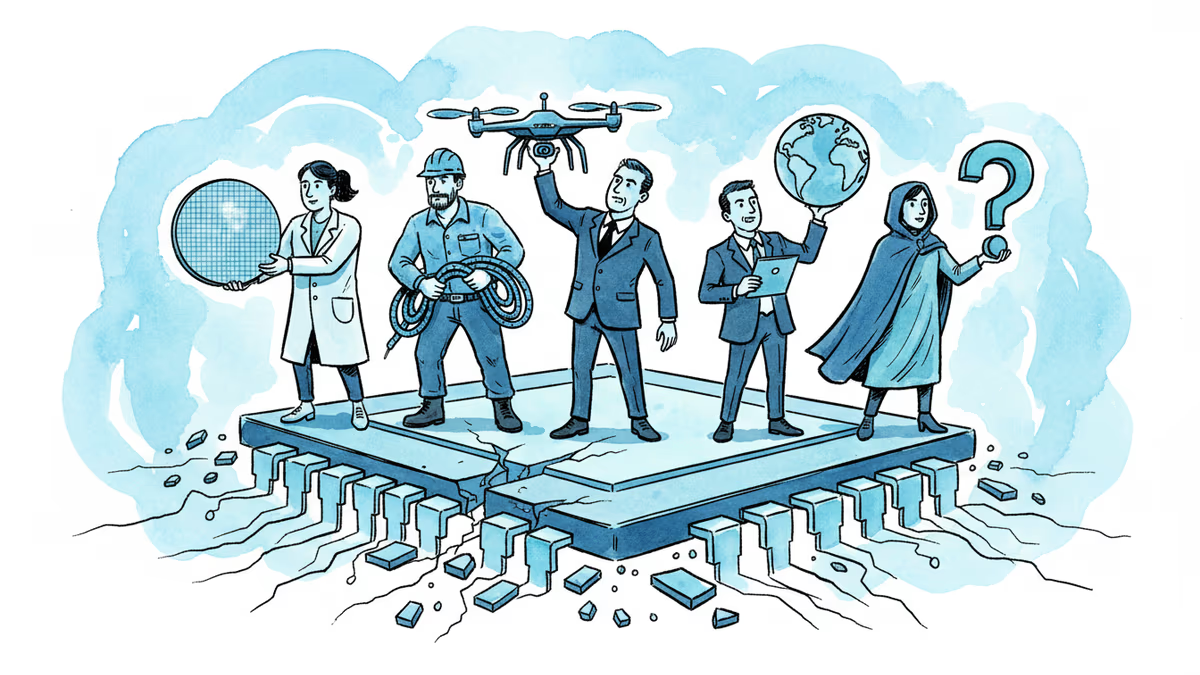
At Milken 2026, five AI insiders—from the CEO of ASML to a quantum physicist challenging LLMs—laid out the physical, energy, and geopolitical limits the AI boom is running into.
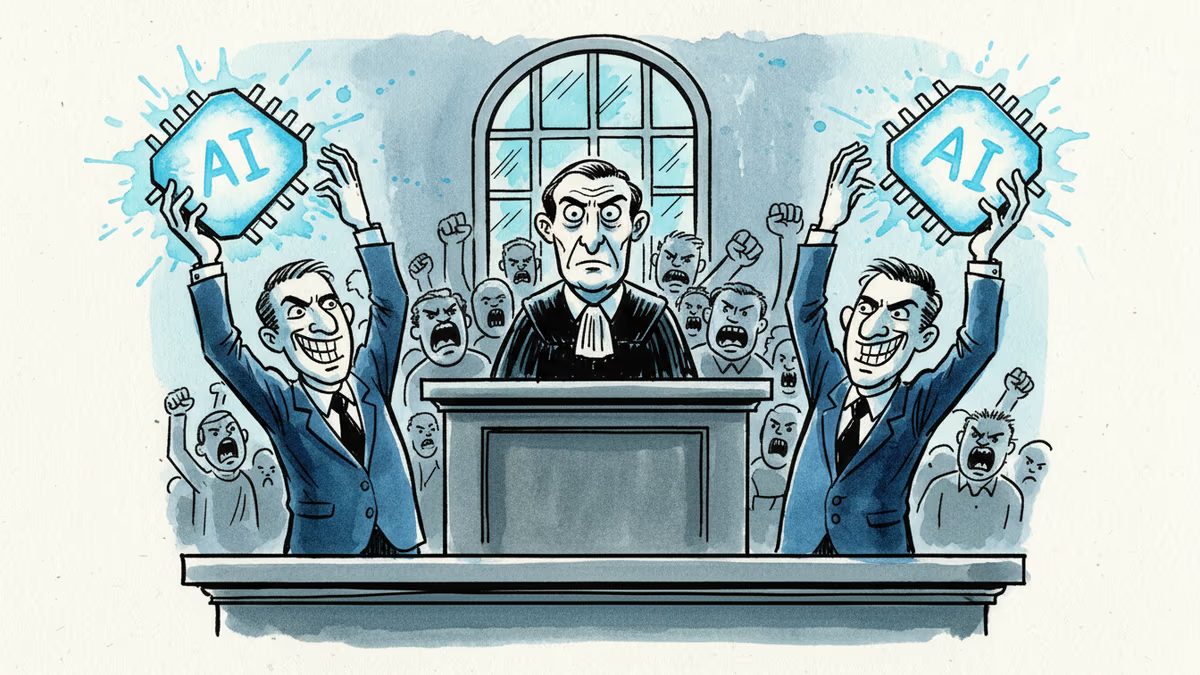
The Musk v. Altman trial in Oakland isn't just a contract dispute. It's become an unscripted window into how AI's most powerful figures actually operate—and who they think should control the technology's future.

Cohere and Aleph Alpha are merging to build a transatlantic AI challenger valued at $20 billion. Their pitch: sovereignty, not just performance. Can it work?

Databricks CTO Matei Zaharia just won computing's top prize. His take on AGI, the security nightmare hiding inside AI agents, and why the real AI revolution is about research, not chatbots.
At Milken 2026, five AI insiders—from the CEO of ASML to a quantum physicist challenging LLMs—laid out the physical, energy, and geopolitical limits the AI boom is running into.
The Musk v. Altman trial in Oakland isn't just a contract dispute. It's become an unscripted window into how AI's most powerful figures actually operate—and who they think should control the technology's future.
Cohere and Aleph Alpha are merging to build a transatlantic AI challenger valued at $20 billion. Their pitch: sovereignty, not just performance. Can it work?
Databricks CTO Matei Zaharia just won computing's top prize. His take on AGI, the security nightmare hiding inside AI agents, and why the real AI revolution is about research, not chatbots.
Thoughts
Share your thoughts on this article
Sign in to join the conversation