
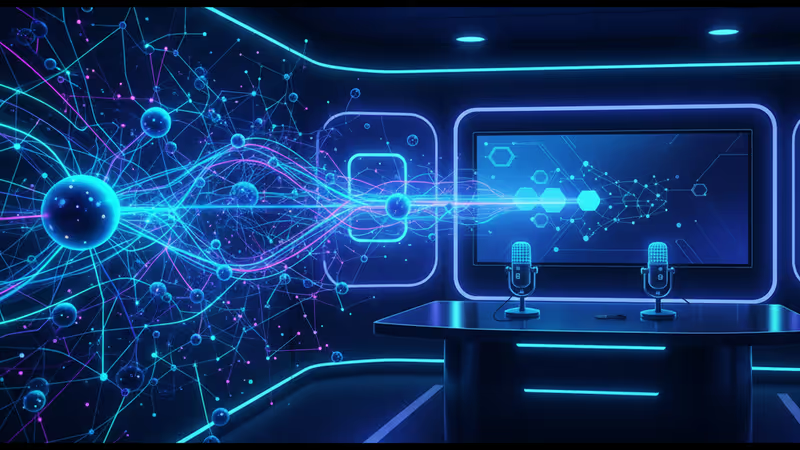
Netflix Original Video Podcasts 2026: Challenging YouTube's Dominance
Netflix is launching its first original video podcasts in January 2026, featuring Pete Davidson and Michael Irvin, aiming to disrupt YouTube's dominance.
Netflix is officially entering the ring to fight for the future of digital audio-visual content. According to The Verge, the streaming giant is launching its first pair of original video podcasts, signaling a major shift in its content strategy to compete with the industry leader, YouTube.
Netflix Original Video Podcasts 2026 Launch Schedule
The platform's original slate kicks off with The White House, hosted by NFL legend Michael Irvin, which is set to debut on January 19th. Shortly after, SNL alum Pete Davidson will make his debut with The Pete Davidson Show on January 30th. These shows join an existing library of licensed hits from Spotify and iHeartMedia.

Building a Walled Garden
It's not just about adding new faces; it's about platform control. Netflix has reportedly enforced strict licensing deals that prevent these shows from appearing in their entirety on YouTube. By doing so, they're directly attacking YouTube's position as the primary destination for video-based podcasts. This move forces fans of stars like Pete Davidson to stay within the Netflix ecosystem if they want the full experience.
Authors
Related Articles
Netflix launches exclusive video podcasts featuring Pete Davidson and Michael Irvin in late Jan 2026, directly challenging YouTube's living room dominance.
Disney Plus is set to introduce a vertical video feed in 2026. The new feature will showcase original short-form content and refashioned clips to boost engagement.
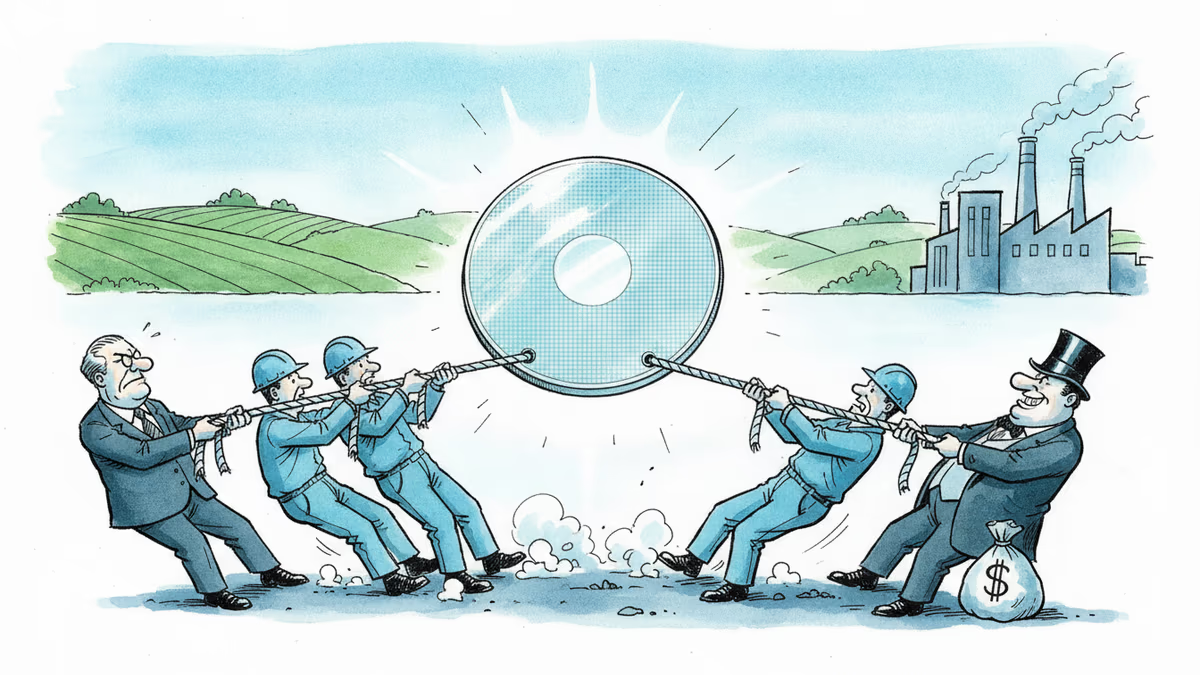
Samsung Electronics' union branch revealed that 84% of survey respondents oppose the government's roughly $290 billion (₩400 trillion) semiconductor megaproject in Gwangju. Government, management, the union and shareholders are all reading the same national project in sharply different ways.

Nvidia shipped roughly a billion RISC-V cores in 2024, then announced it would run CUDA on the open standard. We break down how royalty-free instruction sets and open software stacks are trying to route around CUDA's lock-in. Part 2 of the Semiconductor Sovereignty series.
Netflix launches exclusive video podcasts featuring Pete Davidson and Michael Irvin in late Jan 2026, directly challenging YouTube's living room dominance.
Disney Plus is set to introduce a vertical video feed in 2026. The new feature will showcase original short-form content and refashioned clips to boost engagement.
Samsung Electronics' union branch revealed that 84% of survey respondents oppose the government's roughly $290 billion (₩400 trillion) semiconductor megaproject in Gwangju. Government, management, the union and shareholders are all reading the same national project in sharply different ways.
Nvidia shipped roughly a billion RISC-V cores in 2024, then announced it would run CUDA on the open standard. We break down how royalty-free instruction sets and open software stacks are trying to route around CUDA's lock-in. Part 2 of the Semiconductor Sovereignty series.
Thoughts
Share your thoughts on this article
Sign in to join the conversation