

When Athletes Become Investors: The Giannis-Kalshi Deal
NBA star Giannis Antetokounmpo's investment in prediction market Kalshi sparks debate about athlete conflicts of interest and sports betting boundaries.
Giannis Antetokounmpo just became the first NBA player to invest directly in a prediction market platform. But his 1% stake in Kalshi is raising questions that go far beyond basketball.
The two-time MVP announced Friday that he's joining Kalshi as a shareholder, declaring on social media: "The internet is full of opinions. I decided it was time to make some of my own." The move is perfectly legal under the NBA's recent collective bargaining agreement, which allows players to take stakes up to 1% in sports betting companies—as long as they don't promote league-related wagers.
Yet the announcement has triggered a wave of criticism online, with fans describing it as a "conflict of interest" and questioning whether such investments should be allowed at all.
The New Rules of the Game
The NBA's evolving stance on sports betting reflects a broader shift across professional sports. Just a few years ago, any association between players and gambling would have been career-ending. Today, the league has carved out specific parameters: athletes can invest and advertise for betting companies, but with strict limitations.
Antetokounmpo won't be allowed to trade on NBA-related markets, in accordance with Kalshi's policies against insider trading and market manipulation. The company plans to partner with him on marketing and live events, positioning the Greek Freak as a face for prediction markets beyond traditional sports betting.
Kalshi operates differently from traditional sportsbooks, focusing on prediction markets for everything from election outcomes to economic indicators. Users can bet on whether inflation will hit certain targets or which company will reach specific market caps. The platform has gained traction by positioning itself as a more sophisticated alternative to conventional gambling.

Beyond the Court
This investment signals something larger than one athlete's portfolio diversification. As sports betting becomes mainstream, we're witnessing the emergence of a new category: athlete-investors who leverage their public platforms to promote financial products.
The timing isn't coincidental. Prediction markets are experiencing unprecedented growth, driven by retail investors seeking alternatives to traditional trading. Antetokounmpo's endorsement could legitimize these platforms for millions of fans who view him as more than just a basketball player.
But the fan backlash reveals deeper concerns about the intersection of sports and finance. When athletes become stakeholders in betting platforms, the lines between entertainment and financial advice blur. Fans who follow Antetokounmpo's investment moves might not fully understand the risks involved in prediction markets.
The Influence Economy
The controversy also highlights how athlete influence has evolved. Social media has transformed sports stars into multi-platform brands, where every post can move markets and shape consumer behavior. Antetokounmpo's54 million social media followers represent a massive audience for any product he endorses.
This raises questions about responsibility and transparency. While traditional investment advisors must disclose conflicts of interest, athlete-investors operate in a regulatory gray area. When Antetokounmpo promotes Kalshi, is he sharing a business opportunity or leveraging his platform for personal gain?
Different stakeholders view this development through vastly different lenses. Fans worry about conflicts of interest, while investors see validation of prediction markets' mainstream potential. Regulators face the challenge of protecting consumers without stifling innovation in emerging financial products.
Authors
Related Articles
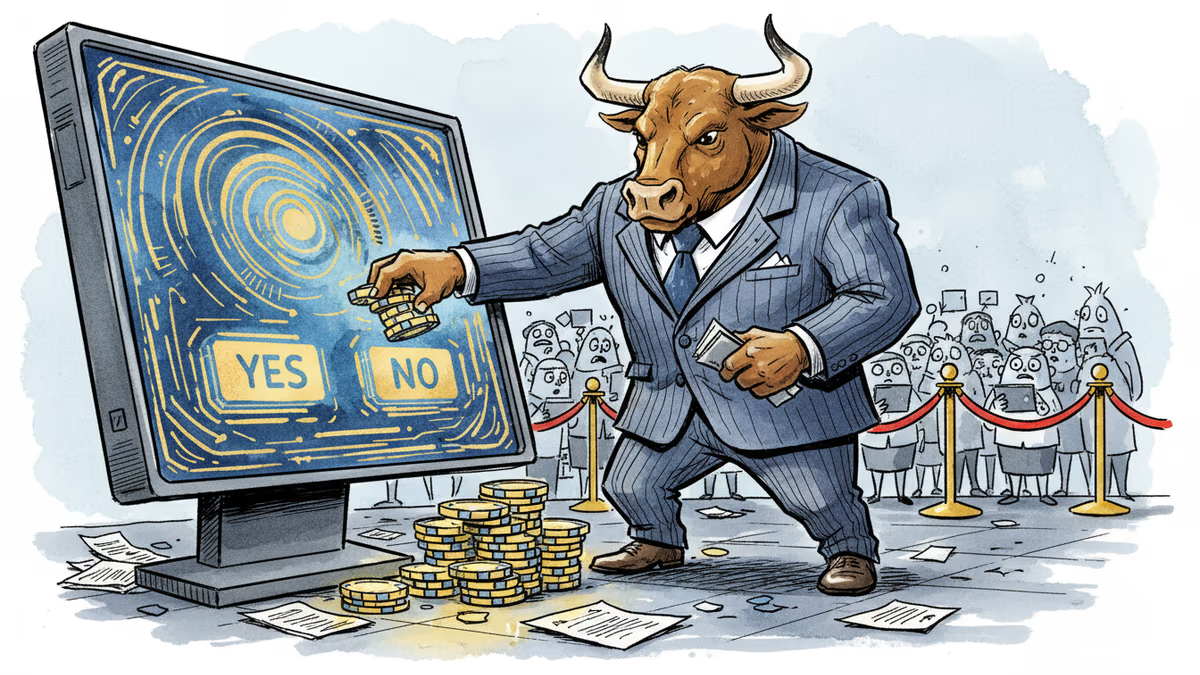
From NYSE's parent company to Nasdaq, institutional money is flooding into prediction markets. But as Wall Street moves in, is the 'wisdom of crowds' at risk of becoming another professional trading arena?
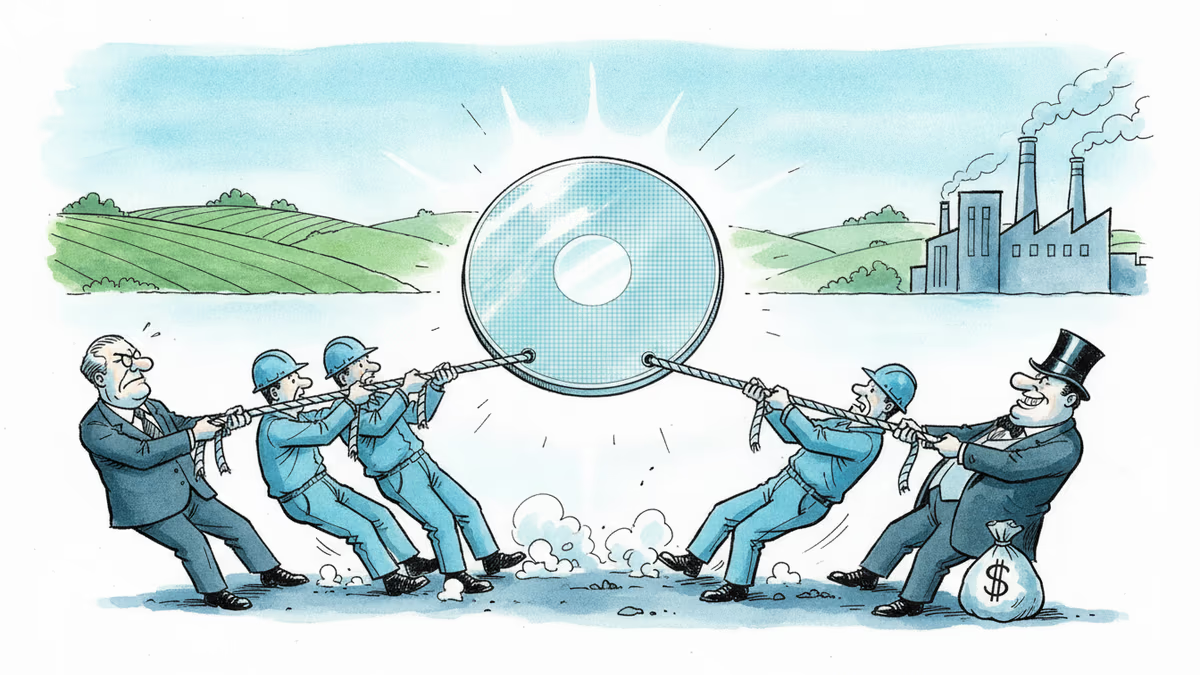
Samsung Electronics' union branch revealed that 84% of survey respondents oppose the government's roughly $290 billion (₩400 trillion) semiconductor megaproject in Gwangju. Government, management, the union and shareholders are all reading the same national project in sharply different ways.

Nvidia shipped roughly a billion RISC-V cores in 2024, then announced it would run CUDA on the open standard. We break down how royalty-free instruction sets and open software stacks are trying to route around CUDA's lock-in. Part 2 of the Semiconductor Sovereignty series.

US AI-chip export controls split into three layers in the first half of 2026 — January easing, a May crackdown on circumvention, and a pending bill. Nvidia erased China from its guidance and still posted a record $81.6 billion quarter. A look at the export policy that both shields and cages it.
From NYSE's parent company to Nasdaq, institutional money is flooding into prediction markets. But as Wall Street moves in, is the 'wisdom of crowds' at risk of becoming another professional trading arena?
Samsung Electronics' union branch revealed that 84% of survey respondents oppose the government's roughly $290 billion (₩400 trillion) semiconductor megaproject in Gwangju. Government, management, the union and shareholders are all reading the same national project in sharply different ways.
Nvidia shipped roughly a billion RISC-V cores in 2024, then announced it would run CUDA on the open standard. We break down how royalty-free instruction sets and open software stacks are trying to route around CUDA's lock-in. Part 2 of the Semiconductor Sovereignty series.
US AI-chip export controls split into three layers in the first half of 2026 — January easing, a May crackdown on circumvention, and a pending bill. Nvidia erased China from its guidance and still posted a record $81.6 billion quarter. A look at the export policy that both shields and cages it.
Thoughts
Share your thoughts on this article
Sign in to join the conversation