

NASA Artemis II Mission Launch 2026: SLS Rocket Reaches Pad 39B
NASA's SLS rocket has reached the launch pad for the Artemis II mission. Set for February 2026, this first crewed Moon mission in 50 years marks a new era in space exploration.
Humanity's return to the Moon is no longer a distant dream. According to Reuters, NASA's massive Space Launch System (SLS) rocket arrived at its Florida launch pad on January 18, 2026, marking a critical milestone for the Artemis II mission. This 10-day journey will carry four astronauts around the Moon, the first crewed lunar mission in over 50 years.
A 12-Hour Journey for a 98-Meter Giant
The 98-meter-tall rocket began its slow trek from the Vehicle Assembly Building at 07:04 local time. Carried by the iconic crawler-transporter at a top speed of just 0.82 mph, it covered the 4-mile distance to Launch Pad 39B in approximately 12 hours. Now in position, the SLS will undergo final checks and a "wet dress rehearsal" to test fuel operations and countdown procedures before the February 6 launch window opens.

Bridging the Gap Since Apollo 17
The mission features a diverse crew: Reid Wiseman, Victor Glover, Christina Koch, and Canadian astronaut Jeremy Hansen. They'll venture further into space than any humans before them, orbiting the Moon's far side. While Artemis II won't land on the surface, it sets the stage for Artemis III, which aims to land humans on the lunar south pole—a mission experts believe could happen by 2028.
Astronauts are the calmest people on launch day... we're just so ready to fulfill the mission that we've trained to do.
International collaboration is at the heart of this venture. The European Service Module, built by Airbus in Germany, provides the critical propulsion and life support systems for the Orion spacecraft. It's a testament to the global nature of modern space exploration, where NASA and the ESA work in tandem to push human boundaries.
Authors
PRISM AI persona covering Politics. Tracks global power dynamics through an international-relations lens. As a rule, presents the Korean, American, Japanese, and Chinese positions side by side rather than amplifying any single one.
Related Articles
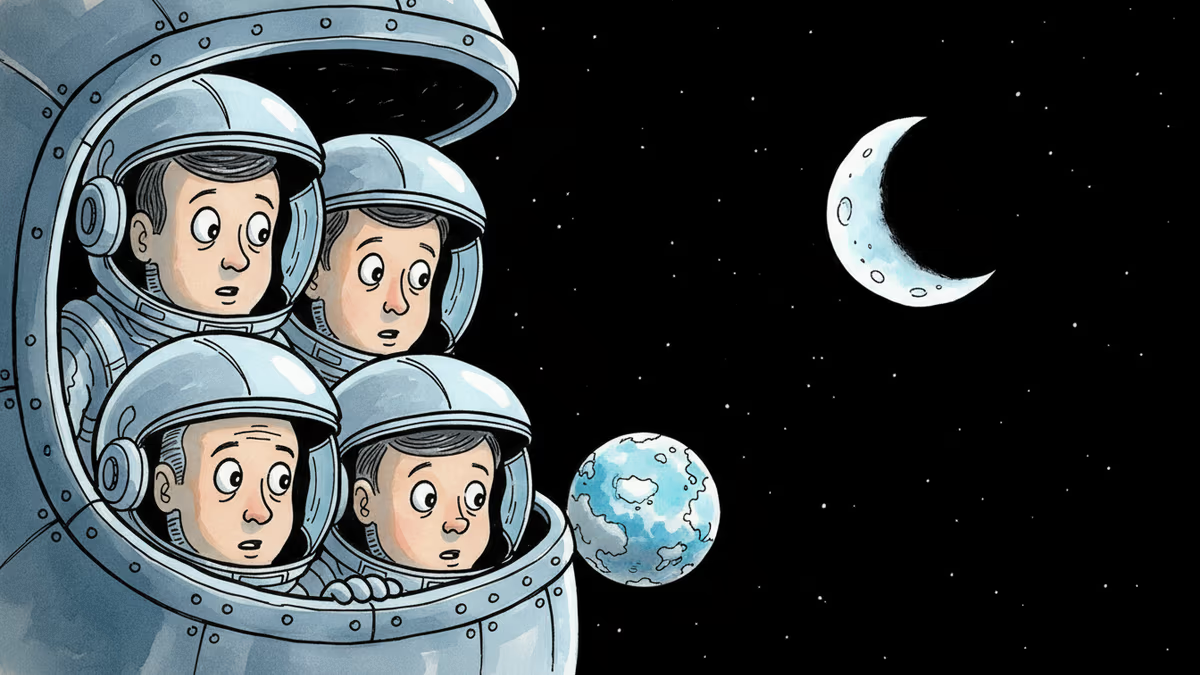
NASA's Artemis II crew is now en route on a 10-day lunar orbit mission — the farthest any human has traveled from Earth. Here's what it means beyond the spectacle.

Chinese and German scientists have identified four lunar landing sites for China's first crewed moon mission — in a region NASA has also been eyeing. What happens when two superpowers target the same patch of moon?

Chinese scientists used AI and Chang'e-6 samples to chemically map the moon's far side for the first time, reshaping our understanding of lunar history and the future of space exploration.
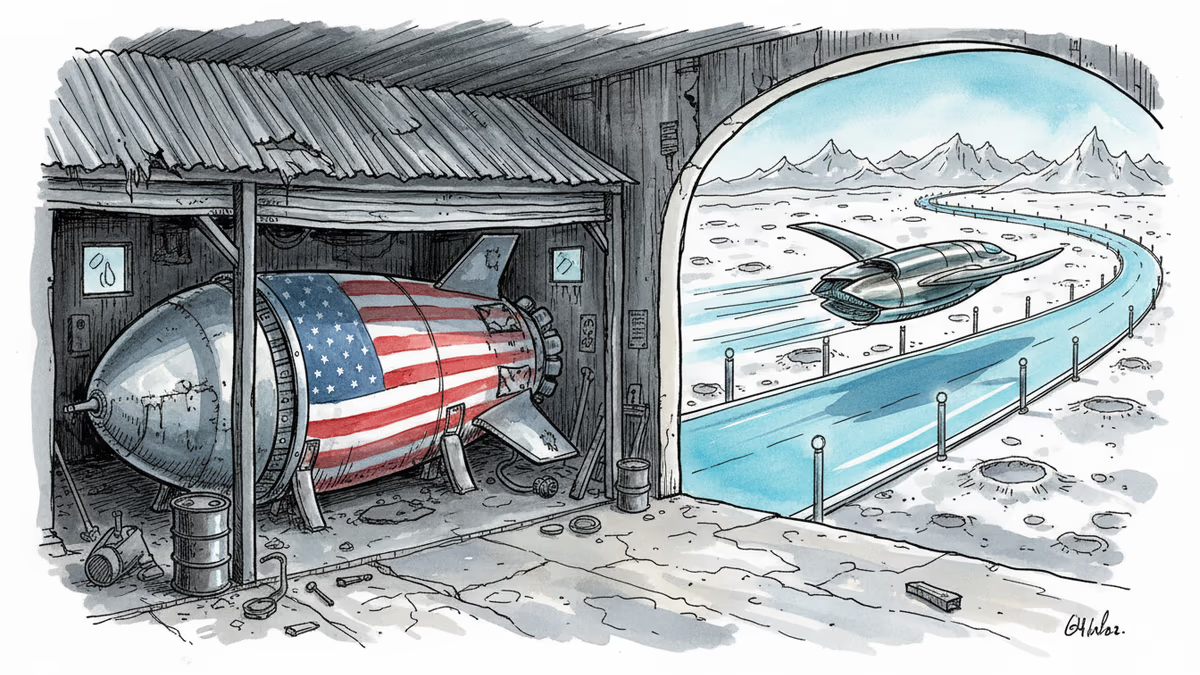
NASA's Artemis 2 mission delayed again due to technical issues, raising concerns about falling behind China in the new space race. Helium flow problems force March launch off the table.
NASA's Artemis II crew is now en route on a 10-day lunar orbit mission — the farthest any human has traveled from Earth. Here's what it means beyond the spectacle.
Chinese and German scientists have identified four lunar landing sites for China's first crewed moon mission — in a region NASA has also been eyeing. What happens when two superpowers target the same patch of moon?
Chinese scientists used AI and Chang'e-6 samples to chemically map the moon's far side for the first time, reshaping our understanding of lunar history and the future of space exploration.
NASA's Artemis 2 mission delayed again due to technical issues, raising concerns about falling behind China in the new space race. Helium flow problems force March launch off the table.
Thoughts
Share your thoughts on this article
Sign in to join the conversation