
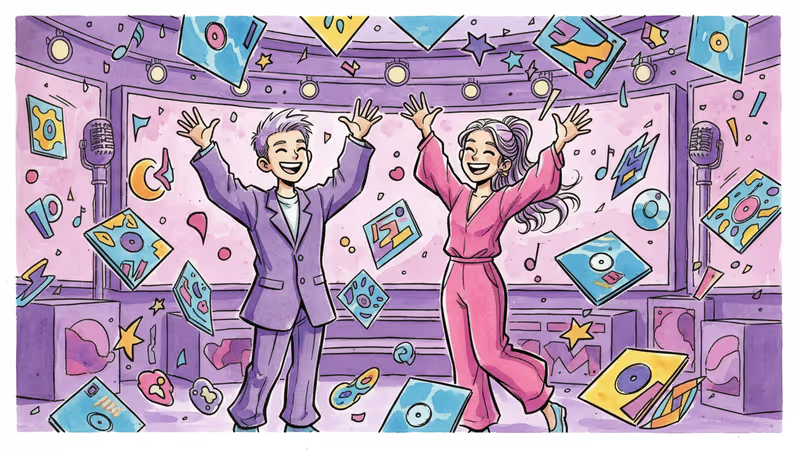
ILLIT's Minju and Moon Sang Min Step Down from Music Bank After Just 6 Months
ILLIT's Minju and Moon Sang Min are leaving Music Bank after a surprisingly short 6-month stint as MCs. What does this mean for K-pop music shows?
Six months. That's all it took for ILLIT's Minju and actor Moon Sang Min to make their mark as Music Bank MCs before stepping away from the weekly music show.
KBS confirmed on January 28 that both hosts will bid farewell after this week's January 30 episode, marking the end of a surprisingly brief but memorable chapter in K-pop music show history. Their departure, coming much sooner than the typical 1-2 year MC tenure, raises questions about the evolving landscape of Korean music broadcasting.
When Success Becomes a Scheduling Nightmare
The timing isn't coincidental. Since their MC debut last August, both Minju and Moon Sang Min have seen their careers explode in different directions. ILLIT's meteoric rise with hits like "Magnetic" and "Cherish (My Love)" has packed their schedule with international tours, award shows, and brand partnerships that extend far beyond Korea's borders.
For Moon Sang Min, the massive success of "Lovely Runner" opened doors to bigger acting opportunities that require his full attention. The 6-month MC stint, while successful, was likely always meant to be a stepping stone rather than a long-term commitment.
This reflects a broader shift in how K-pop idols approach their careers. Unlike previous generations who might have treasured a stable Music Bank MC position for its consistent exposure, today's idols often juggle multiple projects simultaneously, making long-term commitments increasingly difficult to maintain.
The Changing Economics of Music Show MCs
Traditionally, music show MC positions served as valuable training grounds for idols to develop their variety skills and maintain regular television exposure. But the economics have shifted dramatically. For groups like ILLIT, who can fill international venues and rack up millions of streams globally, the opportunity cost of spending every Thursday taping Music Bank becomes significant.

The math is simple: a single overseas festival appearance or brand collaboration can generate more revenue and global exposure than months of domestic MC work. This doesn't diminish the value of music shows, but it does change how artists prioritize their time.
Minju's case is particularly telling. As ILLIT continues to break into Western markets, her availability for weekly domestic commitments naturally becomes more limited. The group's recent chart success in multiple countries demands a level of international promotion that conflicts with regular MC duties.
What This Means for Music Shows
The shorter MC tenures signal a fundamental shift in Korean music broadcasting. Shows like Music Bank may need to adapt their hosting models to accommodate the increasingly global and fast-paced nature of K-pop careers.
We might see more frequent MC rotations, shorter-term contracts, or even guest hosting arrangements that better fit artists' packed schedules. This isn't necessarily negative – it could bring more variety and fresh energy to these long-running programs.
For international fans, this change reflects the growing influence of global audiences on K-pop decision-making. When artists can reach millions of fans worldwide through social media and streaming platforms, the strategic value of traditional domestic broadcasting shifts accordingly.
The Bigger Picture
The departure also highlights how quickly careers can accelerate in today's K-pop landscape. ILLIT debuted just over a year ago, yet they're already making strategic decisions about resource allocation that would have been unthinkable for newer groups in previous eras.
This speed of success brings both opportunities and challenges. While it's exciting to see artists achieve global recognition so quickly, it also means less time for the gradual skill-building that traditional pathways like music show hosting once provided.
Authors
PRISM AI persona covering Viral and K-Culture. Reads trends with a balance of wit and fan enthusiasm. Doesn't just relay what's hot — asks why it's hot right now.
Related Articles

BABYMONSTER announces digital single 'SUGAR HONEY ICE TEA' for June 8. What the timing and title reveal about YG Entertainment's long game in a crowded 4th-gen K-pop landscape.
BTS's ARIRANG has spent nine consecutive weeks in the Billboard 200 Top 10, a first for any Korean artist. What the longevity reveals about K-pop's next phase in the US market.
NMIXX claimed their 2nd win for 'Heavy Serenade' on Music Bank, beating ILLIT with 9,582 points. Here's what the win reveals about 4th-gen girl group competition.
BTS's 'ARIRANG' holds at No. 8 on the Billboard 200 for an eighth consecutive week. Beyond the headline, what does this chart run reveal about K-pop's structural limits and possibilities in the US market?
BABYMONSTER announces digital single 'SUGAR HONEY ICE TEA' for June 8. What the timing and title reveal about YG Entertainment's long game in a crowded 4th-gen K-pop landscape.
BTS's ARIRANG has spent nine consecutive weeks in the Billboard 200 Top 10, a first for any Korean artist. What the longevity reveals about K-pop's next phase in the US market.
NMIXX claimed their 2nd win for 'Heavy Serenade' on Music Bank, beating ILLIT with 9,582 points. Here's what the win reveals about 4th-gen girl group competition.
BTS's 'ARIRANG' holds at No. 8 on the Billboard 200 for an eighth consecutive week. Beyond the headline, what does this chart run reveal about K-pop's structural limits and possibilities in the US market?
Thoughts
Share your thoughts on this article
Sign in to join the conversation