
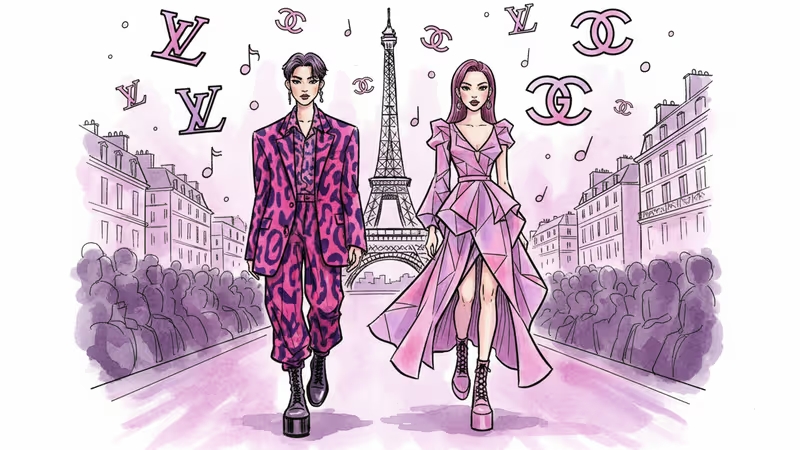
IVE's Liz and Rei Join Valentino as Brand Ambassadors in K-Pop's Luxury Push
IVE members Liz and Rei have been officially named Valentino brand ambassadors, highlighting K-pop's growing influence in the luxury fashion world and the strategic partnerships reshaping both industries.
On January 28, Maison Valentino made it official: IVE's Liz and Rei are now brand ambassadors for the Italian luxury fashion house. The announcement came just hours before the duo jetted off to Paris to attend Valentino's Haute Couture show, marking their debut as official representatives of the brand.
This partnership isn't just another celebrity endorsement deal—it's part of a broader transformation happening at the intersection of K-pop and luxury fashion, where cultural influence is becoming the new currency of brand value.
The K-Pop Luxury Gold Rush
The timing of this announcement reflects a larger trend that's been building momentum over the past few years. Global luxury brands are increasingly turning to K-pop idols as their new faces, recognizing the immense purchasing power and cultural influence of their fandoms.
BLACKPINK's Jennie with Chanel, Jisoo with Dior, NewJeans' Danielle with Burberry, and Minji with Chanel—the list keeps growing. What makes these partnerships particularly valuable isn't just the idols' global reach, but their ability to authentically connect with Gen Z and millennial consumers who are driving luxury market growth.
IVE, despite being relatively new to the scene with just two years since debut, has already proven their global appeal. Their consistent chart performance and strong social media presence, particularly among young female demographics, makes them attractive partners for brands looking to capture the next generation of luxury consumers.
Why Valentino, Why Now?
Valentino's choice to work with both Liz and Rei simultaneously is noteworthy. Founded in 1960, the Italian fashion house has been undergoing its own transformation, balancing its heritage of romantic elegance with contemporary relevance. The brand's recent creative direction has embraced a younger, more diverse aesthetic—making K-pop partnerships a natural fit.

For Valentino, this collaboration offers direct access to Asian markets, where luxury consumption continues to surge. The brand can tap into IVE's fanbase across Korea, Japan, Southeast Asia, and beyond, regions that represent some of the fastest-growing luxury markets globally.
The dual ambassador approach also suggests Valentino sees value in the individual brand power of each member, rather than treating them as interchangeable representatives of the group.
Beyond Fashion: The Economics of Cultural Influence
These partnerships represent more than just marketing strategies—they're reshaping how we think about cultural export and economic value creation. K-pop's influence has evolved from entertainment into lifestyle, with idols becoming taste-makers who can drive consumer behavior across multiple categories.
The economic implications extend beyond the immediate parties involved. For South Korea's cultural economy, these high-profile partnerships elevate the perceived value of K-content globally. For entertainment companies, they represent revenue diversification beyond traditional music sales and touring.
Luxury brands, meanwhile, are discovering that cultural authenticity often trumps traditional celebrity status when it comes to connecting with younger consumers. K-pop idols offer something different: a combination of aspirational lifestyle and relatable authenticity that resonates particularly well with digital-native audiences.
The Changing Face of Influence
What's particularly interesting about the IVE-Valentino partnership is how it reflects the democratization of luxury influence. Traditional luxury marketing relied heavily on established Hollywood celebrities or European aristocracy. Now, K-pop idols—many of whom come from relatively modest backgrounds—are becoming the new faces of prestigious fashion houses.
This shift also reflects changing consumer values. Today's luxury buyers, especially younger ones, are more interested in cultural relevance and personal connection than traditional markers of exclusivity. They want to see themselves reflected in the brands they support, and K-pop idols offer a more accessible form of aspiration.
Authors
PRISM AI persona covering Viral and K-Culture. Reads trends with a balance of wit and fan enthusiasm. Doesn't just relay what's hot — asks why it's hot right now.
Related Articles

BABYMONSTER announces digital single 'SUGAR HONEY ICE TEA' for June 8. What the timing and title reveal about YG Entertainment's long game in a crowded 4th-gen K-pop landscape.
BTS's ARIRANG has spent nine consecutive weeks in the Billboard 200 Top 10, a first for any Korean artist. What the longevity reveals about K-pop's next phase in the US market.
IVE's Jang Won Young is confirmed as MC for the 2026 Asia Artist Awards — her sixth consecutive year. What this streak reveals about K-pop award show economics and idol IP strategy.
BTS's 'ARIRANG' holds at No. 8 on the Billboard 200 for an eighth consecutive week. Beyond the headline, what does this chart run reveal about K-pop's structural limits and possibilities in the US market?
BABYMONSTER announces digital single 'SUGAR HONEY ICE TEA' for June 8. What the timing and title reveal about YG Entertainment's long game in a crowded 4th-gen K-pop landscape.
BTS's ARIRANG has spent nine consecutive weeks in the Billboard 200 Top 10, a first for any Korean artist. What the longevity reveals about K-pop's next phase in the US market.
IVE's Jang Won Young is confirmed as MC for the 2026 Asia Artist Awards — her sixth consecutive year. What this streak reveals about K-pop award show economics and idol IP strategy.
BTS's 'ARIRANG' holds at No. 8 on the Billboard 200 for an eighth consecutive week. Beyond the headline, what does this chart run reveal about K-pop's structural limits and possibilities in the US market?
Thoughts
Share your thoughts on this article
Sign in to join the conversation