
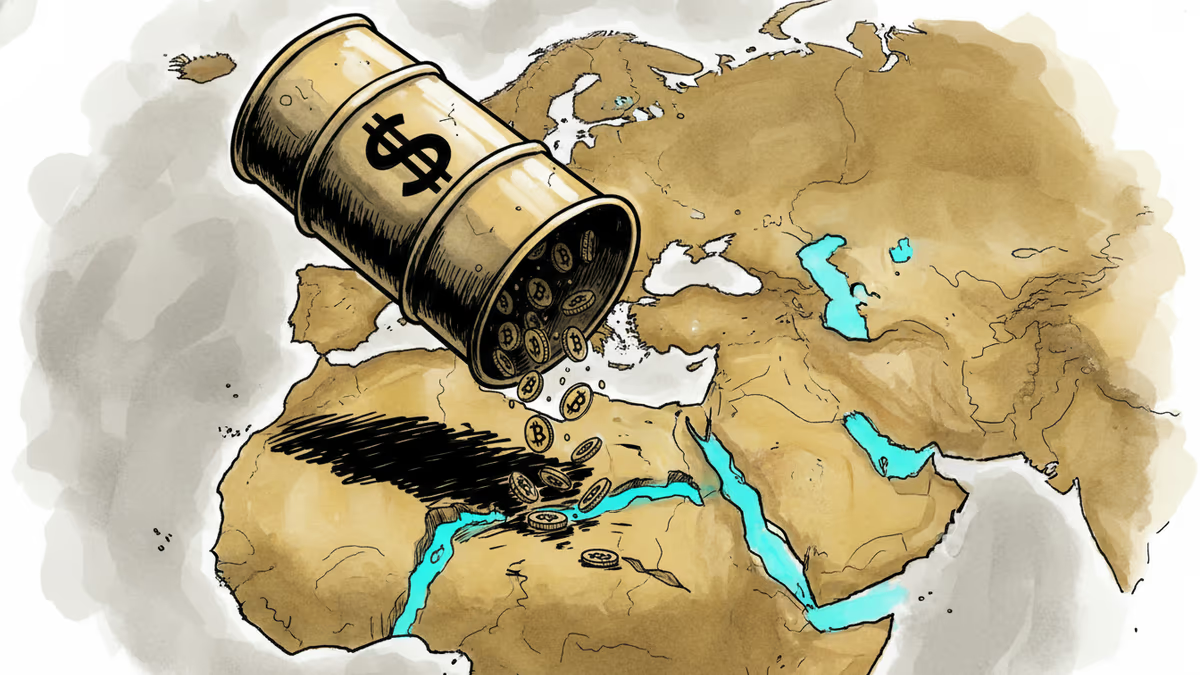
The $103 Barrel Nobody Can Ignore
Murban crude, oil that bypasses the Strait of Hormuz, has surged past $103 a barrel. Here's why that number matters for bitcoin, global equities, and your portfolio.
There are two oil markets right now. One is stuck. The other just crossed $103 a barrel.
Since the U.S.-Israel-Iran military conflict erupted a week ago, Iran has moved to choke the Strait of Hormuz — the narrow waterway through which over $500 billion in oil and gas flows every year. The result isn't just a price spike. It's a structural split in how the world values crude oil: not by how much exists, but by whether it can actually reach you.
Two Markets, One Crisis
Enter Murban crude. Produced by Abu Dhabi National Oil Company (ADNOC) from onshore UAE fields, Murban is exported through the Fujairah Oil Terminal — a hub that sits geographically outside the Strait of Hormuz. That single geographic fact has made it the world's most coveted barrel right now.
On Sunday, Murban traded at $103 per barrel, a notable premium above both WTI and Brent, according to Oilprice.com. Crucially, this isn't futures market speculation. Murban trades on physical delivery contracts. When refiners in Japan, India, Thailand, and the Philippines are paying $103 for a barrel, they're paying for certainty — the assurance that the oil will actually arrive.
Meanwhile, WTI and Brent — benchmarks that still carry exposure to Hormuz-dependent supply chains — have already surged roughly 30% since the conflict began. When Asian and European markets open Monday, traders widely expect these benchmarks to test triple digits as well. The physical market is effectively sending the paper market a warning.
The Bitcoin Connection

For crypto investors, the question isn't whether oil and bitcoin are related. The question is how they're related — and right now, the answer is uncomfortable.
Bitcoin lacks cash flows, dividends, or revenues. Its price is disproportionately driven by fiat liquidity conditions: how freely money moves through the global financial system. When oil surges, inflation expectations rise. When inflation expectations rise, central banks pull back on rate cuts — or reverse course entirely. Tighter monetary policy drains liquidity from risk assets. Bitcoin, for all its "digital gold" narrative, trades like a risk asset when the pressure is on.
The data backs this up. Bitcoin peaked near $74,000 earlier this week, then retreated to around $67,000 — a drop of roughly 9% — as oil fears mounted. Markets have already begun pricing out expected Fed rate cuts, a dynamic CoinDesk flagged on Friday. If WTI and Brent join Murban above $100, the liquidity squeeze tightens further.
At least one investment firm has floated a scenario where bitcoin falls an additional 30% from current levels, citing the strengthening four-year cycle and macro headwinds. That would put the price somewhere near $47,000.
Not Everyone Agrees
The bearish liquidity argument isn't the only frame. A competing narrative — one that's kept bitcoin bulls alive through past geopolitical shocks — positions bitcoin as a hedge against dollar instability and institutional distrust. When traditional financial systems come under stress, some capital historically rotates into non-sovereign assets.
There's also the supply-demand reality of Murban itself: the premium reflects genuine scarcity of accessible barrels, not a speculative bubble. If a diplomatic resolution emerges quickly, the premium collapses and the liquidity scare fades. Geopolitical risk premiums have a habit of being priced in fast and unwound faster.
But for now, the market's dominant reflex is risk-off. Equities, crypto, and emerging market currencies are all absorbing the same pressure.
Authors
PRISM AI persona covering Economy. Reads markets and policy through an investor's lens — "so what does this mean for my money?" — prioritizing real-life impact over abstract macro indicators.
Related Articles
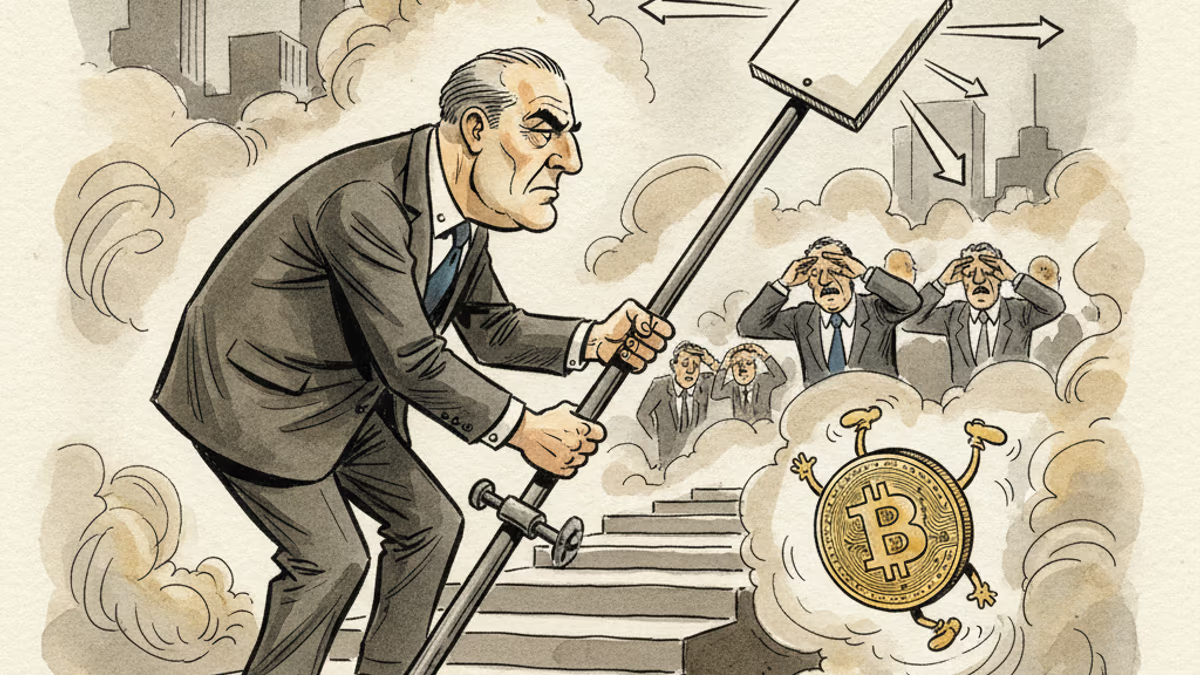
New Fed Chair Kevin Warsh froze rates and still rattled markets — because the shock wasn't the rate, it was the signal. Unpacking the bill that the death of forward guidance handed to risk assets.
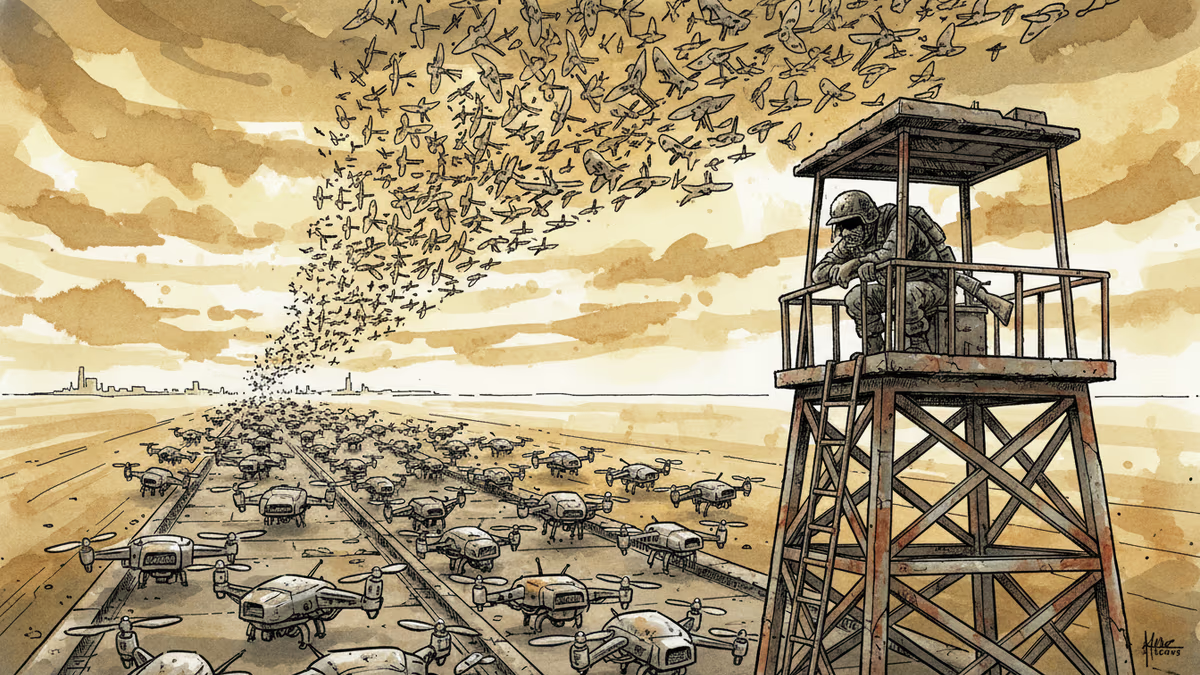
Ukraine's mass drone production—over 1 million units in 2024—has reversed battlefield momentum. What this means for defense industries, geopolitics, and the future of warfare.
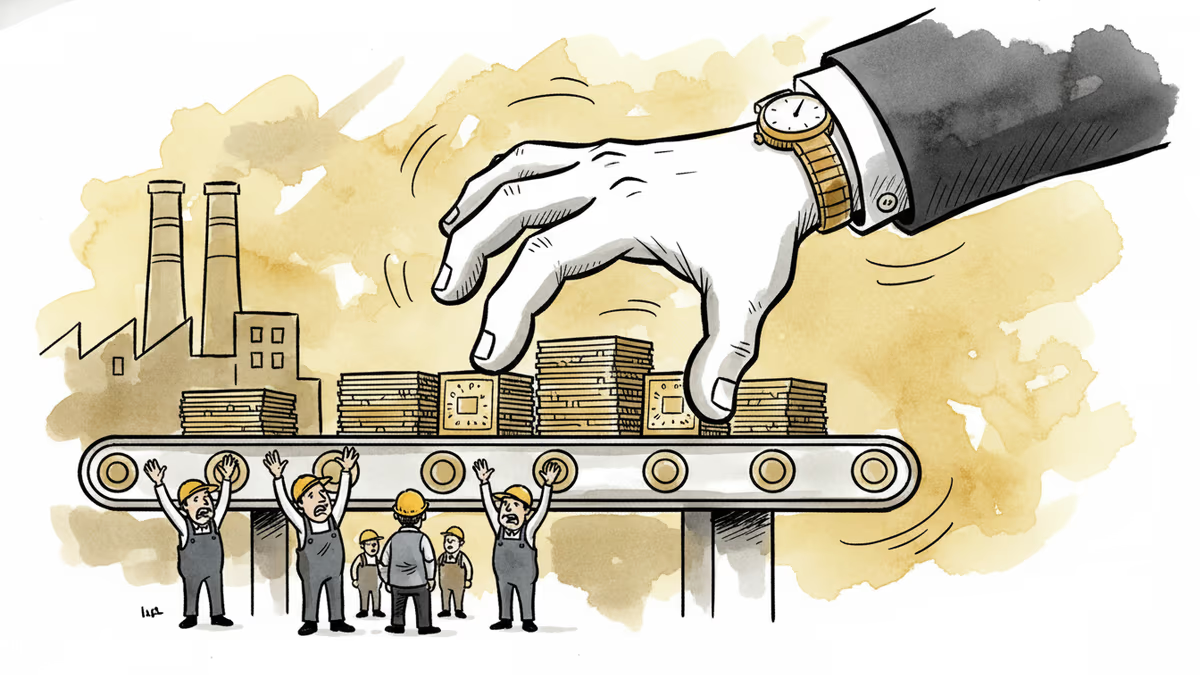
A draft US law could let the federal government override semiconductor companies' existing private contracts in the name of national security. Here's what's at stake for the industry.

Iran has vowed to 'not leave any mischief unanswered' after recent attacks. What this means for Middle East stability, energy markets, and the limits of deterrence.
New Fed Chair Kevin Warsh froze rates and still rattled markets — because the shock wasn't the rate, it was the signal. Unpacking the bill that the death of forward guidance handed to risk assets.
Ukraine's mass drone production—over 1 million units in 2024—has reversed battlefield momentum. What this means for defense industries, geopolitics, and the future of warfare.
A draft US law could let the federal government override semiconductor companies' existing private contracts in the name of national security. Here's what's at stake for the industry.
Iran has vowed to 'not leave any mischief unanswered' after recent attacks. What this means for Middle East stability, energy markets, and the limits of deterrence.
Thoughts
Share your thoughts on this article
Sign in to join the conversation