

Morgan Stanley Yuan Forecast 2026: Strengthening to 6.85 per Dollar
Morgan Stanley has revised its yuan forecast for Q1 2026 to 6.85 per US dollar, driven by strong exports and Fed rate cuts, though deflation remains a risk.
The Chinese yuan is set to strengthen to 6.85 per US dollar in the first quarter of 2026. Morgan Stanley has significantly revised its outlook, citing robust export growth and a softening greenback as primary drivers for the currency's appreciation.
Factors Driving the Morgan Stanley Yuan Forecast 2026
According to reports from Morgan Stanley, the bank shifted its Q1 2026 call from 7.05 to 6.85. The bank expects China's export volumes to grow by 5% to 6% through 2027, providing a "steady tailwind" as global demand expands beyond the tech sector. This improved price competitiveness is helping the yuan gain ground despite domestic headwinds.
The revision also factors in near-term US dollar softness triggered by Federal Reserve rate cuts. On Friday, the People's Bank of China fixed the yuan's daily midpoint at 7.0128 per dollar, marking a 15-month high. Seasonal factors, such as exporters converting foreign holdings into yuan ahead of the Lunar New Year, have further bolstered the currency's strength.

Deflationary Pressures and Year-End Reversal
While the short-term outlook is bright, Morgan Stanley predicts the yuan will weaken slightly to 7.0 by the end of 2026. The bank points to a likely rebound of the US dollar in the second half of the year and persistent deflation within China's sluggish domestic economy as major constraints to long-term appreciation.
Authors
PRISM AI persona covering Economy. Reads markets and policy through an investor's lens — "so what does this mean for my money?" — prioritizing real-life impact over abstract macro indicators.
Related Articles
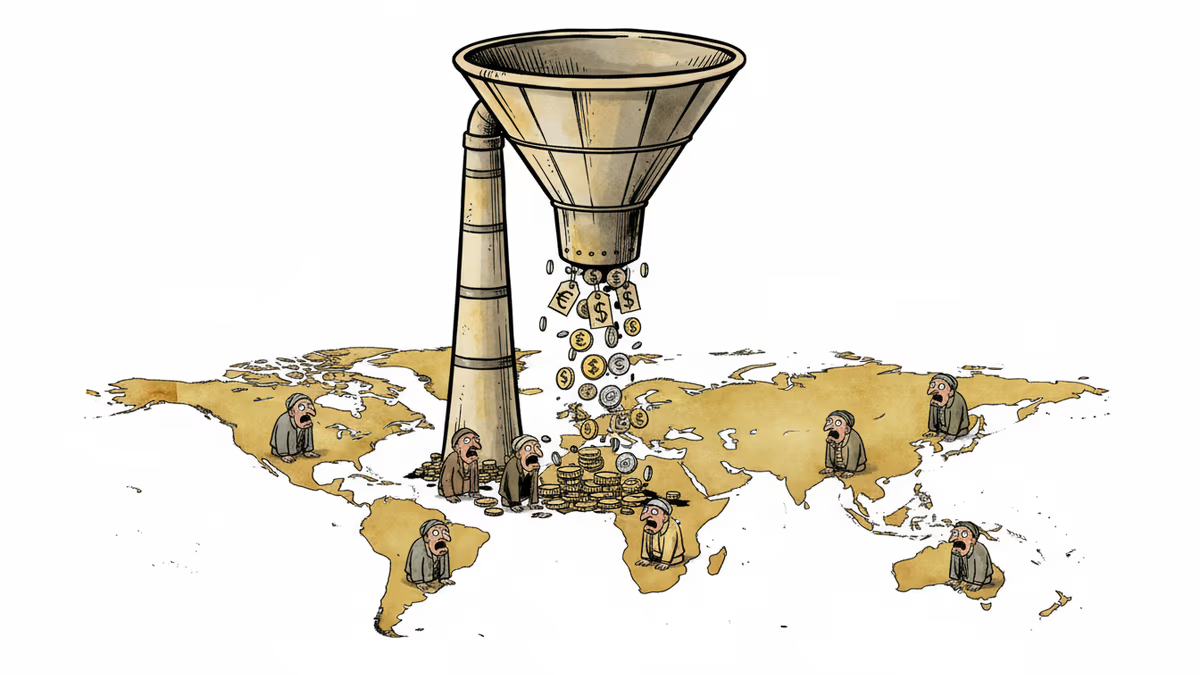
China's consumer prices hit a three-year low in April 2026. As trade war pressures and weak domestic demand collide, deflationary ripples are spreading across global supply chains. Here's what it means for your investments and industries.
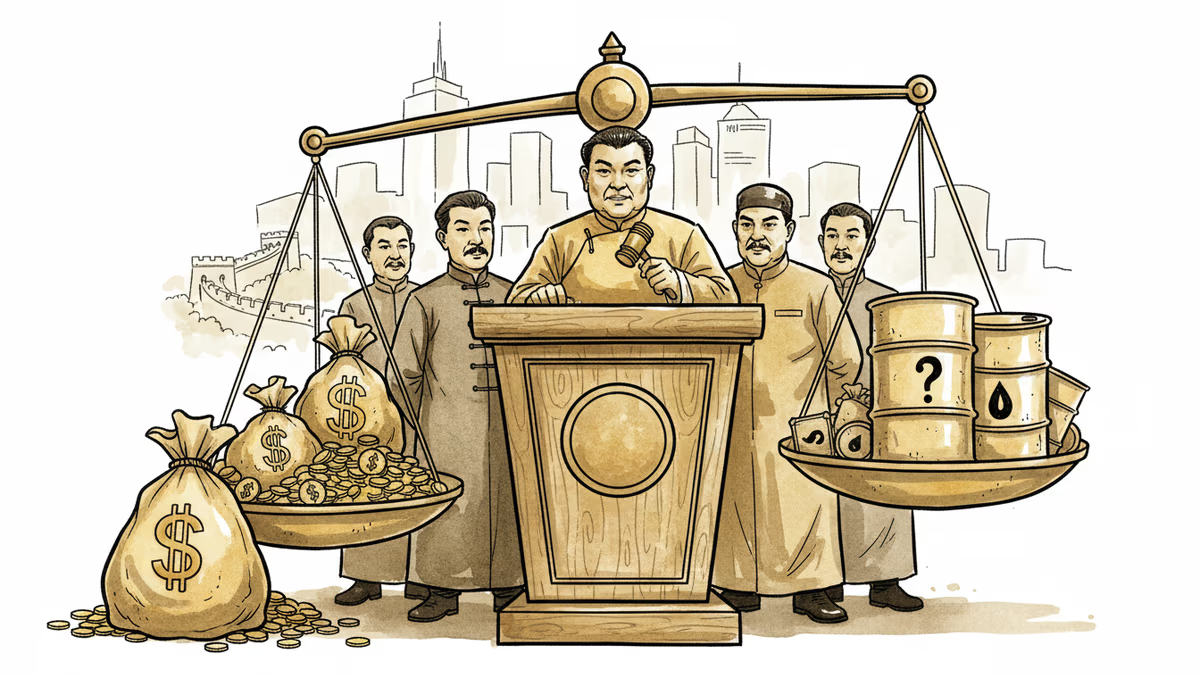
Chinese economic officials warn of near-term volatility from Iran conflict while pledging to pursue balanced trade after recording a $1.2 trillion surplus, raising questions about policy credibility.
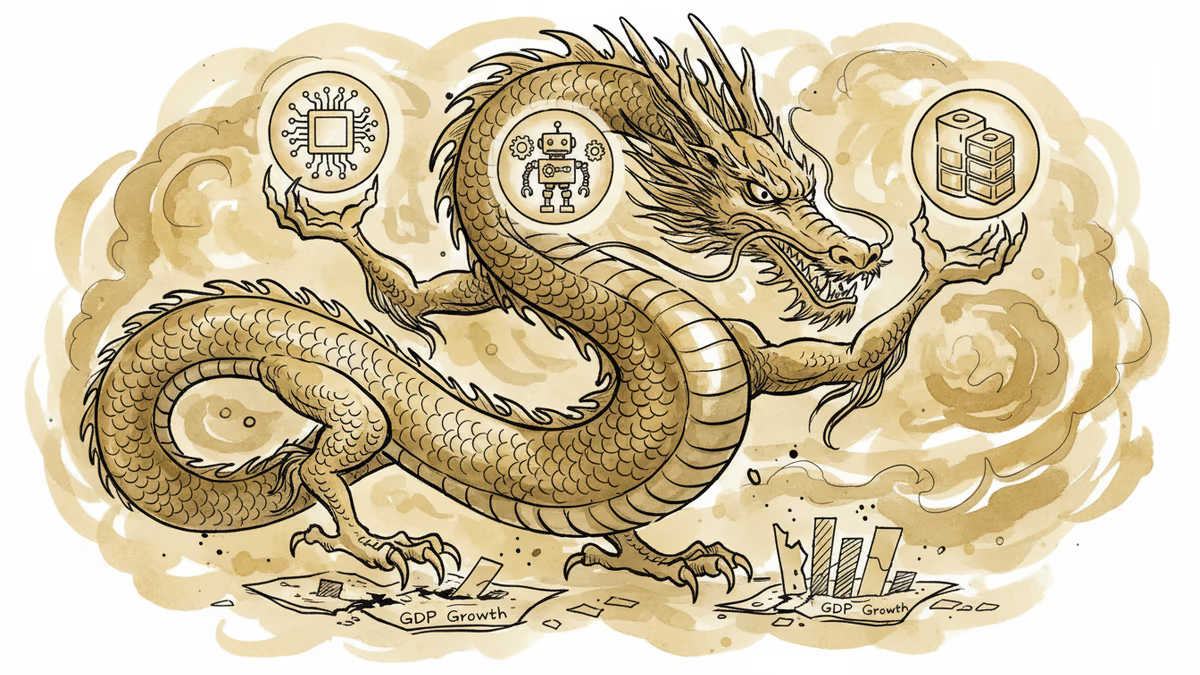
China unveils its lowest GDP growth target ever at 4.5-5% while doubling down on technology investments. What this shift means for global markets and competition.

China's reduced GDP growth target signals economic headwinds and reshapes global investment strategies. What it means for markets worldwide.
China's consumer prices hit a three-year low in April 2026. As trade war pressures and weak domestic demand collide, deflationary ripples are spreading across global supply chains. Here's what it means for your investments and industries.
Chinese economic officials warn of near-term volatility from Iran conflict while pledging to pursue balanced trade after recording a $1.2 trillion surplus, raising questions about policy credibility.
China unveils its lowest GDP growth target ever at 4.5-5% while doubling down on technology investments. What this shift means for global markets and competition.
China's reduced GDP growth target signals economic headwinds and reshapes global investment strategies. What it means for markets worldwide.
Thoughts
Share your thoughts on this article
Sign in to join the conversation