
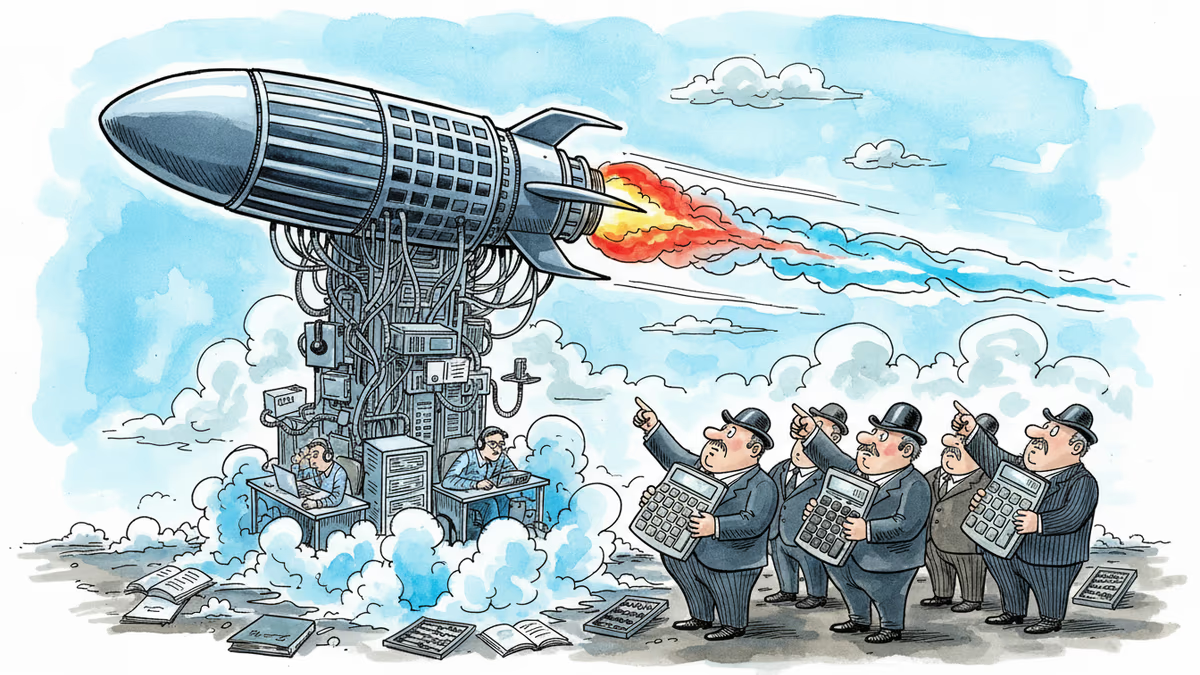
The $10M ARR in 3 Months Phenomenon is Real
Stripe's 2025 report reveals AI startups are hitting $10M ARR twice as fast, with 20% charging customers within 30 days of launch. The startup playbook is being rewritten in real-time.
Double the startups hit $10 million ARR in three months compared to 2024. 20% charge their first customer within 30 days of launch, up from 8% in 2020. The startup math has fundamentally changed.
Stripe's annual report, released Tuesday, confirms what Silicon Valley has been whispering: AI has created a new breed of hyper-growth companies. The 2025 startup cohort grew 50% faster than those starting in 2024, with 57% launching outside the United States. More than half of Stripe Atlas formations—up 41% year-over-year—are moving from incorporation to revenue at unprecedented speed.
The social media boasts about "bootstrapping to $10M ARR being easier than building a VC-backed unicorn" and "AI-native startups hitting $10M ARR with three people" now have data to back them up.
The Three-Person $10M Company
What used to take three years now happens in three months. AI tools have collapsed development cycles, global distribution platforms have eliminated geographic barriers, and cloud infrastructure has made scaling almost frictionless. The minimum viable product (MVP) isn't so minimum anymore—it's often a fully functional service from day one.
This isn't just about faster coding or cheaper servers. It's about fundamentally different unit economics. When a three-person team can serve thousands of customers without hiring customer support, the traditional startup cost structure breaks down.
The VC Paradox

Venture capitalists publicly emphasize "durable growth over ultra-speedy growth." They want low churn rates and sticky recurring revenue. But privately, they're chasing the rocket ships. In a market where startups can demonstrate product-market fit in months rather than years, the pressure to show rapid traction has intensified.
This creates a paradox: VCs say they value sustainability, but fund based on velocity. Startups that can't show exponential growth curves within the first quarter risk being overlooked, regardless of their long-term potential.
The Global Arbitrage
With 57% of new startups launching outside the US, we're seeing geographic arbitrage at scale. A developer in Eastern Europe or Southeast Asia can build for the US market from day one, accessing the same tools, platforms, and customer base as their Silicon Valley counterparts—but at a fraction of the cost.
This isn't just about labor arbitrage. Different markets have different risk tolerances for new technologies. What might take months to gain adoption in conservative enterprise markets can find immediate traction in more experimental regions.
The Sustainability Question
Speed doesn't guarantee staying power. The companies celebrating $10M ARR in three months face a different challenge: proving they can maintain that growth rate. Historical data suggests that companies achieving extreme early growth often struggle with the next phase of scaling.
The question isn't whether this phenomenon is real—Stripe's data confirms it is. The question is whether these hyper-growth companies can build the operational foundation and market position necessary for long-term success.
Authors
Related Articles

All 11 of xAI's original co-founders have now left Elon Musk's AI startup. With the company absorbed into SpaceX and declared 'rebuilt from foundations,' what does this mean for Grok—and for Musk's AI ambitions?
Google Cloud's global startup chief warns against two once-hot AI business models. Why LLM wrappers and AI aggregators are hitting turbulence, and what separates the survivors from the casualties.

A new framework reveals the true commercial ambitions of AI foundation model companies, from OpenAI's billions to research labs that prioritize science over profit.

Lux Capital closes its largest fund ever at $1.5 billion for defense and frontier tech, despite a 10-year low in VC activity. Analyzing the rise of Anduril and AI investments.
All 11 of xAI's original co-founders have now left Elon Musk's AI startup. With the company absorbed into SpaceX and declared 'rebuilt from foundations,' what does this mean for Grok—and for Musk's AI ambitions?
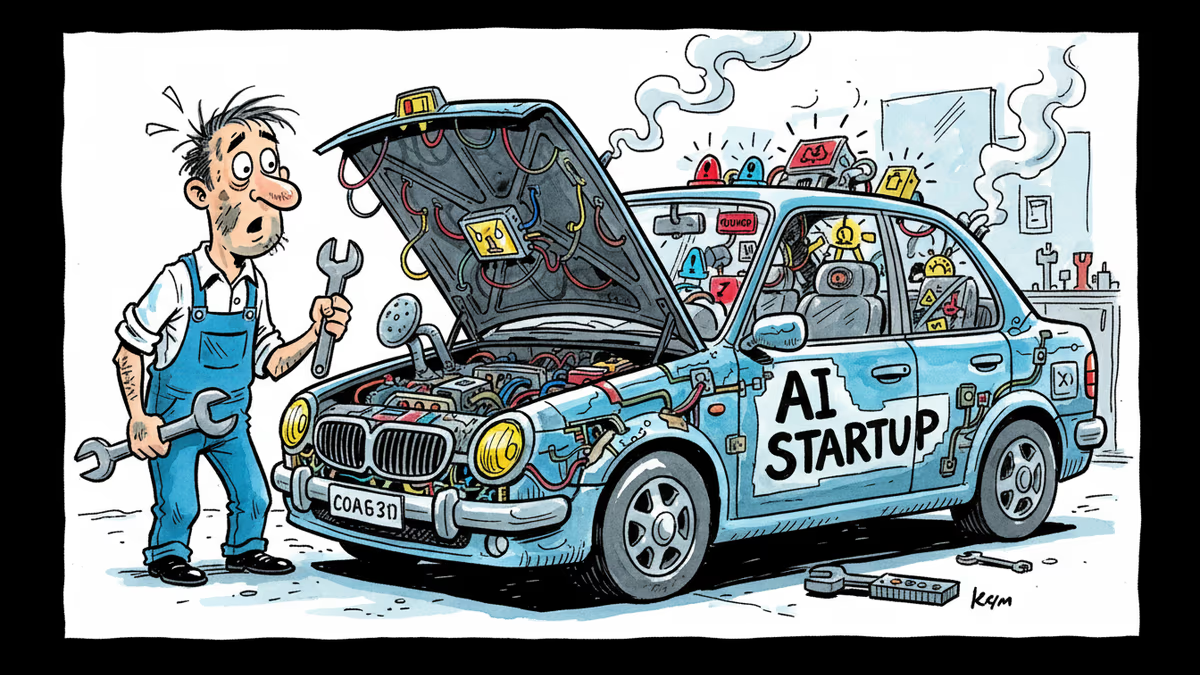
Google Cloud's global startup chief warns against two once-hot AI business models. Why LLM wrappers and AI aggregators are hitting turbulence, and what separates the survivors from the casualties.
A new framework reveals the true commercial ambitions of AI foundation model companies, from OpenAI's billions to research labs that prioritize science over profit.
Lux Capital closes its largest fund ever at $1.5 billion for defense and frontier tech, despite a 10-year low in VC activity. Analyzing the rise of Anduril and AI investments.
Thoughts
Share your thoughts on this article
Sign in to join the conversation