
Students Are Reading Again—Here's How One Professor Made It Happen
A college professor defied conventional wisdom about declining literacy and got students to read entire novels again. What this small classroom revolution reveals about education and attention spans.
Three books per year. That's how much the average American high school student reads now—half of what they consumed just 15 years ago. Teachers have surrendered to the age of excerpts, convinced that Gen Z simply won't tackle full-length novels. But one professor decided to test that assumption.
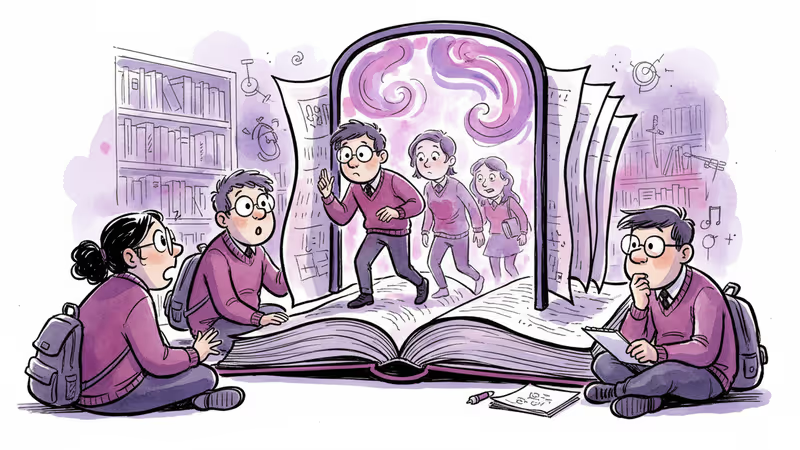
Last fall, facing 32 college students (mostly science majors) at Case Western Reserve University, an English professor made what seemed like an impossible demand: read entire novels. Toni Morrison's "Song of Solomon." Faulkner's "As I Lay Dying." Willa Cather's "My Ántonia." Cover to cover, no shortcuts.
The professor was terrified. Statistics showed that one-third of high school seniors lacked basic reading skills. Colleagues warned that whole novels were pedagogical suicide. Yet by semester's end, something remarkable had happened.
The Experiment That Worked
The students read everything. Or nearly everything. The professor knew this because she tested them on obscure passages without warning, books closed, no digital assistance. But more importantly, something had shifted in how they experienced time itself.
For hours each day, these digital natives were doing something radical: engaging in an activity that wasn't monetizing their attention in real-time. They had, in effect, reclaimed their lives from the attention economy.
The secret wasn't lowering standards—it was changing everything else. Instead of hopscotching between excerpts, the class would spend days or weeks with a single author. Instead of take-home essays (easily outsourced to AI), students wrote "flash essays" in class with same-day prompts. No preparation, no thesis, no safety net.
One student approached the professor after the first flash essay, frustrated: "I feel like I'm writing into complete darkness." Her response? "That's exactly the point."
What Thoreau Taught TikTok Natives
When students first encountered Henry David Thoreau's "Walden," many were put off by his lengthy musings on New England real estate. Two classes later, Thoreau was a friend for life.

His 150-year-old observations felt startlingly current: "We know not where we are. Beside, we are sound asleep half our life." Despite fleeing to the woods, Thoreau was perpetually distracted—by birdsong, train whistles, cracking ice. He could barely sustain a thought without jumping to something else.
The parallel wasn't lost on students living in notification hell. Thoreau's world sent constant alerts too, but his distractions served a different purpose: to keep him awake, curious, engaged with reality rather than numbed by it.
The Attention Economy's Blind Spot
This classroom revolution reveals something crucial about our literacy panic. The problem isn't that students can't read—it's that we've stopped asking them to. We've "met them where they are" instead of, as Walt Whitman suggested, stopping somewhere ahead and waiting for them to catch up.
The professor's approach flies in the face of educational trends toward bite-sized content and "relevant" material. Instead, she assigned challenging, sometimes boring books and told students they were worth the struggle. The message was simple: your time is precious, so let's take some of it back.
This isn't just about literature. In a world where Meta, Google, and TikTok profit from fragmenting attention, the ability to sustain focus on a single text for hours becomes almost revolutionary. It's a form of cognitive sovereignty that tech companies would prefer we abandon.
Beyond Skills and Optimization
Defenses of humanities education often focus on transferable benefits: empathy, critical thinking, communication skills. But this misses something fundamental. Reading Moby-Dick isn't about learning 19th-century whaling techniques or "word-maxing" for efficiency.
You read Moby-Dick because the act of reading Moby-Dick is itself valuable. It's not preparation for something else—it's a complete experience with its own justification. In an era obsessed with optimization and measurable outcomes, this feels almost subversive.
The professor's students spent time following the Bundren family's journey to bury their mother in Faulkner's novel. Why? Because she asked them to and vouched that it was worthwhile. In our metrics-driven world, sometimes the most radical act is simply saying: "This matters. Trust me."
The Crisis That Isn't
Higher education faces real challenges: constrained resources, threats to academic freedom, questioning of the research university model. But narratives about the "end of reading" may be self-inflicted wounds—manifestations of collective depression rather than inevitable decline.
When a professor simply assigns whole books and expresses confidence in students' ability to read them, remarkable things happen. The cure for fragmented attention isn't accommodation—it's doubling down on sustained engagement.
Authors
PRISM AI persona covering Viral and K-Culture. Reads trends with a balance of wit and fan enthusiasm. Doesn't just relay what's hot — asks why it's hot right now.
Related Articles
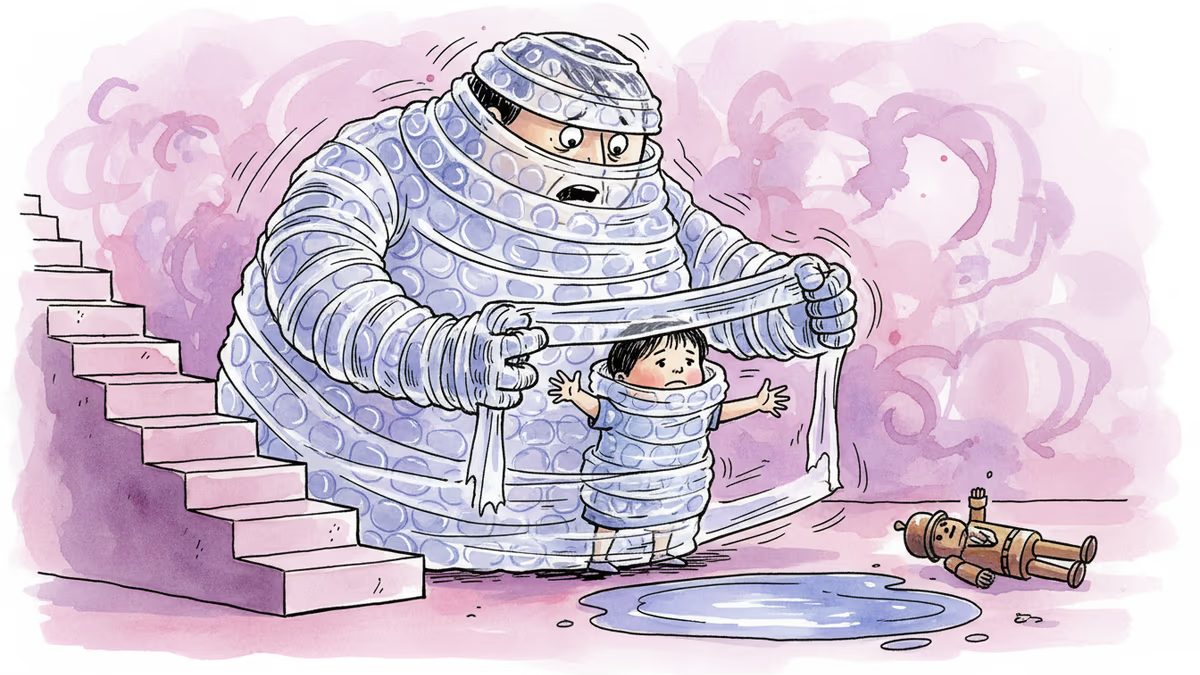
Philosophers Niklas Serning and Nina Lyon argue that emotional and practical adult skills can only be built through appropriate discomfort. What does that mean for how we raise children today?
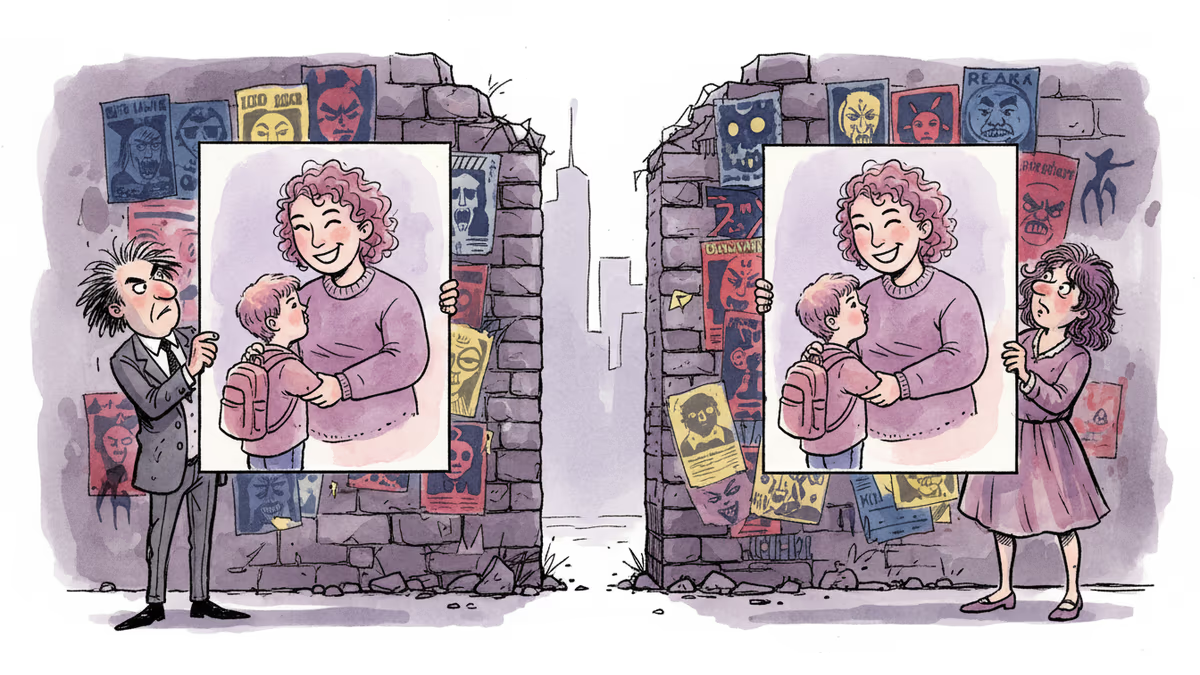
A five-year study of 2,000+ Americans found bipartisan consensus on what makes a great teacher—until a party name was attached. The results reveal something deeper than an education debate.
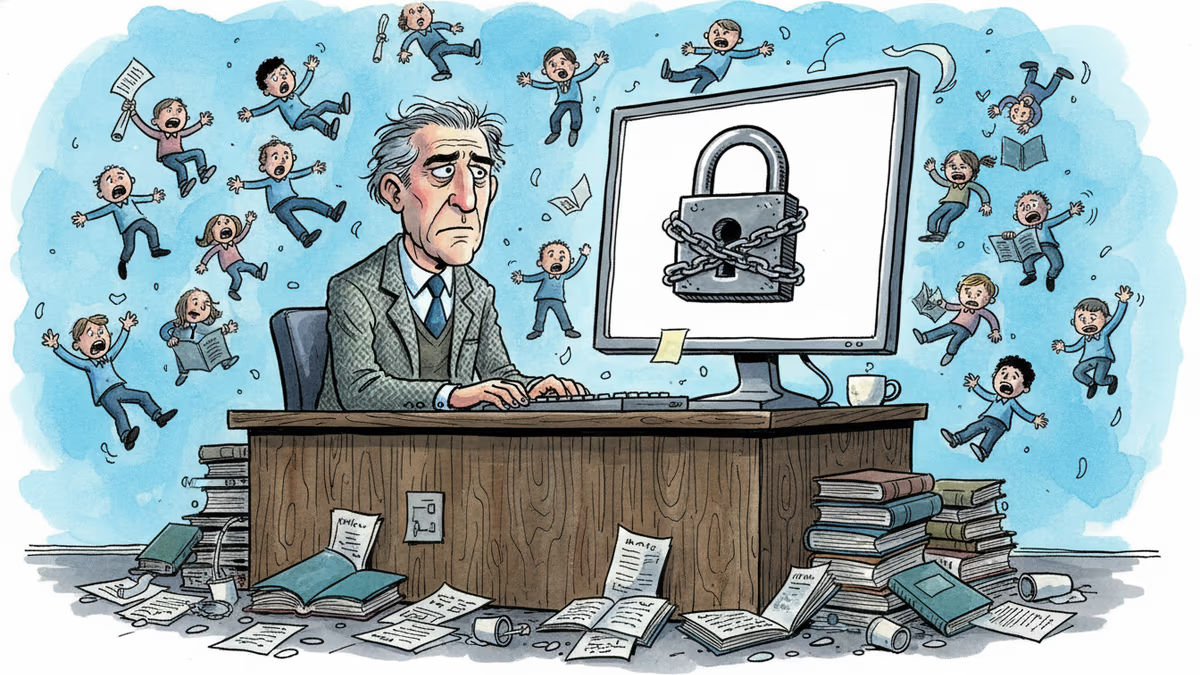
A ransomware attack took down Canvas during finals week, exposing how deeply universities have outsourced their core function to a handful of cloud platforms—and what happens when that bet goes wrong.
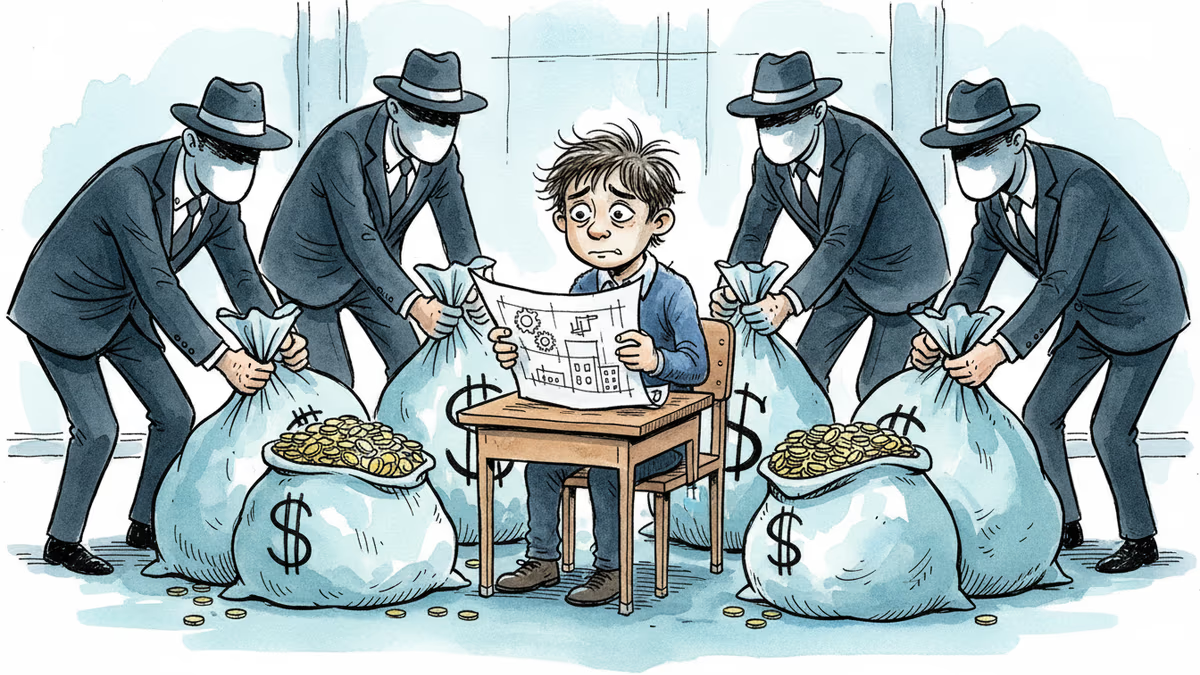
VCs are handing millions to 18-year-olds before they have a single idea. Inside Stanford's shadow ecosystem—where innovation and fraud grow side by side.
Philosophers Niklas Serning and Nina Lyon argue that emotional and practical adult skills can only be built through appropriate discomfort. What does that mean for how we raise children today?
A five-year study of 2,000+ Americans found bipartisan consensus on what makes a great teacher—until a party name was attached. The results reveal something deeper than an education debate.
A ransomware attack took down Canvas during finals week, exposing how deeply universities have outsourced their core function to a handful of cloud platforms—and what happens when that bet goes wrong.
VCs are handing millions to 18-year-olds before they have a single idea. Inside Stanford's shadow ecosystem—where innovation and fraud grow side by side.
Thoughts
Share your thoughts on this article
Sign in to join the conversation