
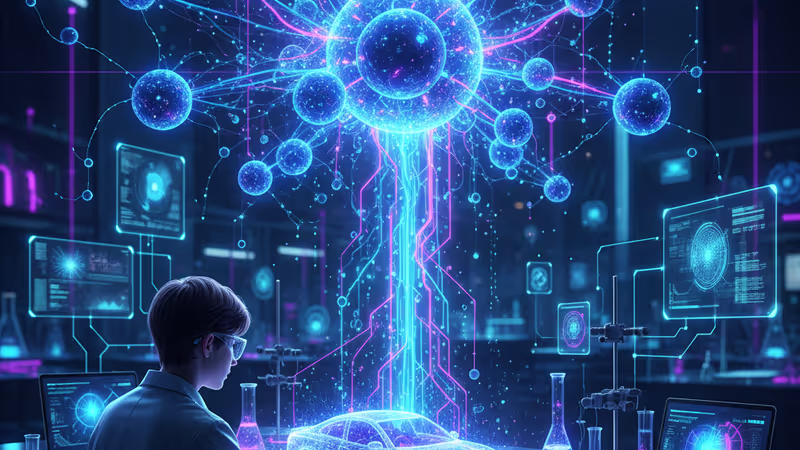
MIT BioMaker Space Engineering: Building Chemical Cars and Community
Discover the MIT BioMaker Space engineering experience. Students design chemically powered cars while learning collaboration and advanced biological techniques in a hands-on lab environment.
Engineering is getting 'squishy' at MIT. In the basement of Building 26, students aren't just reading textbooks—they're building chemically powered cars from scratch using biological systems.
Hands-On MIT BioMaker Space Engineering
Jaden Chizuruoke May ’29 and his teammates are currently tackling a unique challenge in the Huang-Hobbs BioMaker Space. As part of the class "Hands-On Engineering: Squishy Style Making with Biology and Chemistry," taught by Justin Buck, they've designed a model car powered by a layered electrochemical battery.

The lab isn't just for experts. It's a welcoming hub for novices, offering workshops in everything from CRISPR to DNA origami. For May, the most valuable part is the freedom to figure out how to tackle complex tasks independently after receiving initial training.
More Than Just Lab Work
Beyond the technical specs of chemical batteries, the makerspace serves as a social pillar. "The emphasis placed on teamwork is what makes the class feel both welcoming and exciting," May says. It's where he made some of his first friends at MIT, proving that the best engineering happens through collaboration.
Authors
Related Articles

OpenAI introduces ChatGPT Health, a siloed space for medical inquiries with Apple Health integration. Learn how OpenAI plans to protect your data while improving healthcare access.
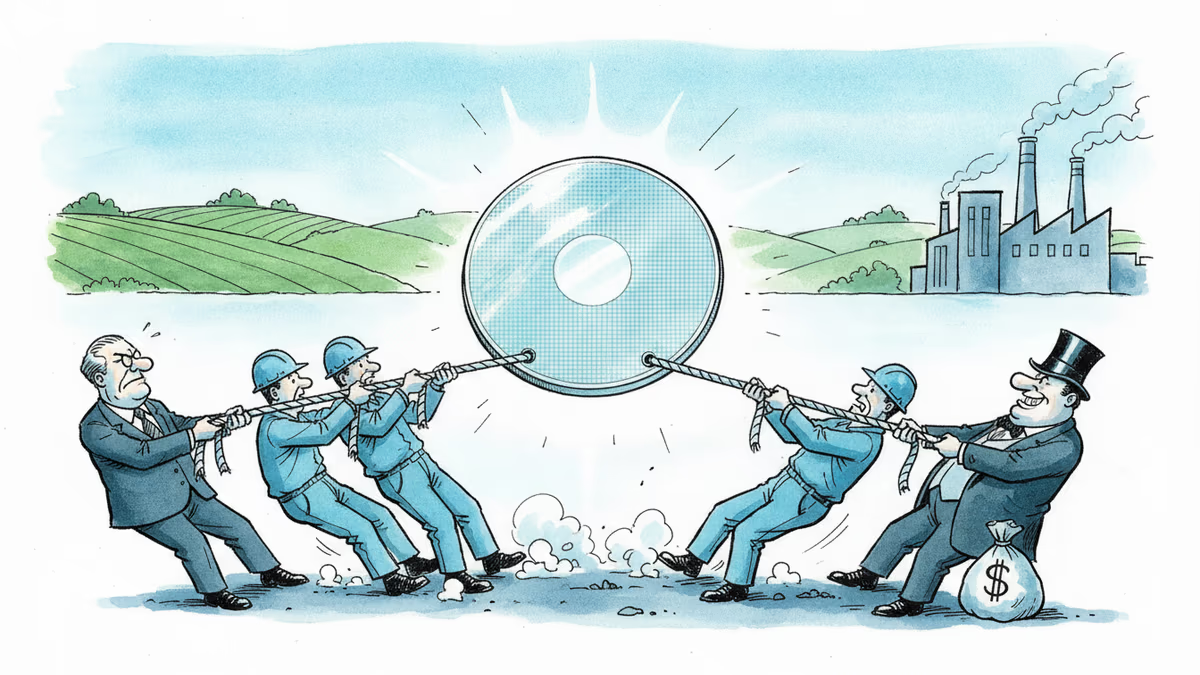
Samsung Electronics' union branch revealed that 84% of survey respondents oppose the government's roughly $290 billion (₩400 trillion) semiconductor megaproject in Gwangju. Government, management, the union and shareholders are all reading the same national project in sharply different ways.
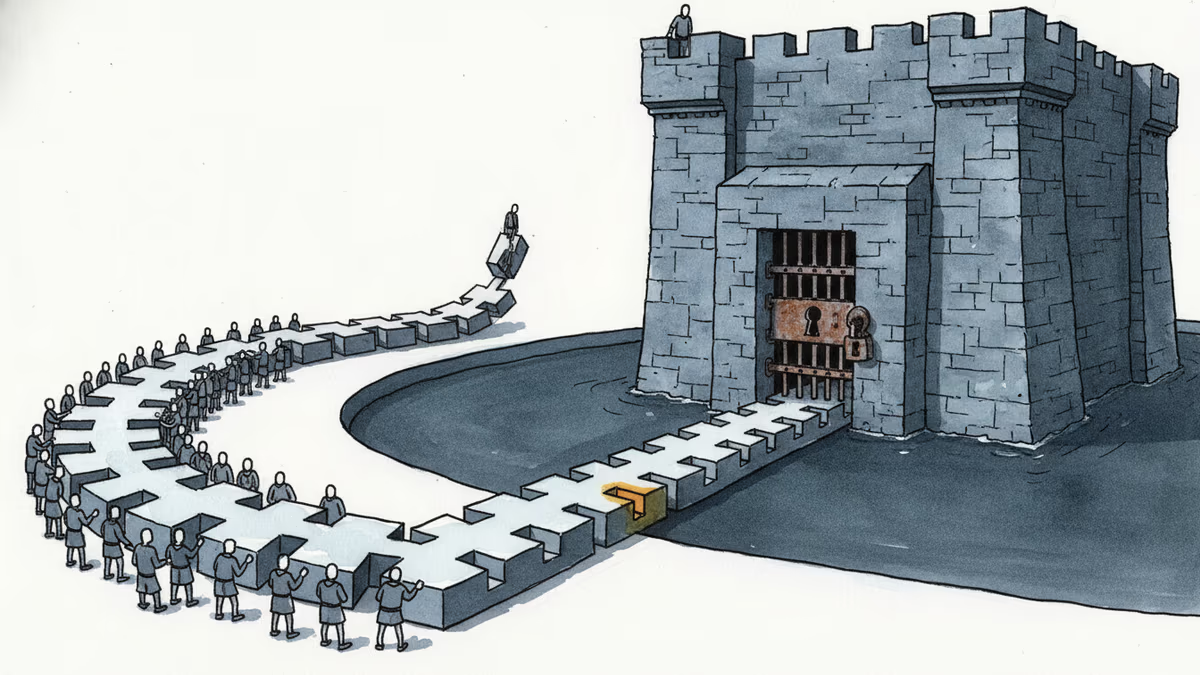
Nvidia shipped roughly a billion RISC-V cores in 2024, then announced it would run CUDA on the open standard. We break down how royalty-free instruction sets and open software stacks are trying to route around CUDA's lock-in. Part 2 of the Semiconductor Sovereignty series.
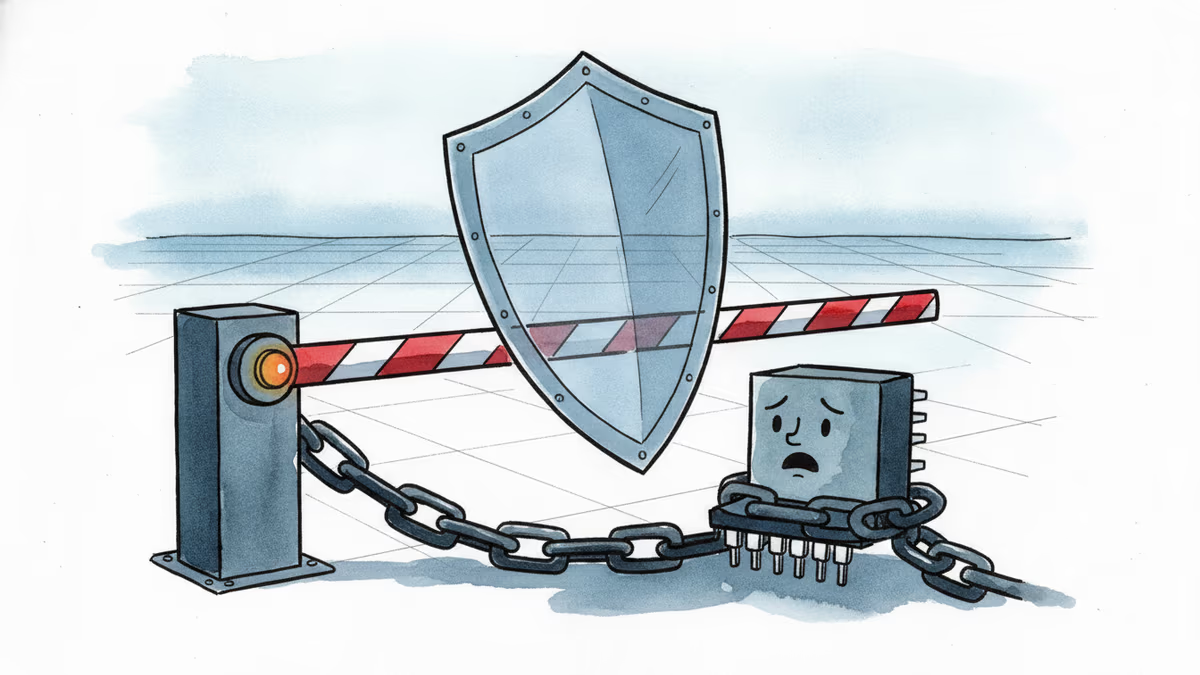
US AI-chip export controls split into three layers in the first half of 2026 — January easing, a May crackdown on circumvention, and a pending bill. Nvidia erased China from its guidance and still posted a record $81.6 billion quarter. A look at the export policy that both shields and cages it.
OpenAI introduces ChatGPT Health, a siloed space for medical inquiries with Apple Health integration. Learn how OpenAI plans to protect your data while improving healthcare access.
Samsung Electronics' union branch revealed that 84% of survey respondents oppose the government's roughly $290 billion (₩400 trillion) semiconductor megaproject in Gwangju. Government, management, the union and shareholders are all reading the same national project in sharply different ways.
Nvidia shipped roughly a billion RISC-V cores in 2024, then announced it would run CUDA on the open standard. We break down how royalty-free instruction sets and open software stacks are trying to route around CUDA's lock-in. Part 2 of the Semiconductor Sovereignty series.
US AI-chip export controls split into three layers in the first half of 2026 — January easing, a May crackdown on circumvention, and a pending bill. Nvidia erased China from its guidance and still posted a record $81.6 billion quarter. A look at the export policy that both shields and cages it.
Thoughts
Share your thoughts on this article
Sign in to join the conversation