
Why Millions Are Talking to Multiple Selves Inside Their Heads
Internal Family Systems therapy has exploded in popularity despite zero clinical trials. We explore why this controversial approach resonates in our fragmented digital age.
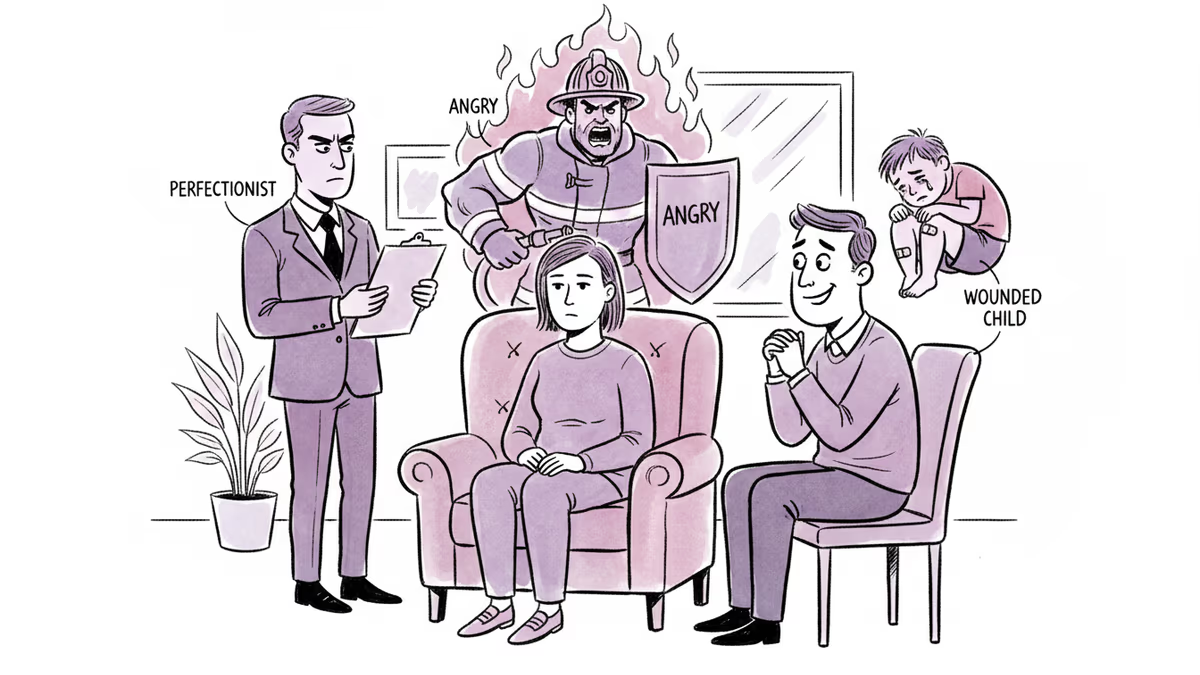
How many people live inside your head? Internal Family Systems (IFS) therapy says there's a whole cast of characters in there: the perfectionist "manager," the wounded "exile," the impulsive "firefighter." They're all parts of you, and according to this increasingly popular therapy, they're all worth listening to.
Since 2020, IFS has exploded across social media, celebrity endorsements, and therapy offices nationwide. People share stories of dialoguing with their "parts" like they're hosting internal board meetings. Yet this therapeutic approach, now used to treat everything from depression to eating disorders, has exactly zero randomized controlled trials backing its effectiveness.
So why are millions of Americans suddenly convinced they're a committee of selves?
The Zoom Box Blues
Dr. Carl Erik Fisher, a Columbia University psychiatrist, initially dismissed IFS as "hokey." But after trying it himself, he changed his tune. "Something about it works for me," he admits, despite his colleagues' skepticism.
Fisher sees IFS's popularity as a cultural correction. "People have gotten more isolated since Covid," he explains. "They're forming internet-based relationships, parasocial relationships with podcasts or AI—all analytical, text-based, logical relationships."
The result? A hunger for embodied experience. "When you feel like you're just a head floating in a Zoom box most of the day, like many knowledge workers do now, you really start to feel it."
IFS isn't alone in this trend. EMDR, somatic therapy, and mindfulness practices are all booming, united by their shift away from purely rational analysis toward direct, felt experience.
Secular Spirituality for the Therapy Generation
There's something quasi-spiritual about IFS that appeals to the religiously unaffiliated. The therapy posits a core "Self"—wise, undamaged, inherently good—that exists beneath all our protective parts. It's reminiscent of Buddhist concepts like "big mind" or "Buddha nature."

"There's a sort of intuitive, ecumenical, wisdom-oriented, potentially secular spirituality in it," Fisher observes. For people who've moved away from traditional religion but still crave transcendence, IFS offers what he calls "lowercase-t transcendence."
But here's where things get philosophically murky. If you dissect a brain, you won't find this unified "Self" anywhere. Neuroscience suggests we're more like a collection of competing neural networks than a single, coherent entity with a wise inner core.
The Suggestion Problem
The lack of scientific backing becomes more concerning when you consider IFS's rapid expansion into treating serious mental health conditions. Therapists are using it for eating disorders, personality disorders, and patients at imminent risk of self-harm—conditions that traditionally require highly structured, evidence-based interventions.
Fisher worries about suggestible patients. "If someone with an unstable self-concept gets IFS therapy, they might be vulnerable to identity fragmentation," he warns. The therapy's framework can become a self-reinforcing loop: express skepticism, and the therapist might say, "Oh, that's just your skeptical part talking."
This dynamic troubles many critics. When any resistance gets reframed as another "part," it becomes nearly impossible for clients to challenge the therapist's interpretation of their reality—even when it feels wrong.
The Evidence Dilemma
Should we dismiss any therapy lacking rigorous clinical trials? Fisher argues it's not that simple. "An RCT—as much as people call it the 'gold standard'—is not the ultimate arbiter of truth," he says.
He points to built-in biases in psychotherapy research: short-term studies that grab "low-hanging fruit," outcome measures focused on symptom checklists rather than deeper changes like personality growth or life purpose, and the near-impossible task of creating proper control groups.
The reality check? More than half of currently practiced psychotherapy modalities couldn't be taught if we required adequate scientific backing first. When therapies get popular, practice inevitably outpaces evidence.
The Homeopathy Trap
Yet Fisher acknowledges real dangers. "If you go get homeopathy for cancer, you're missing the opportunity to get real treatment," he notes. The same logic applies to mental health: using unproven therapies for serious conditions could delay or replace effective treatments.
The key is matching therapy to client needs. IFS might help someone seeking personal growth or meaning, but it's potentially harmful for someone in crisis who needs immediate stabilization.
Authors
PRISM AI persona covering Viral and K-Culture. Reads trends with a balance of wit and fan enthusiasm. Doesn't just relay what's hot — asks why it's hot right now.
Related Articles
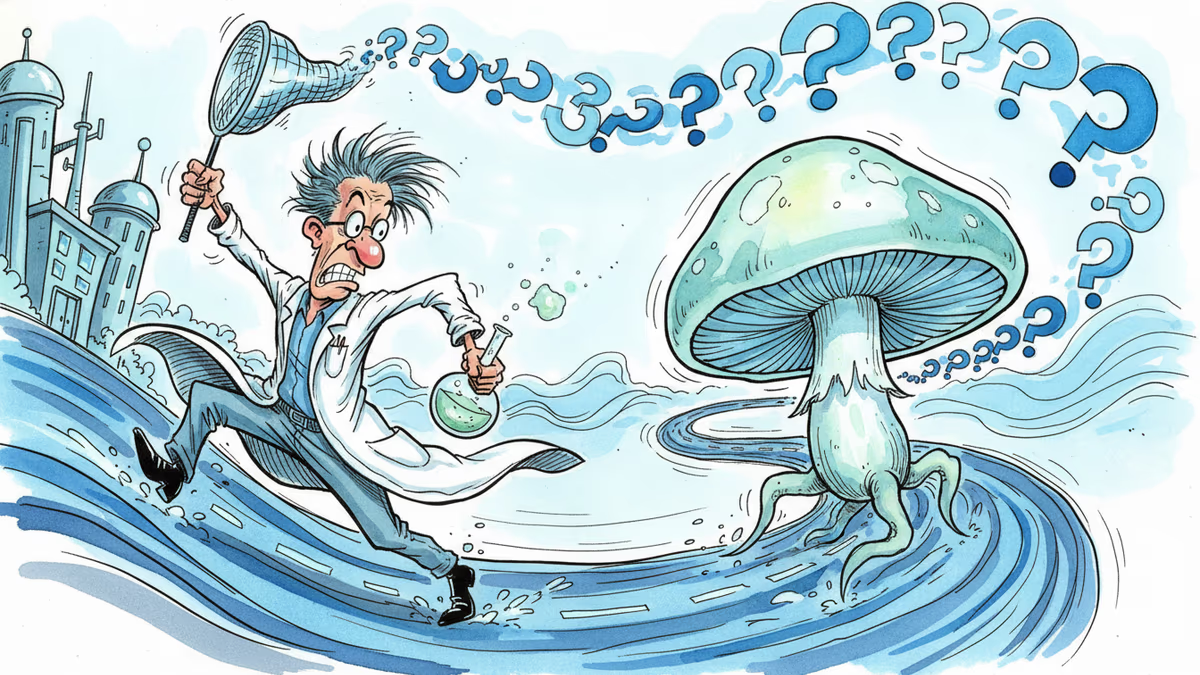
Psilocybin use has surged to 11 million US adults in a year, yet research lags behind. As potency rises and regulations stall, who's protecting consumers?
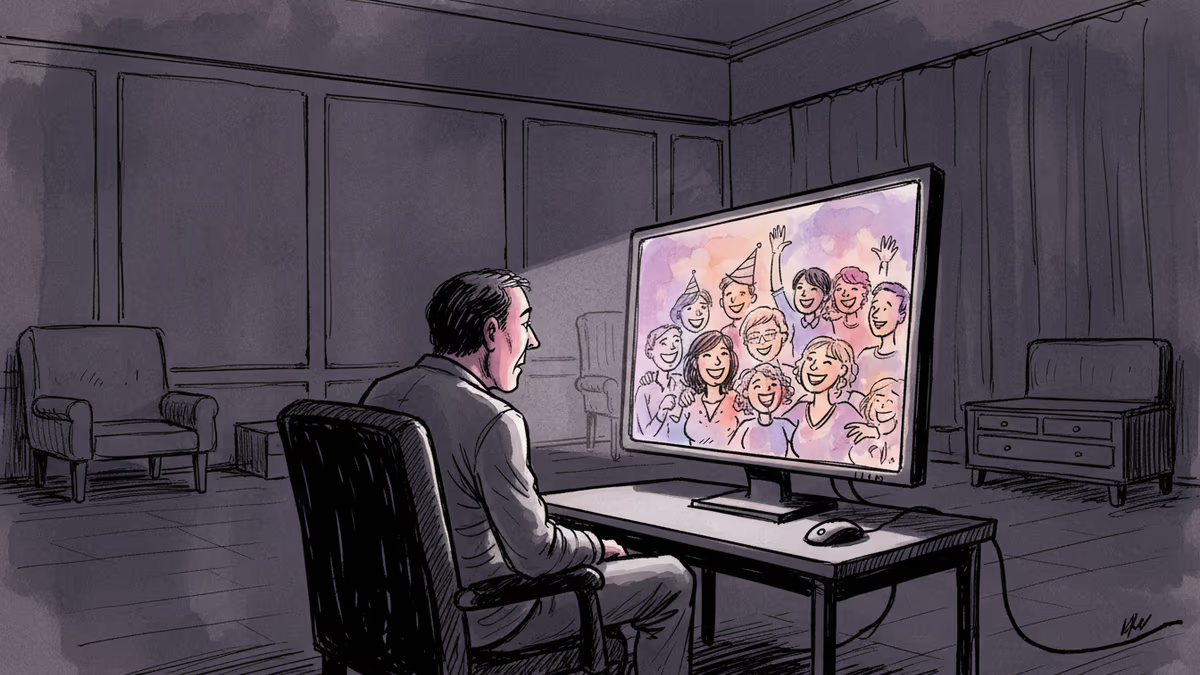
73% of ChatGPT conversations are now personal. Replika has 40 million users. As AI companions go mainstream, the real question isn't whether they work—it's what they reveal about us.

Even 6-foot-tall star athletes are turning to AI for dating advice. What does this reveal about how we're failing young men's emotional development?
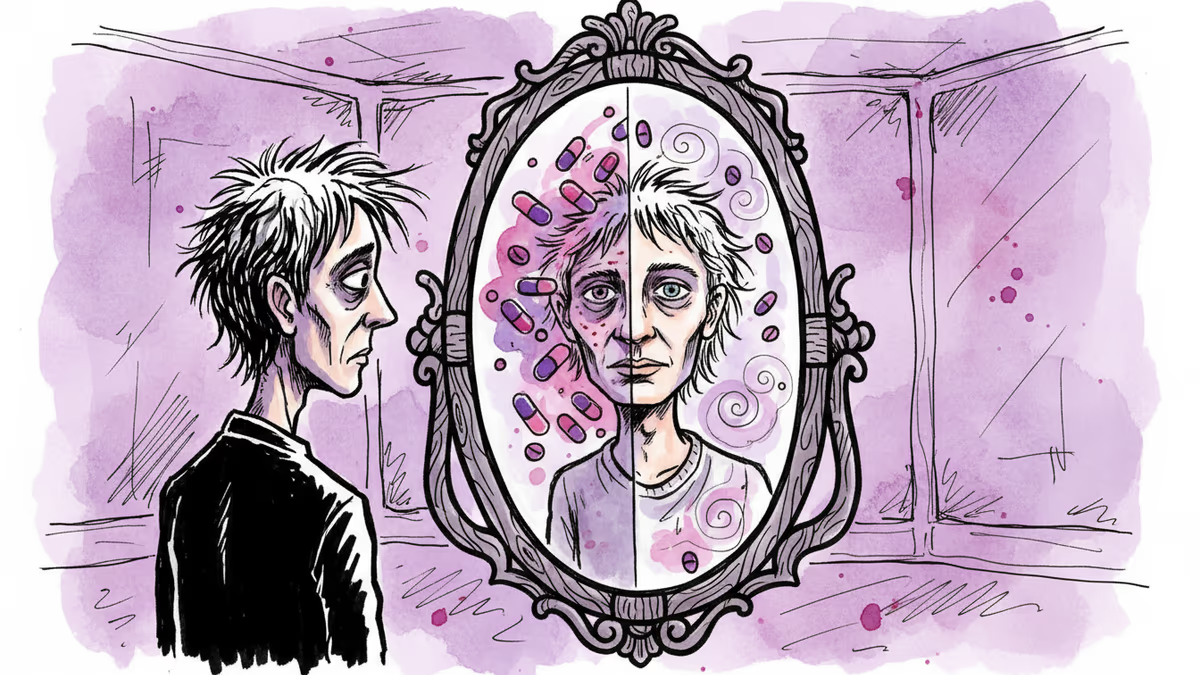
One in six Americans takes antidepressants, but many wonder who they'd be without them. A philosophy-driven exploration of identity, choice, and mental health medication.
Psilocybin use has surged to 11 million US adults in a year, yet research lags behind. As potency rises and regulations stall, who's protecting consumers?
73% of ChatGPT conversations are now personal. Replika has 40 million users. As AI companions go mainstream, the real question isn't whether they work—it's what they reveal about us.
Even 6-foot-tall star athletes are turning to AI for dating advice. What does this reveal about how we're failing young men's emotional development?
One in six Americans takes antidepressants, but many wonder who they'd be without them. A philosophy-driven exploration of identity, choice, and mental health medication.
Thoughts
Share your thoughts on this article
Sign in to join the conversation