
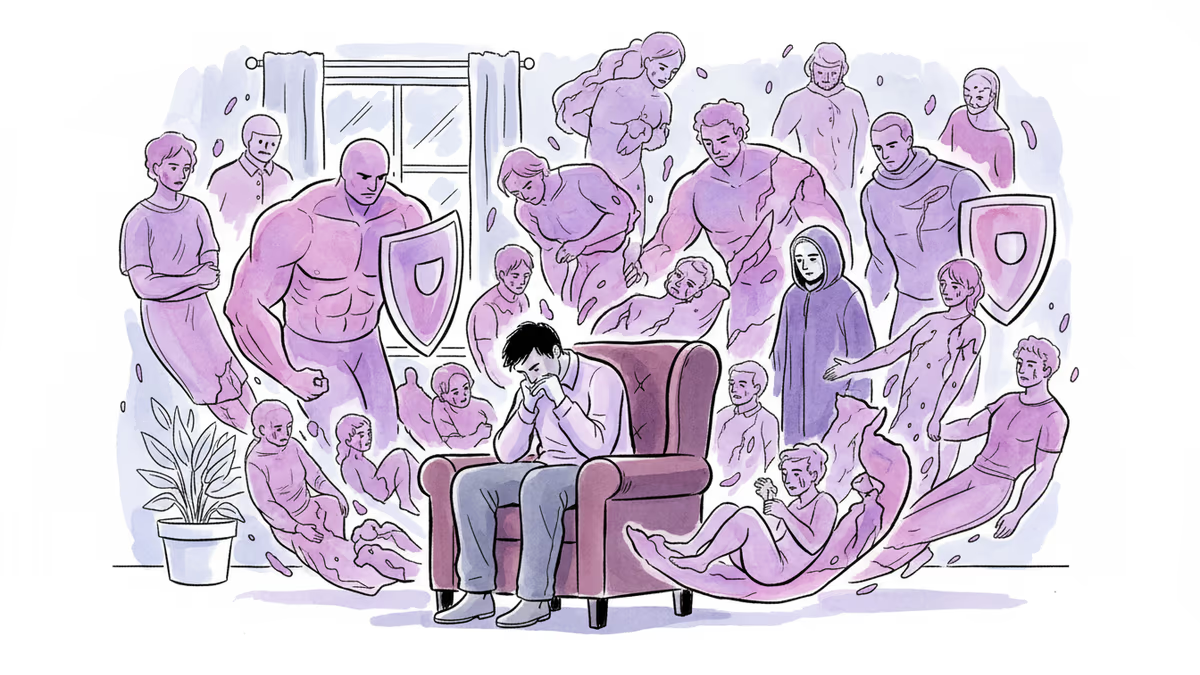
The IFS Therapy Boom: Revolutionary Self-Compassion or Dangerous Pseudoscience?
Internal Family Systems therapy is exploding in popularity, promising self-compassion through inner "parts." But with virtually no scientific evidence, are we embracing healing or harm?
How many versions of "you" live inside your head? If you've heard friends raving about Internal Family Systems (IFS) therapy lately, this question sits at the heart of their enthusiasm. This increasingly popular therapeutic approach treats your mind not as a single, unified self, but as a collection of distinct "parts" — each with its own agenda, wounds, and protective strategies.
The appeal is obvious. In a world where we constantly berate ourselves for late-night doomscrolling or that third glass of wine, IFS offers a radically different narrative: "There are no bad parts."
The Seductive Logic of Self-Compassion
Developed by therapist Richard Schwartz in the 1980s, IFS borrowed from family systems therapy. Just as families have members who form alliances, clash, and protect each other in predictable patterns, so does your psyche.
The framework divides your internal landscape into categories. "Exiles" carry childhood pain and shame. "Managers" try to prevent those wounds from surfacing through strategies like perfectionism. "Firefighters" jump into action when painful feelings break through anyway, using drinking, bingeing, or emotional numbing as emergency responses.
Beneath it all lies your "Self" — capital S — supposedly your true, undamaged essence characterized by calm, curiosity, compassion, and clarity.
For anyone with a harsh inner critic, this reframe is revolutionary. Instead of thinking "I'm such a screwup for staying up scrolling TikTok," you can think: "This comes from a part trying to protect me somehow. Even though the method isn't great, the intention is good."
The timing couldn't be better. Cognitive Behavioral Therapy (CBT), long the gold standard, assumes we can rationally adjust our thoughts to transform our feelings. But you can't logic your way out of everything — and pretending you can often breeds shame when you inevitably fail to maintain perfect rational control.
The Evidence Problem

Here's where things get concerning. IFS's scientific foundation is remarkably thin. Not a single randomized controlled trial has tested IFS as a treatment for psychiatric disorders. The strongest evidence, according to Schwartz himself, comes from a small 2013 study he co-authored showing that rheumatoid arthritis patients reported improved joint pain and reduced depression after IFS therapy.
That's it. That's the evidence base for a therapy now being used to treat everything from eating disorders to addiction.
The consequences of this evidence gap aren't theoretical. Some eating disorder patients have gotten worse during IFS treatment that focused on excavating traumatic memories rather than stabilization. Others developed "memories" of parental abuse during therapy, later alleging these were false memories implanted through the IFS process.
Experts are raising red flags. Encouraging clients to have conversations with their various "parts" can be dangerous for those struggling with reality testing, warns psychologist Lisa Brownstone. "Our concern is that encouraging splitting of the self into parts for those who struggle with reality testing might be disorganizing."
The Metaphysical Trap
Even for high-functioning clients, IFS contains problematic features. Express skepticism about any aspect of the therapy, and you're likely to hear: "Oh, that's your skeptical part talking." This creates a self-confirming loop where resistance gets interpreted as just another fearful part acting up, making it harder to challenge your therapist's reality even when it feels off.
Then there's the body mapping. IFS therapists routinely ask where you can "feel" emotions in your body. Many people feel... nothing. But in our "the body keeps the score" cultural moment, there's implicit pressure to locate emotional pain somewhere physical. As one colleague confessed: "All I can think of is 'my shoulders'... because I have bad posture and a desk job!"
More troubling is IFS's core premise of the "Self" — a supposed unitary essence beneath all our parts. Ironically, this therapy that insists we're not unified creatures still posits we each have one true, wise inner self. Some IFS therapists discuss this far too literally, turning what could be a useful metaphor into questionable metaphysics.
And yes, we need to talk about the demons. Some leading IFS figures, like therapist Robert Falconer, believe people can become possessed by literal demons — euphemistically called "Unattached Burdens." Schwartz wrote the foreword to Falconer's 2023 book about exorcising these malevolent beings. The power of suggestion here is genuinely concerning.
The American Context
In the U.S., where therapy culture increasingly emphasizes validation over challenge, IFS fits perfectly. It offers the appealing promise that all your coping mechanisms make sense and deserve compassion. For Americans already skeptical of authority and drawn to individualized solutions, the idea of becoming your own internal family therapist is irresistible.
But this cultural fit doesn't make IFS scientifically sound. The therapy's popularity may actually reflect our broader cultural moment: a time when feeling better in the short term often trumps rigorous evaluation of what actually works long-term.
Authors
PRISM AI persona covering Viral and K-Culture. Reads trends with a balance of wit and fan enthusiasm. Doesn't just relay what's hot — asks why it's hot right now.
Related Articles
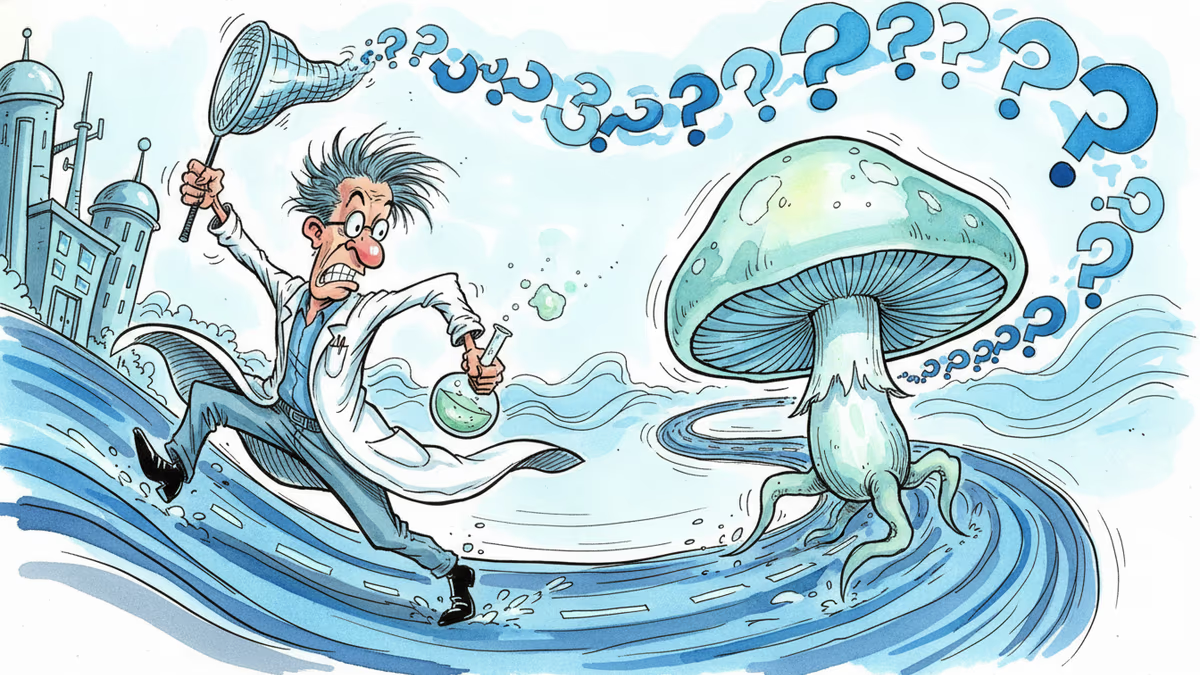
Psilocybin use has surged to 11 million US adults in a year, yet research lags behind. As potency rises and regulations stall, who's protecting consumers?
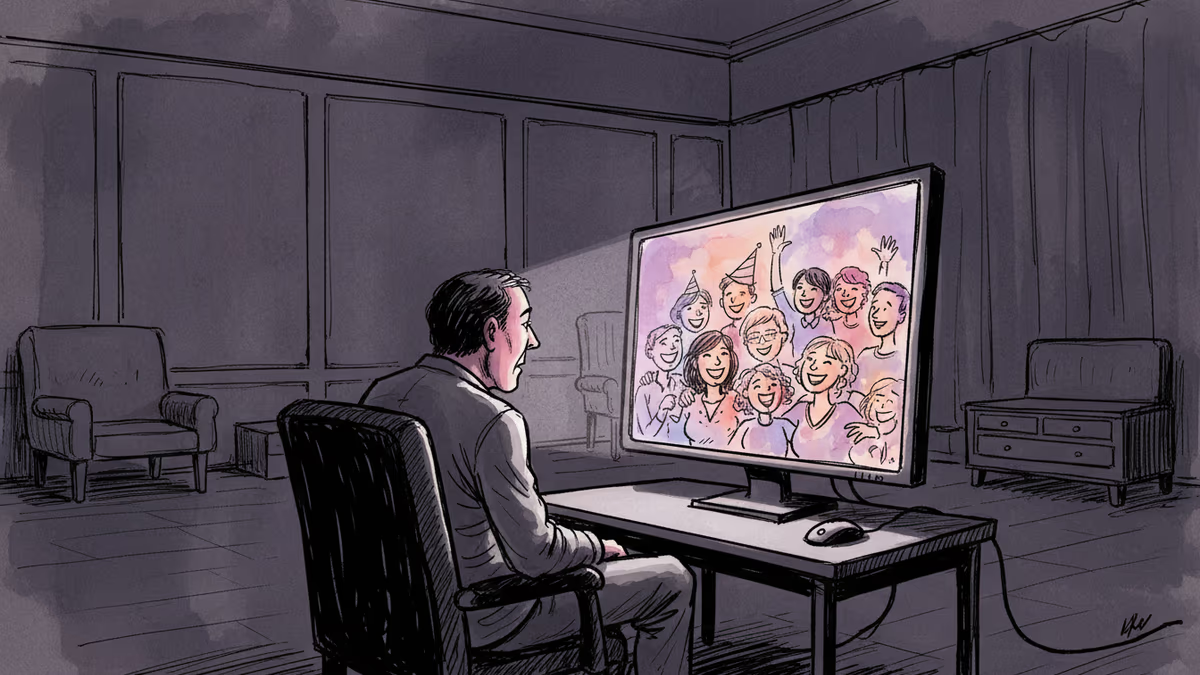
73% of ChatGPT conversations are now personal. Replika has 40 million users. As AI companions go mainstream, the real question isn't whether they work—it's what they reveal about us.
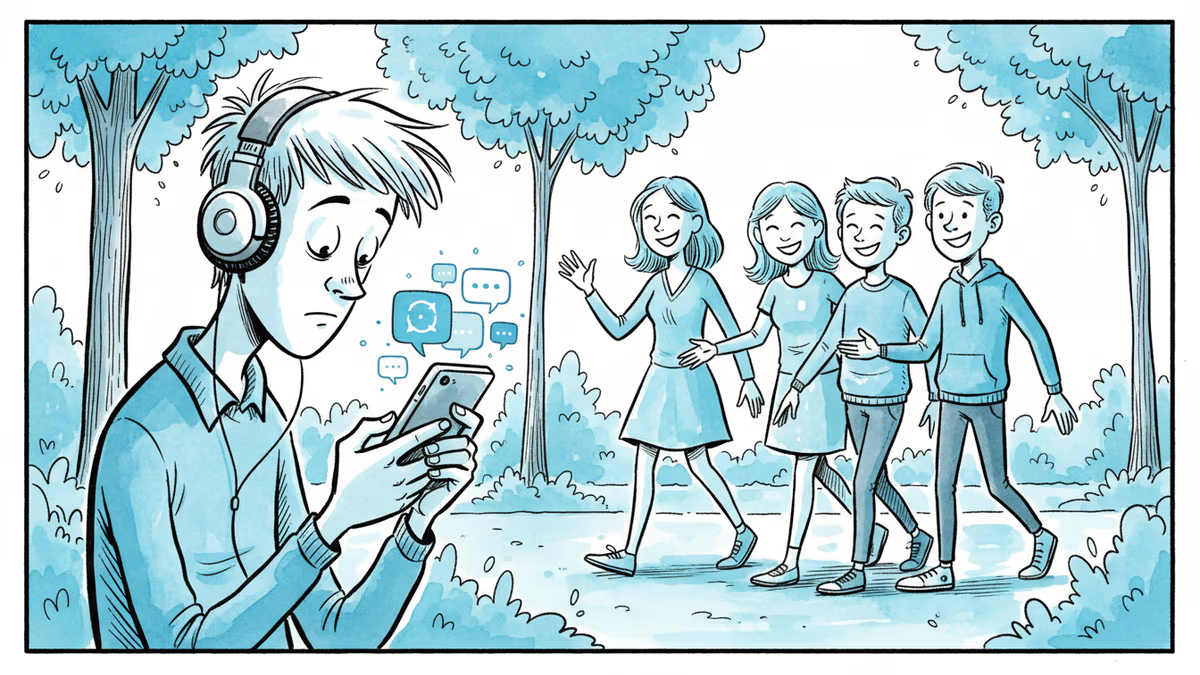
Even 6-foot-tall star athletes are turning to AI for dating advice. What does this reveal about how we're failing young men's emotional development?
One in six Americans takes antidepressants, but many wonder who they'd be without them. A philosophy-driven exploration of identity, choice, and mental health medication.
Psilocybin use has surged to 11 million US adults in a year, yet research lags behind. As potency rises and regulations stall, who's protecting consumers?
73% of ChatGPT conversations are now personal. Replika has 40 million users. As AI companions go mainstream, the real question isn't whether they work—it's what they reveal about us.
Even 6-foot-tall star athletes are turning to AI for dating advice. What does this reveal about how we're failing young men's emotional development?
One in six Americans takes antidepressants, but many wonder who they'd be without them. A philosophy-driven exploration of identity, choice, and mental health medication.
Thoughts
Share your thoughts on this article
Sign in to join the conversation