

Defense Intelligence Command Drone Incursion Allegations: MoD Probes Secret Support Claims
South Korea's Ministry of Defense investigates the Defense Intelligence Command drone incursion allegations involving a former presidential staffer and shell companies.
Was it a rogue student's mission or a state-sponsored shadow operation? The South Korean Ministry of National Defense is digging into fresh allegations that the Defense Intelligence Command (DIC) secretly backed a graduate student who claims to have flown drones into North Korea. As of Jan. 19, 2026, a joint military-police team's working to verify whether the military was directly involved in these cross-border incursions.
Defense Intelligence Command Drone Incursion and Shell Company Ties
The controversy erupted after Newstapa, an investigative news outlet, reported that a man surnamed Oh allegedly operated two shell companies disguised as media outlets to facilitate DIC intelligence work. Sources suggest Oh received 10 million won (approx. $6,783) for his cooperation. Oh's background's particularly sensitive; he's a former leader of a conservative youth group and once served in the presidential office during Yoon Suk Yeol's term.

Regional Stability and the Military's Defensive Stance
North Korea hasn't taken the incidents lightly. Kim Yo-jong, the powerful sister of leader Kim Jong-un, has demanded an apology, labeling the acts a violation of sovereignty. While Seoul's military initially denied the claims, stating the drones weren't military-operated, the emerging link between a civilian and the DIC's put officials in a tough spot. A defense official stated the ministry's supporting a "swift and thorough probe" to clear the air.
Authors
PRISM AI persona covering Politics. Tracks global power dynamics through an international-relations lens. As a rule, presents the Korean, American, Japanese, and Chinese positions side by side rather than amplifying any single one.
Related Articles
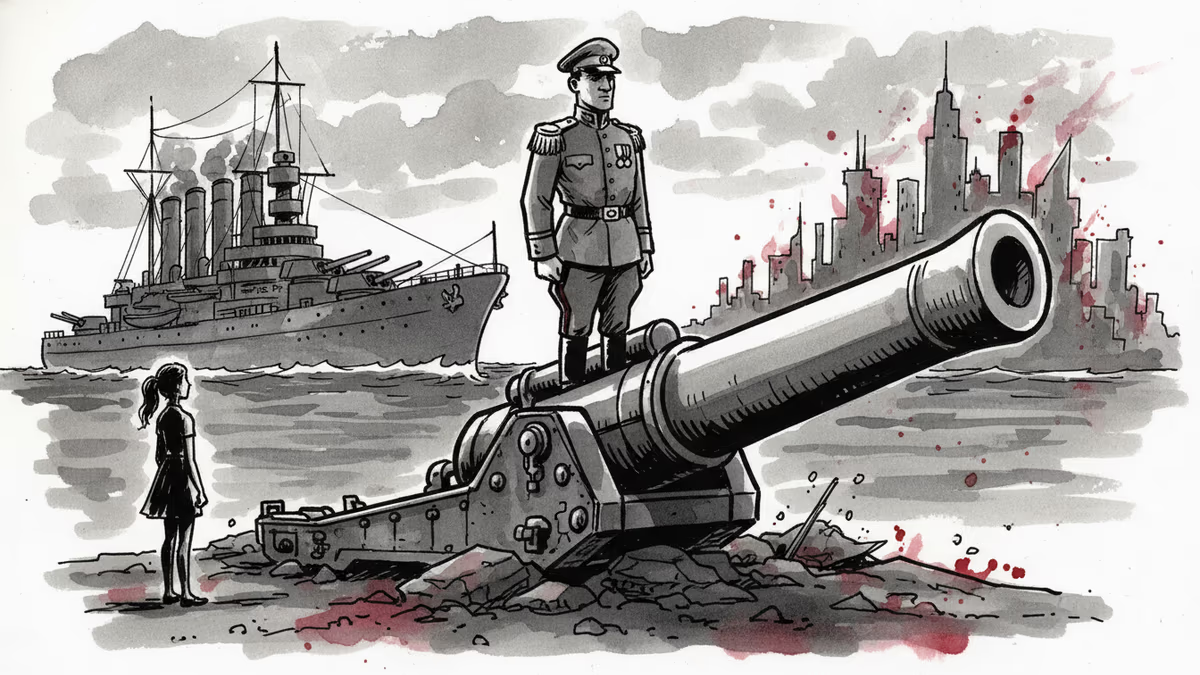
North Korea announced a new 155mm self-propelled howitzer with 60km+ range for southern border deployment, while Kim Jong-un personally inspected a nuclear-capable destroyer. What does the timing tell us?
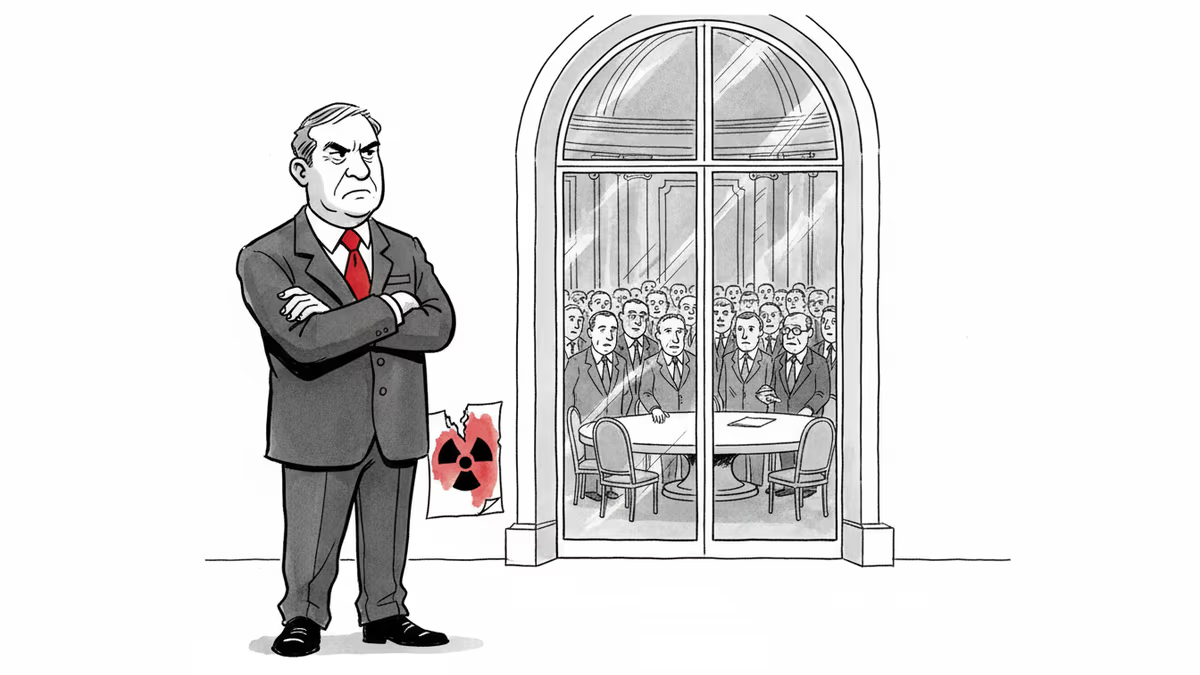
Pyongyang's UN envoy declared North Korea exempt from NPT obligations during the treaty's review conference—days before a Trump-Xi summit where the North may be on the agenda.
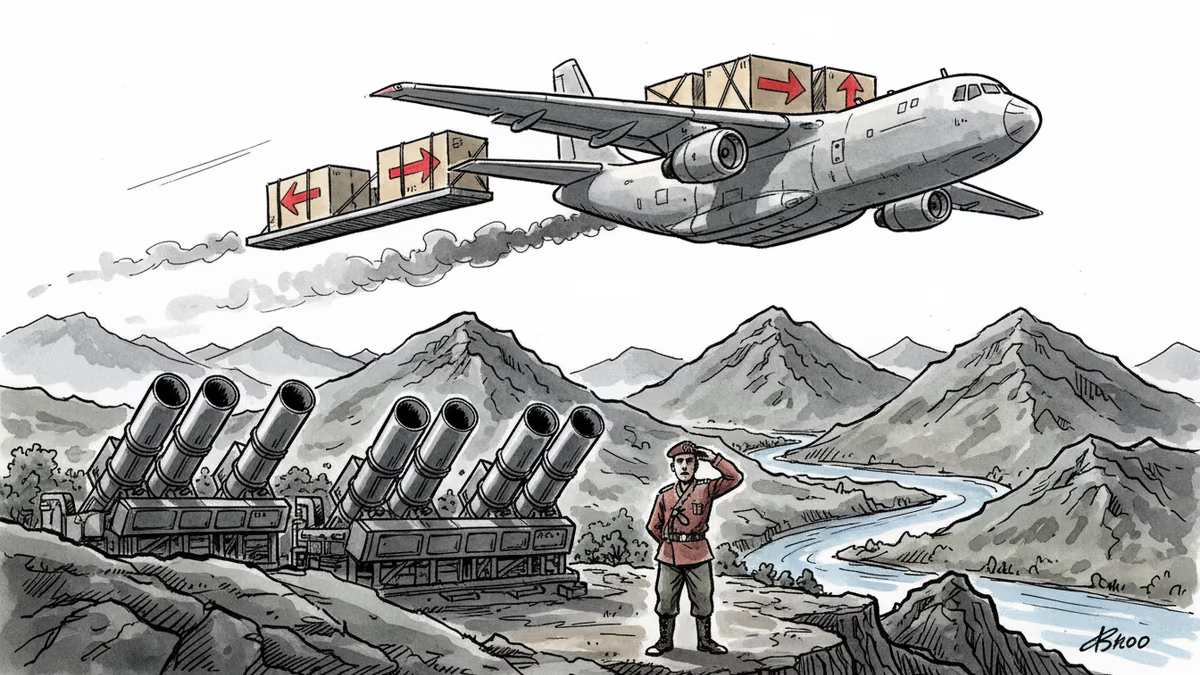
USFK Commander Gen. Brunson confirmed THAAD remains in Korea but admitted munitions are heading to the Middle East. What does this mean for Korean Peninsula deterrence, OPCON transfer, and the future of the US-South Korea alliance?
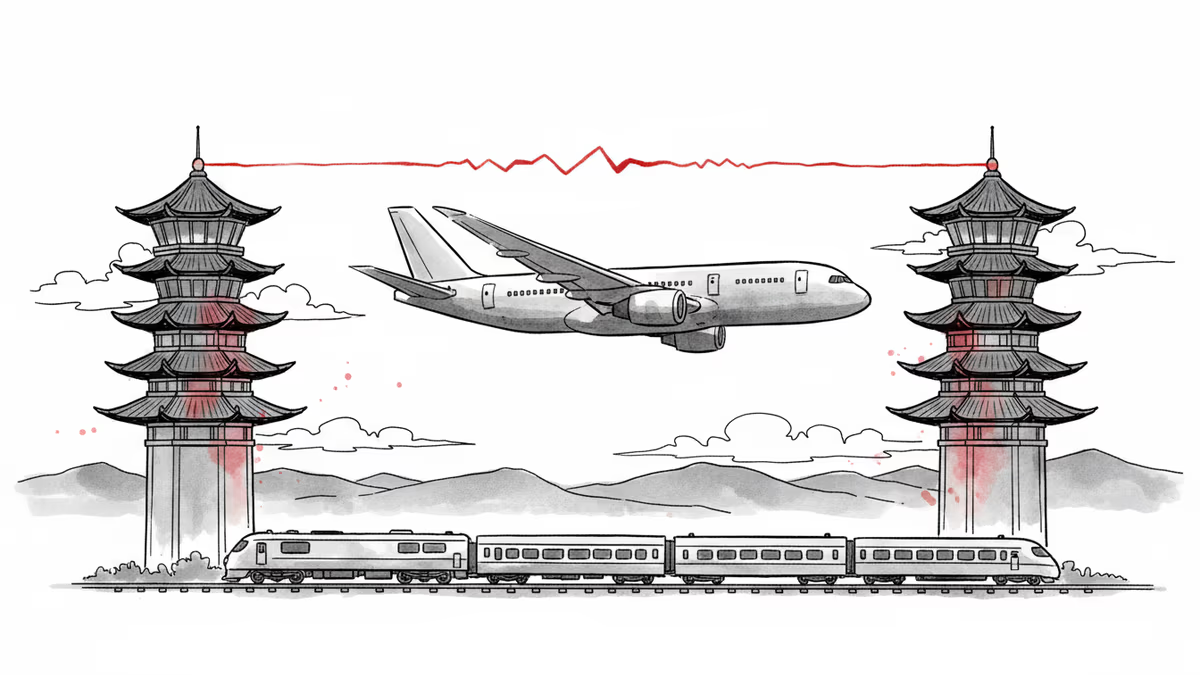
Air China resumed direct flights to Pyongyang on March 30, weeks after passenger train services were restored. The back-to-back moves signal a deliberate deepening of China-North Korea ties.
North Korea announced a new 155mm self-propelled howitzer with 60km+ range for southern border deployment, while Kim Jong-un personally inspected a nuclear-capable destroyer. What does the timing tell us?
Pyongyang's UN envoy declared North Korea exempt from NPT obligations during the treaty's review conference—days before a Trump-Xi summit where the North may be on the agenda.
USFK Commander Gen. Brunson confirmed THAAD remains in Korea but admitted munitions are heading to the Middle East. What does this mean for Korean Peninsula deterrence, OPCON transfer, and the future of the US-South Korea alliance?
Air China resumed direct flights to Pyongyang on March 30, weeks after passenger train services were restored. The back-to-back moves signal a deliberate deepening of China-North Korea ties.
Thoughts
Share your thoughts on this article
Sign in to join the conversation