
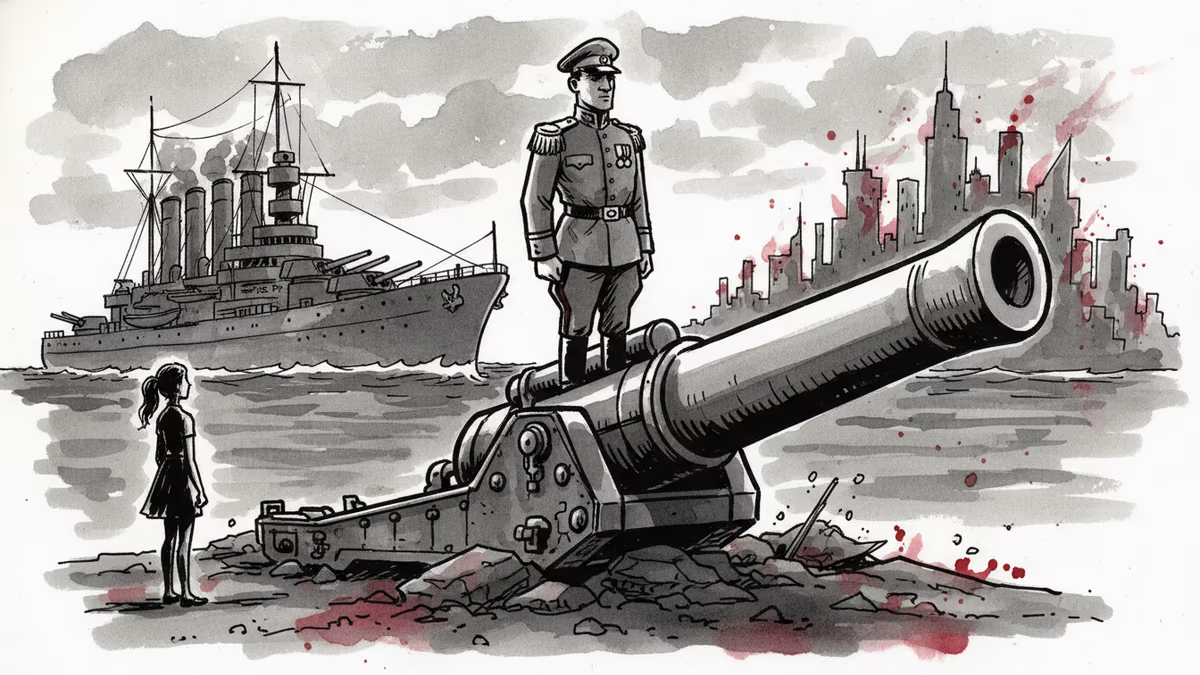
Seoul in Range: North Korea's Twin Military Signals
North Korea announced a new 155mm self-propelled howitzer with 60km+ range for southern border deployment, while Kim Jong-un personally inspected a nuclear-capable destroyer. What does the timing tell us?
Seoul sits 60 kilometers from the demilitarized zone. That distance just became the headline.
On May 8, 2026, North Korea's state media KCNA reported that Kim Jong-un had visited a munitions factory to inspect production of a "new-type 155mm self-propelled gun-howitzer," slated for delivery to three battalions along the country's southern border before year's end. The weapon's stated range: over 60 kilometers — enough to place South Korea's capital within reach of front-line positions.
The same day brought a second announcement. Kim had personally boarded the 5,000-ton destroyer Choe Hyon in the Yellow Sea to observe a maneuvering assessment test ahead of its commissioning. His daughter Ju-ae was photographed at his side. He ordered the vessel delivered to the navy by mid-June.
Two weapons systems. One day. One message.
What the Hardware Actually Means
The 155mm caliber is NATO standard — an unusual choice for Pyongyang that raises immediate questions. North Korea has supplied Russia with large volumes of artillery shells since the Ukraine war began, and analysts widely believe the relationship has involved technology transfers in return. The new howitzer may be one visible result of that exchange.
The range matters more than the caliber. North Korea's existing workhorse, the M-1978 Koksan self-propelled gun, reaches roughly 40–50km. The new system extends that by at least 10–20km, pulling a wider swath of the Seoul metropolitan area — home to roughly half of South Korea's population — into potential range. It also gives North Korean forces greater standoff distance, meaning they can fire from positions harder to locate and neutralize.
The Choe Hyon is a different category of concern. North Korea has used the destroyer as a launch platform for strategic cruise missiles that analysts assess may be nuclear-capable. The vessel was unveiled in April 2025. A sister ship, the Kang Kon, was launched in June 2025. Kim has already ordered a third vessel of the same class, to be completed by October 10 — the founding anniversary of the ruling Workers' Party.

Land-based fires. Sea-based strike capability. Both moving on parallel tracks.
Why Now
Context doesn't explain everything, but it explains a lot. Earlier this year, North Korea revised its constitution to delete references to "reunification" and formally designate South Korea as a hostile foreign state. The legal redefinition came first; the military demonstration follows.
The external environment is also in motion. Reports indicate the Hegseth Pentagon has ordered the withdrawal of roughly 5,000 U.S. troops from Germany, and the Trump administration's approach to alliance management continues to generate uncertainty among partners. South Korea is watching those signals closely. So is Pyongyang.
Kim declared that 2026 would "record an unprecedented upgrade" in North Korea's defense capabilities. That framing — a year-long campaign, not a single test — suggests a deliberate pace of demonstration rather than a reaction to any single event.
How Different Capitals Read This
Seoul faces the most immediate calculus. South Korea has invested heavily in long-range precision strike systems and layered air defenses, but a howitzer with greater range and presumably improved accuracy forces planners to revisit targeting assumptions and response timelines. The political dimension is equally complex: South Korea's government has maintained a "peaceful coexistence" posture toward the North even as Pyongyang's constitution hardened its adversarial language.
Washington reads the destroyer news through the lens of extended deterrence. The U.S. nuclear umbrella over South Korea depends on its credibility being perceived as ironclad. As North Korea develops more diverse delivery systems — including sea-based platforms — the question of how to maintain that credibility without escalating becomes more acute.
Beijing won't comment publicly, but North Korea's growing naval presence in the Yellow Sea adds a variable to regional maritime dynamics that China does not fully control. China's preference has consistently been stability on the peninsula; Pyongyang's independent military expansion complicates that preference without requiring Chinese approval.
For Pyongyang, the logic is structural. Deterrence requires visibility. Publishing factory inspection photos, releasing images of Kim aboard a warship with his daughter, announcing specific deployment timelines — these are not leaks. They are the message.
This content is AI-generated based on source articles. While we strive for accuracy, errors may occur. We recommend verifying with the original source.
Related Articles
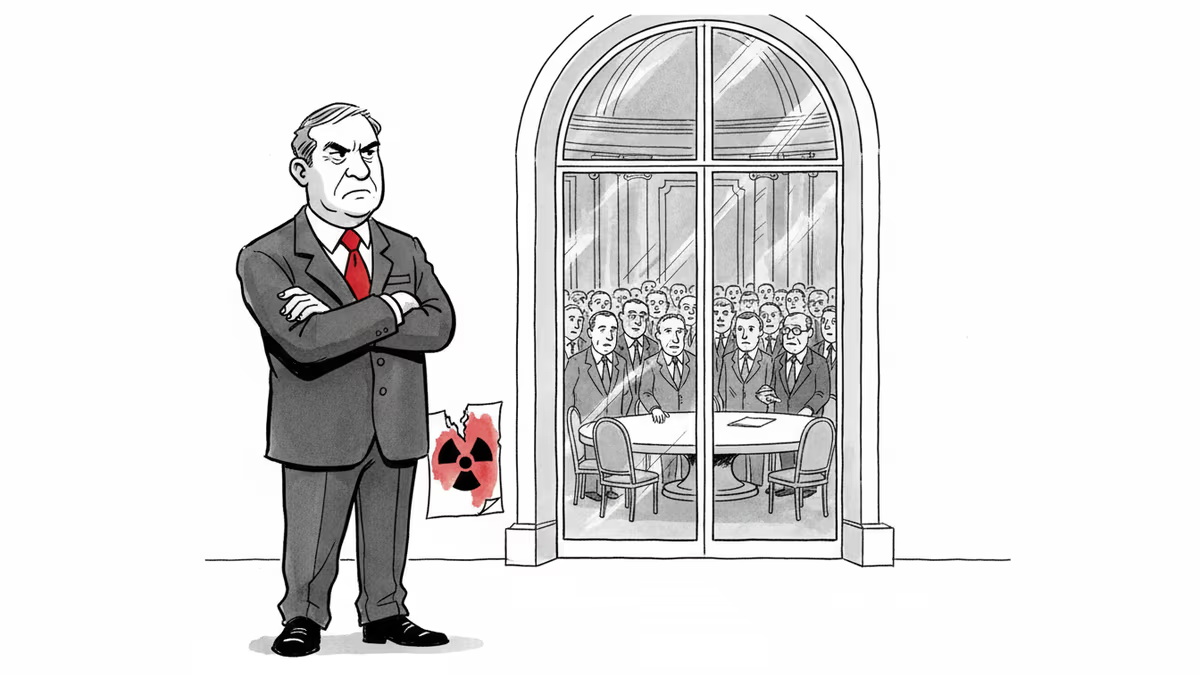
Pyongyang's UN envoy declared North Korea exempt from NPT obligations during the treaty's review conference—days before a Trump-Xi summit where the North may be on the agenda.
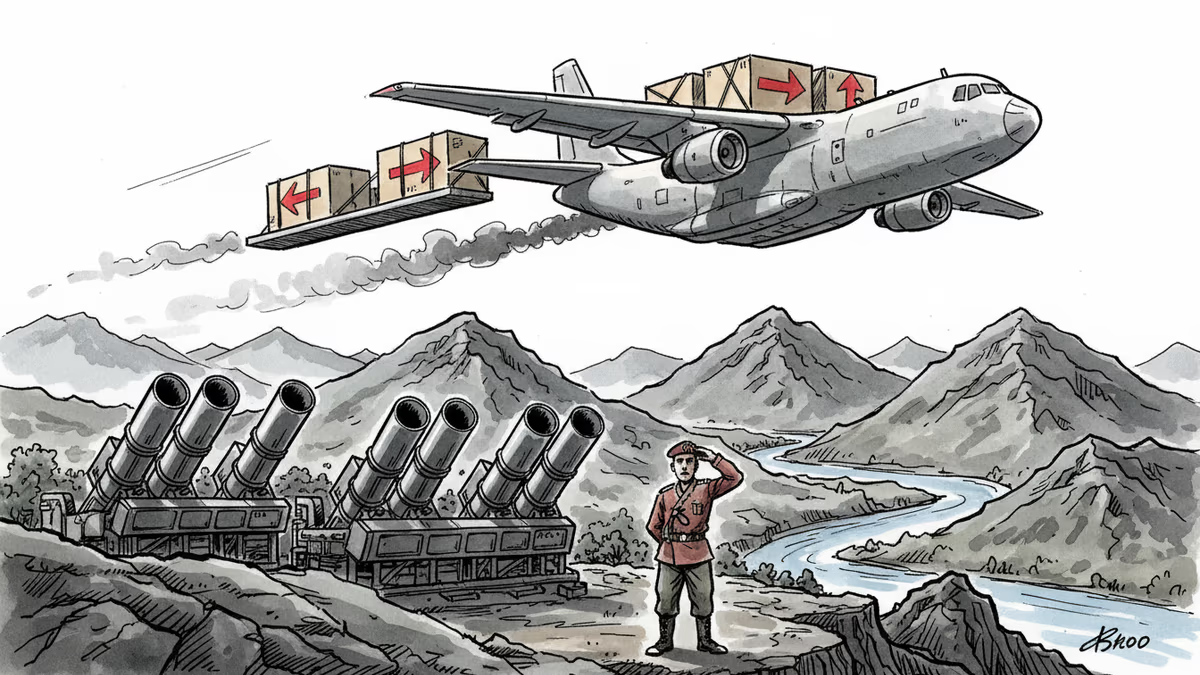
USFK Commander Gen. Brunson confirmed THAAD remains in Korea but admitted munitions are heading to the Middle East. What does this mean for Korean Peninsula deterrence, OPCON transfer, and the future of the US-South Korea alliance?
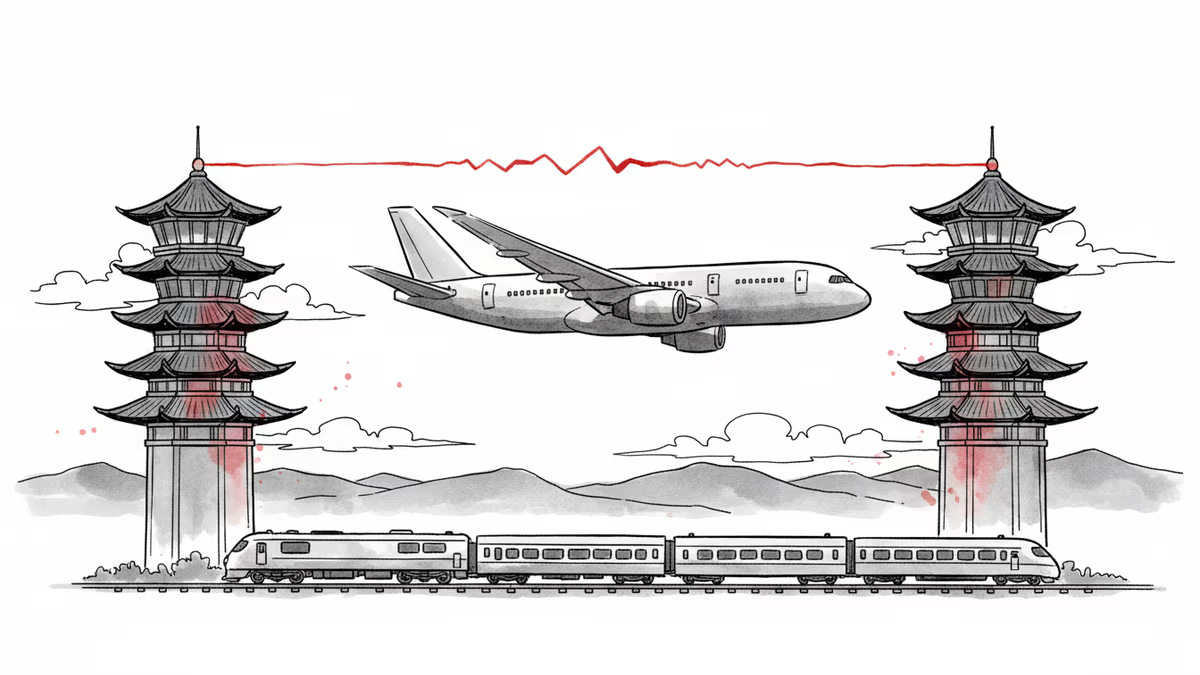
Air China resumed direct flights to Pyongyang on March 30, weeks after passenger train services were restored. The back-to-back moves signal a deliberate deepening of China-North Korea ties.
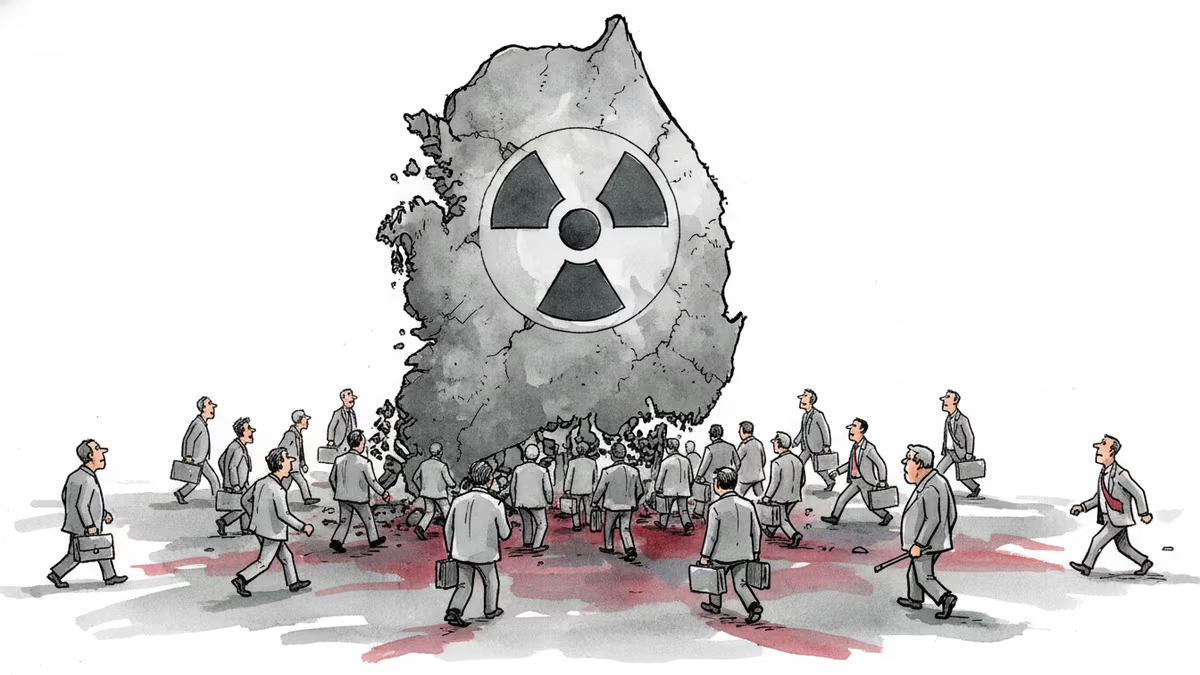
North Korea's Kim Jong Un has formally rejected nuclear disarmament in a parliamentary address, codifying Pyongyang's nuclear status and designating South Korea its most hostile state.
Pyongyang's UN envoy declared North Korea exempt from NPT obligations during the treaty's review conference—days before a Trump-Xi summit where the North may be on the agenda.
USFK Commander Gen. Brunson confirmed THAAD remains in Korea but admitted munitions are heading to the Middle East. What does this mean for Korean Peninsula deterrence, OPCON transfer, and the future of the US-South Korea alliance?
Air China resumed direct flights to Pyongyang on March 30, weeks after passenger train services were restored. The back-to-back moves signal a deliberate deepening of China-North Korea ties.
North Korea's Kim Jong Un has formally rejected nuclear disarmament in a parliamentary address, codifying Pyongyang's nuclear status and designating South Korea its most hostile state.
Thoughts
Share your thoughts on this article
Sign in to join the conversation