
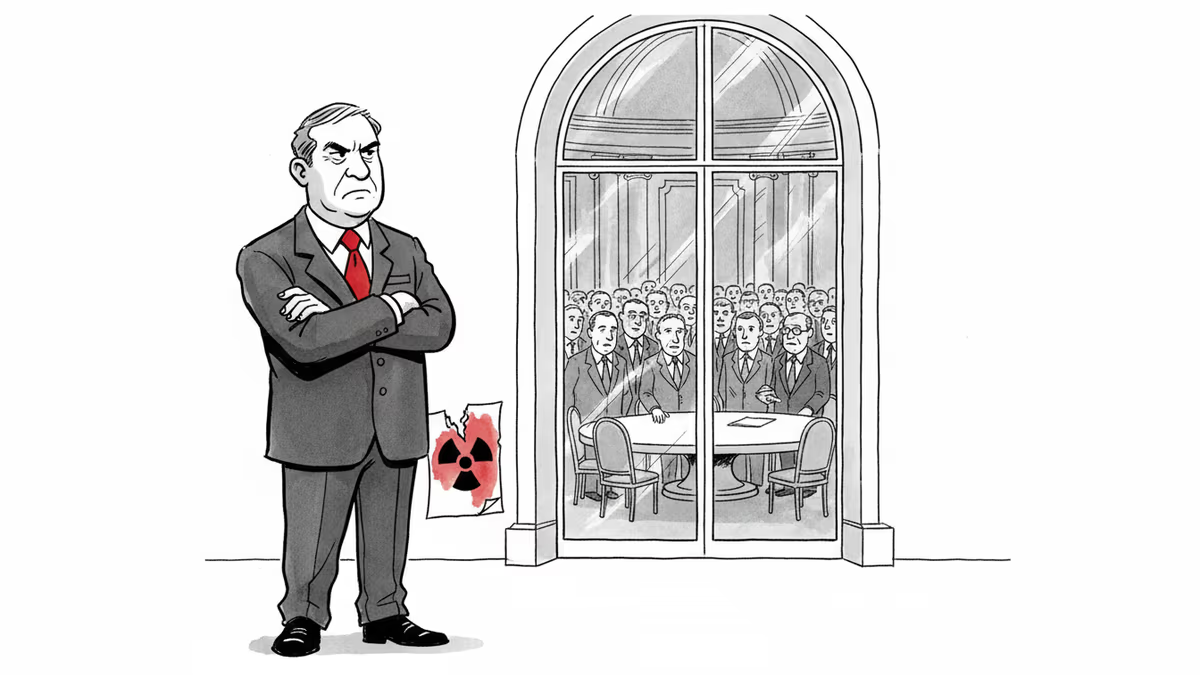
North Korea to the NPT: "We Are Not Bound
Pyongyang's UN envoy declared North Korea exempt from NPT obligations during the treaty's review conference—days before a Trump-Xi summit where the North may be on the agenda.
A treaty only binds the countries that belong to it. North Korea left in 1993. And yet, thirty-three years later, Pyongyang still feels compelled to say so out loud—loudly, and with deliberate timing.
On May 6, Kim Song, North Korea's permanent representative to the United Nations, issued a formal statement declaring that the DPRK "is not bound by the NPT in any case." The statement, carried by the state-run Korean Central News Agency, went further: any attempt to force Pyongyang to fulfill treaty obligations, he said, constitutes a "wanton violation of the spirit of the treaty and a total disregard of the purpose and principle of international law."
The audience wasn't just the diplomats in New York. It was Washington, Beijing, and anyone else who might be tempted to put denuclearization on an agenda.
What Was Said, and Why the Timing Matters
The statement landed as the 11th Review Conference of the Nuclear Non-Proliferation Treaty was underway at UN headquarters—the gathering held every five years where signatory states assess how well the 1968 treaty is being upheld. North Korea, which withdrew from the NPT in 1993, is not a party to those proceedings. But it chose this moment to speak anyway.
Kim Song framed the North's nuclear arsenal not as a defiant choice but as a legal obligation. He argued that Pyongyang's weapons program reflects duties enshrined in the country's "law on nuclear forces policy" and its constitution, both of which formally codify North Korea's identity as a nuclear-armed state. The 2022 nuclear forces law and the 2023 constitutional revision were explicit steps in this direction. This week's statement is their diplomatic echo.
"The position of the DPRK as a nuclear weapons state does not change in accordance with rhetorical assertion or unilateral desire of outsiders," Kim Song said. The phrasing is precise: it forecloses the premise of any negotiation that begins with denuclearization as its endpoint.
The Summit in the Background

The statement's timing is hard to separate from what's coming next week. President Donald Trump is expected to meet Chinese President Xi Jinping in Beijing, and analysts widely expect North Korea to feature in those discussions. Pyongyang's declaration, issued days before that summit, reads as a pre-emptive message: whatever Washington and Beijing agree to discuss, the North's nuclear status is not on the table.
This is not the first time Pyongyang has used a multilateral moment to assert its position. During Trump's first term, the Singapore and Hanoi summits collapsed in part because the two sides couldn't agree on what "denuclearization" even meant. The US held to a definition requiring full, verifiable dismantlement; North Korea offered partial steps in exchange for sweeping sanctions relief. The gap was never bridged.
The question North Korea is now answering—before anyone has asked it—is whether that gap has narrowed at all.
The answer, at least from Pyongyang's side, appears to be no.
Three Ways to Read This
For the United States, South Korea, and Japan, the statement is a familiar provocation—one that complicates any diplomatic opening. Issuing it during the NPT review conference adds a layer of deliberate symbolism: North Korea is not merely rejecting bilateral pressure, but challenging the legitimacy of the multilateral nonproliferation order itself.
For China and Russia, who have long advocated dialogue over sanctions, the statement provides ammunition. If coercive pressure hasn't changed Pyongyang's calculus in three decades, the argument goes, perhaps a different approach is warranted. Beijing, in particular, will arrive at next week's summit with its own leverage calculations.
For North Korea, the logic is internally consistent, if deeply troubling to the outside world. Pyongyang has watched what happened to leaders who gave up or never acquired nuclear weapons—and drawn its conclusions. The nuclear program is not a bargaining chip to be traded; it is, in the regime's view, the reason the regime still exists.
And for the NPT itself, this moment is a stress test. The treaty has no enforcement mechanism for states that leave. It relies on the collective weight of international norms and UN Security Council pressure—tools that have demonstrably failed to halt North Korea's program. The 11th Review Conference is meant to celebrate and reinforce a global norm. North Korea's statement, timed to coincide with it, is a reminder of that norm's limits.
This content is AI-generated based on source articles. While we strive for accuracy, errors may occur. We recommend verifying with the original source.
Related Articles

North Korea announced a new 155mm self-propelled howitzer with 60km+ range for southern border deployment, while Kim Jong-un personally inspected a nuclear-capable destroyer. What does the timing tell us?
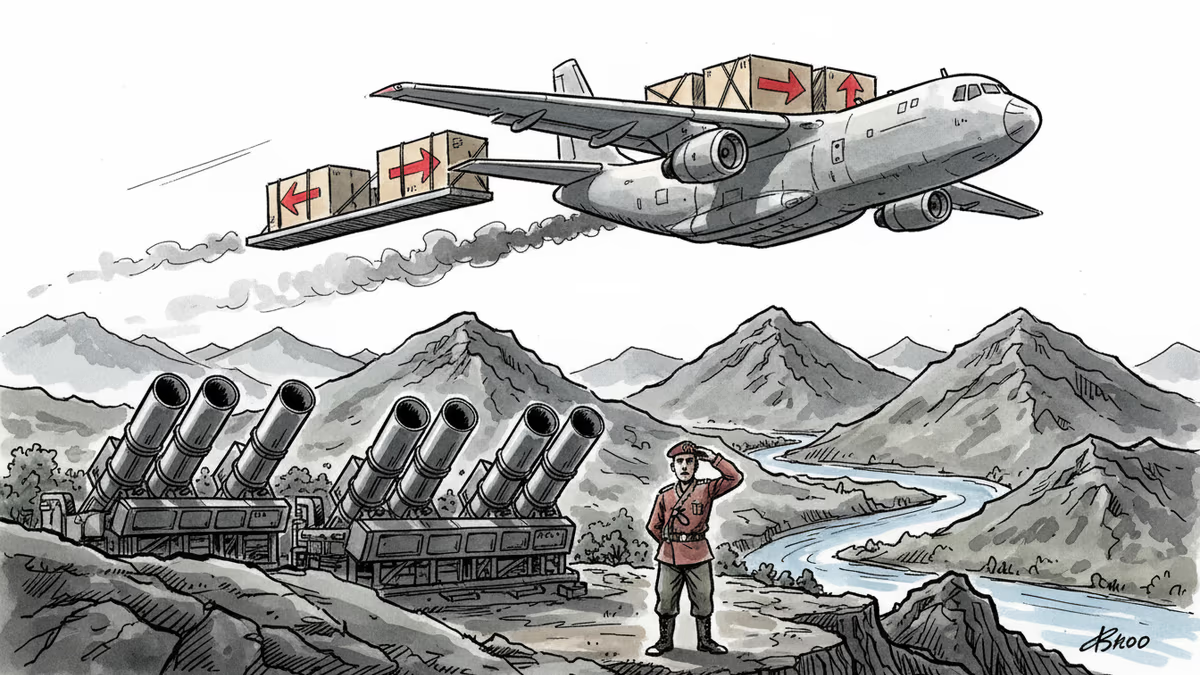
USFK Commander Gen. Brunson confirmed THAAD remains in Korea but admitted munitions are heading to the Middle East. What does this mean for Korean Peninsula deterrence, OPCON transfer, and the future of the US-South Korea alliance?
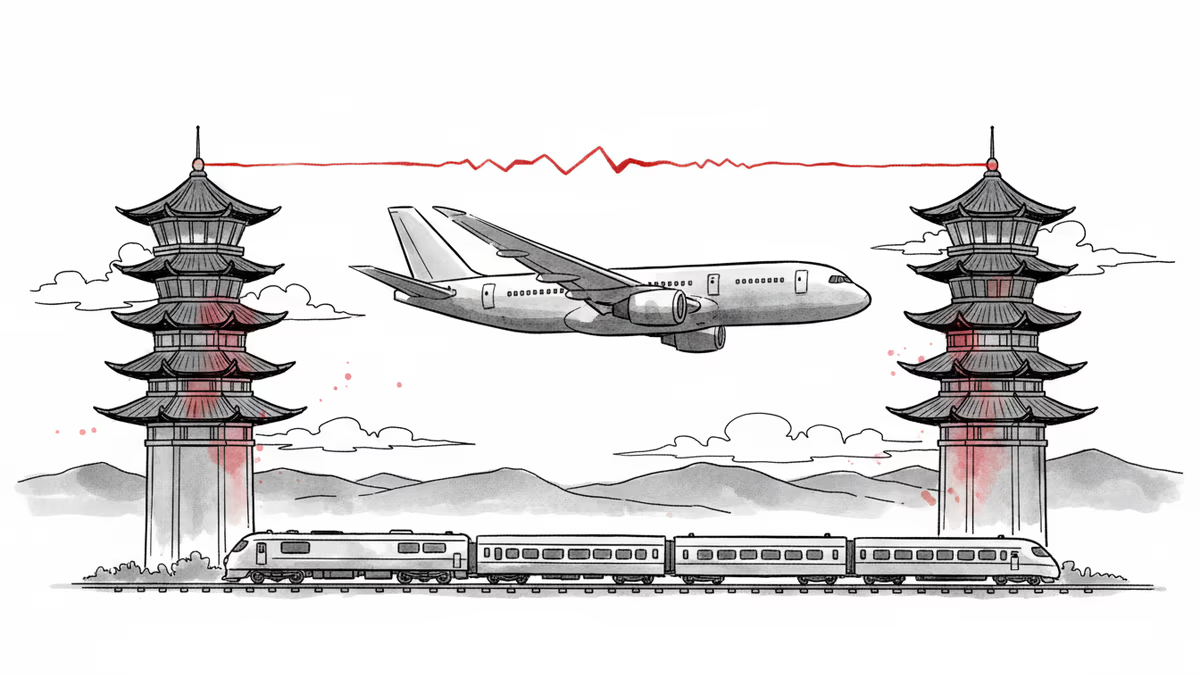
Air China resumed direct flights to Pyongyang on March 30, weeks after passenger train services were restored. The back-to-back moves signal a deliberate deepening of China-North Korea ties.
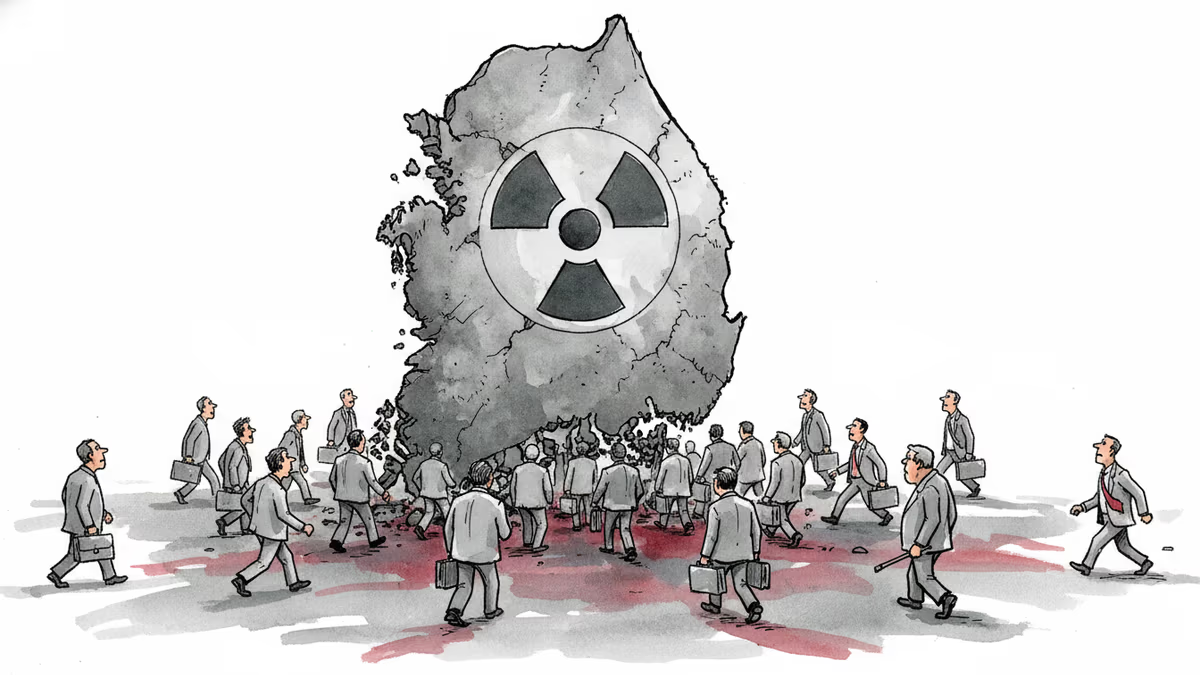
North Korea's Kim Jong Un has formally rejected nuclear disarmament in a parliamentary address, codifying Pyongyang's nuclear status and designating South Korea its most hostile state.
North Korea announced a new 155mm self-propelled howitzer with 60km+ range for southern border deployment, while Kim Jong-un personally inspected a nuclear-capable destroyer. What does the timing tell us?
USFK Commander Gen. Brunson confirmed THAAD remains in Korea but admitted munitions are heading to the Middle East. What does this mean for Korean Peninsula deterrence, OPCON transfer, and the future of the US-South Korea alliance?
Air China resumed direct flights to Pyongyang on March 30, weeks after passenger train services were restored. The back-to-back moves signal a deliberate deepening of China-North Korea ties.
North Korea's Kim Jong Un has formally rejected nuclear disarmament in a parliamentary address, codifying Pyongyang's nuclear status and designating South Korea its most hostile state.
Thoughts
Share your thoughts on this article
Sign in to join the conversation