
One Click in Notepad Could Hack Your PC: Microsoft's Emergency Fix
Microsoft patches critical Notepad vulnerability allowing remote code execution through malicious Markdown links. CVE-2026-20841 analysis and cybersecurity implications
A single click in Windows Notepad could have handed your entire computer to hackers. That's why Microsoft rushed out an emergency patch this Tuesday.
The Trojan Horse in Plain Text
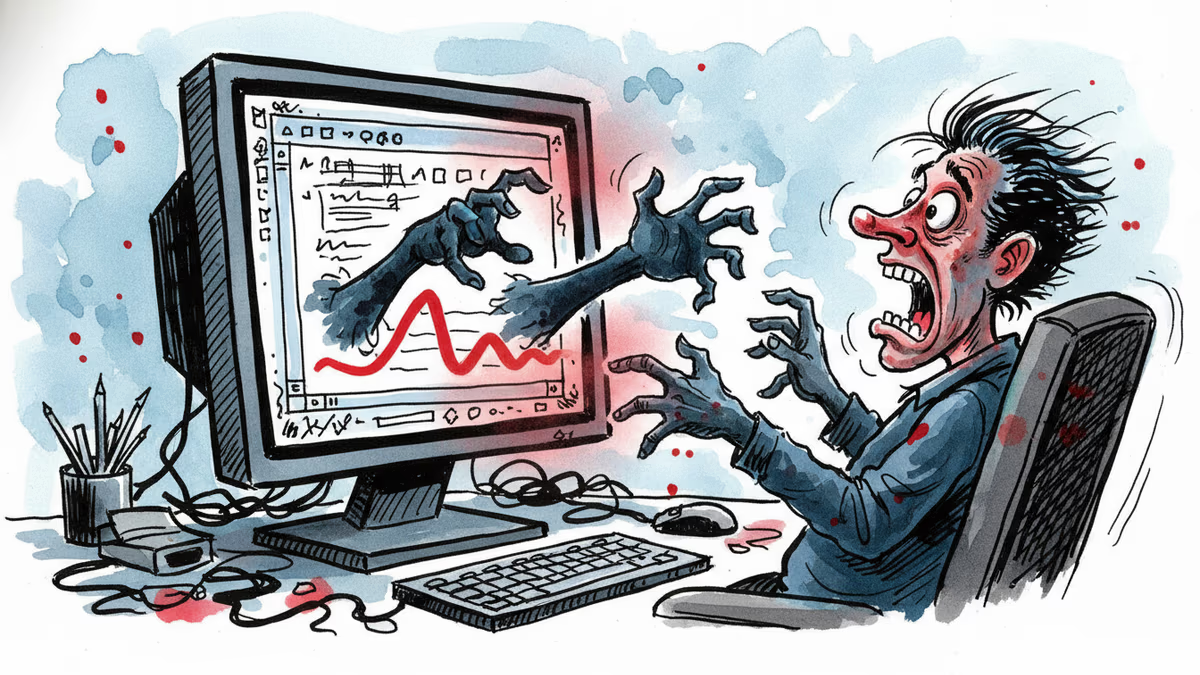
The vulnerability lurked in Notepad's Markdown file handling. Attackers could craft malicious Markdown files containing weaponized links. When users opened these files in Notepad and clicked the links, it would trigger "unverified protocols" that allowed remote code execution.
CVE-2026-20841 essentially turned the world's most trusted text editor into a potential backdoor. Microsoft states there's "no evidence of active exploitation in the wild," but the company clearly wasn't taking chances with 3 billion Windows users at risk.
When Trust Becomes a Weapon
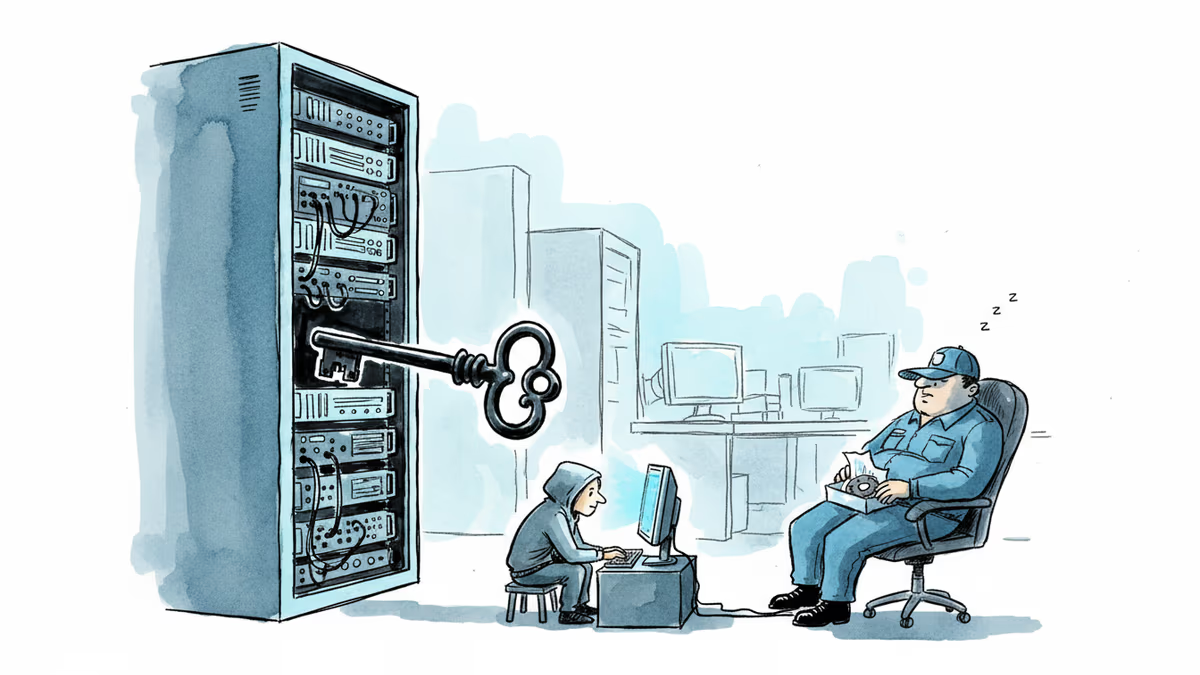
This isn't just another security patch—it's a wake-up call about weaponized trust. Notepad has been Windows users' digital notepad for over 30 years. It's the application equivalent of a pencil: simple, reliable, harmless.

That perception is exactly what makes it dangerous. Cybersecurity experts have long warned about "living off the land" attacks, where hackers exploit trusted, built-in tools rather than introducing obviously malicious software.
The Markdown Paradox
Microsoft added Markdown support to modernize Notepad, responding to developer demands for better documentation tools. But every feature addition expands the attack surface. What seemed like a harmless upgrade became a potential security nightmare.
This reflects a broader industry dilemma: users demand richer functionality, but each new capability introduces new risks. GitHub, Stack Overflow, and countless documentation platforms rely on Markdown's simplicity—yet that same simplicity can mask sophisticated attacks.
The New Paranoia Economy
Cybersecurity firms are already updating their training materials. Employees who never questioned opening a simple text file now need to think twice. IT departments face the uncomfortable task of explaining why even Notepad documents require scrutiny.
The economic implications extend beyond immediate security costs. Trust erosion affects productivity—when workers second-guess every file, collaboration slows. The "zero trust" security model isn't just about network architecture anymore; it's becoming a psychological state.
Authors
Related Articles
A critical vulnerability in Starlette—downloaded 325 million times per week—puts millions of AI agent servers at risk, exposing stored credentials for email, databases, and third-party services.
GitHub confirmed hackers stole data from 3,800 internal repositories via a poisoned VS Code extension. Here's why developer tools are now the most dangerous attack surface in tech.
A Utah woman was sentenced to life in prison partly because of her Google searches and deleted texts. The Kouri Richins case reveals how digital footprints have become the courtroom's most reliable witness.
Dirty Frag gives low-privilege users root access on virtually every Linux distro. The exploit code leaked three days ago. Microsoft says attackers are already experimenting with it.
A critical vulnerability in Starlette—downloaded 325 million times per week—puts millions of AI agent servers at risk, exposing stored credentials for email, databases, and third-party services.
GitHub confirmed hackers stole data from 3,800 internal repositories via a poisoned VS Code extension. Here's why developer tools are now the most dangerous attack surface in tech.
A Utah woman was sentenced to life in prison partly because of her Google searches and deleted texts. The Kouri Richins case reveals how digital footprints have become the courtroom's most reliable witness.
Dirty Frag gives low-privilege users root access on virtually every Linux distro. The exploit code leaked three days ago. Microsoft says attackers are already experimenting with it.
Thoughts
Share your thoughts on this article
Sign in to join the conversation