
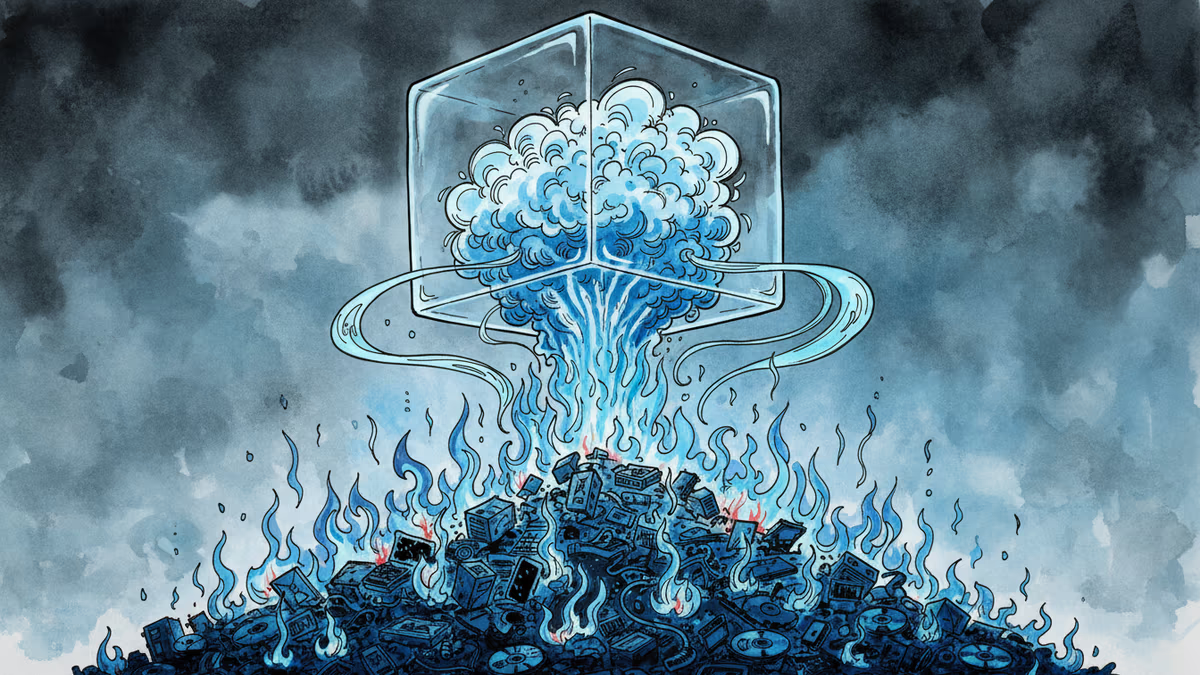
Microsoft Etches Data Into Glass, Promising Storage That Outlasts Civilizations
Microsoft's Project Silica stores data in glass at 1MB per cubic millimeter, potentially lasting centuries. What does this mean for our digital future?
What if Your Hard Drive Could Outlast the Pyramids?
Microsoft researchers just published something extraordinary in Nature: they've figured out how to etch data into glass with a density of over 1 megabyte per cubic millimeter. Project Silica isn't just another storage breakthrough—it's potentially the end of the great digital decay problem that's been haunting us since we went digital.
Consider this: the average hard drive lasts 3-5 years. Your family photos from 2010? They might already be corrupted. Meanwhile, glass can remain stable for centuries without consuming any power. No cooling systems. No periodic data migration. Just data, sitting quietly in crystalline form, waiting to be read.
Why Glass Makes Perfect Sense (And Why Nobody Thought of It Sooner)
We've been overthinking archival storage for decades. DNA storage? Theoretically perfect, practically glacial. Magnetic tape? Requires climate control and degrades over time. Optical discs? Scratch one surface, lose everything.
Glass, as Microsoft's team discovered, is "thermally and chemically stable and resistant to moisture ingress, temperature fluctuations and electromagnetic interference." It's not the fragile window glass we know—it's engineered to be nearly indestructible under normal conditions.
The writing process uses femtosecond lasers to create microscopic structures within the glass. Reading requires optical microscopy and machine learning algorithms to decode the stored patterns. It's complex, but the payoff is enormous: data that could survive nuclear winter.
Who Wins and Who Worries?
Archives and libraries are already calling. The Library of Congress digitizes 15,000 items daily but struggles with long-term preservation. Current solutions require migrating data every 10-15 years—an expensive, risky process where data can be lost.

Tech giants with massive data centers should be paying attention. Amazon, Google, and Microsoft spend billions annually on storage infrastructure and cooling. Glass storage could dramatically reduce operational costs for rarely accessed "cold" data.
Enterprise customers dealing with compliance requirements love the idea. Financial institutions must keep transaction records for decades. Healthcare systems need patient data preserved indefinitely. Glass storage could eliminate the costly cycle of hardware refresh and data migration.
But traditional storage vendors aren't celebrating. If glass storage scales, it could disrupt the entire archival storage industry. The technology also raises questions about data accessibility—what good is permanent storage if reading it requires specialized equipment?
The Catch: It's Not Ready for Your Laptop
Project Silica isn't replacing your SSD anytime soon. Writing data to glass is slow, and reading requires sophisticated optical systems. This is "write once, read occasionally" technology—perfect for archives, terrible for active computing.
The cost question remains unanswered. Microsoft hasn't revealed manufacturing expenses, but the precision required suggests it won't be cheap initially. Like most breakthrough technologies, it'll likely start expensive and trickle down.
There's also the format standardization challenge. What happens when the reading technology becomes obsolete? We've seen this movie before with countless storage formats that became unreadable as technology evolved.
Beyond Storage: A Civilization-Scale Backup Plan
Project Silica hints at something bigger than just better storage. We're creating the first truly permanent digital medium in human history. Future archaeologists might find glass data storage alongside pottery shards and stone tablets.
This could revolutionize how we think about digital legacy. Instead of worrying about platform migrations and format obsolescence, we could create permanent digital time capsules. Imagine storing not just data, but entire cultural snapshots—complete with the software needed to interpret them.
Authors
Related Articles
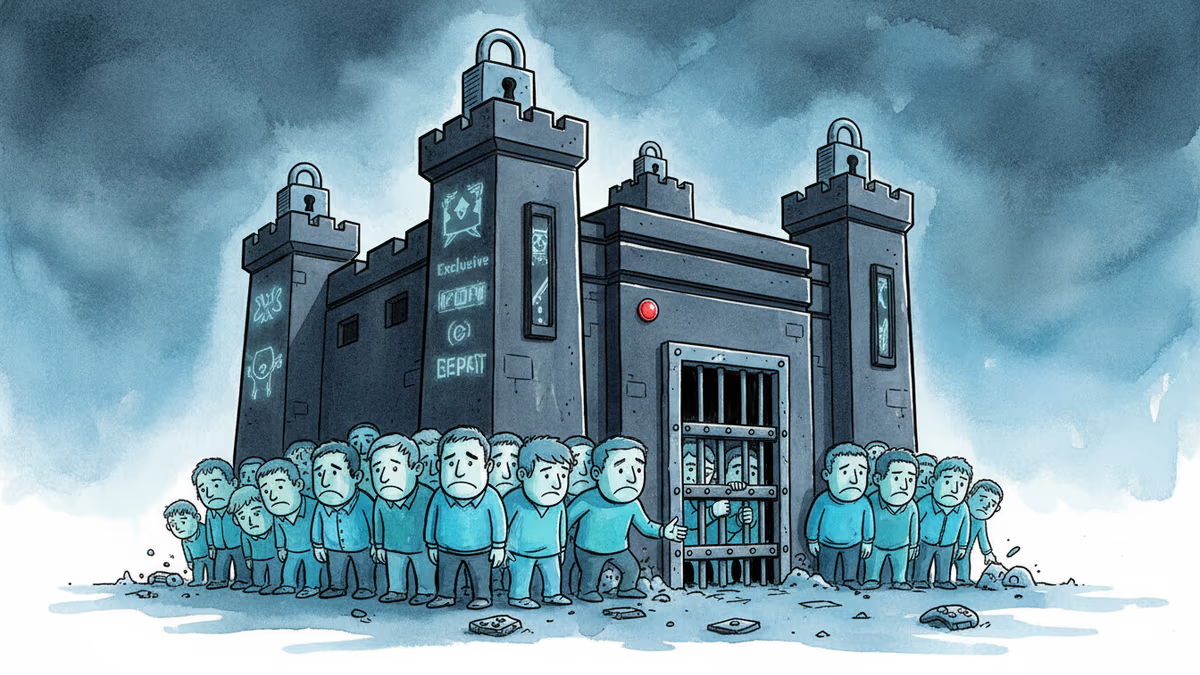
Sony and Microsoft are pulling back from multi-platform strategies, signaling a return to console exclusives. What this means for gamers and the industry.
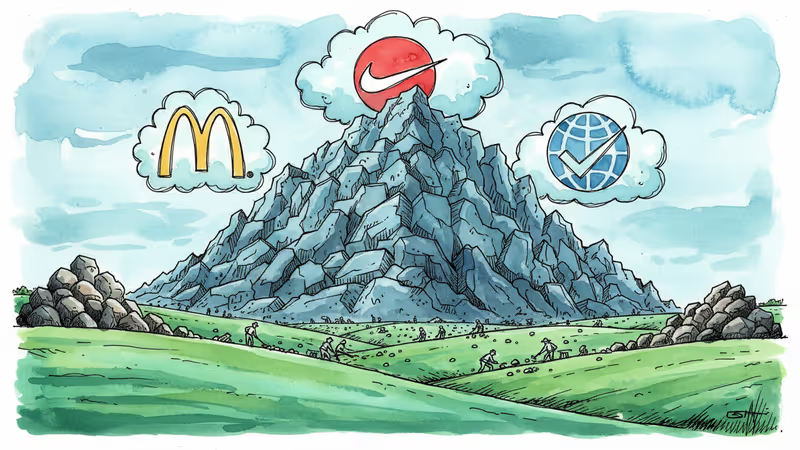
Terradot acquires competitor Eion as big investors demand scale in carbon removal. The consolidation reveals what really matters in climate tech: size, not just innovation.
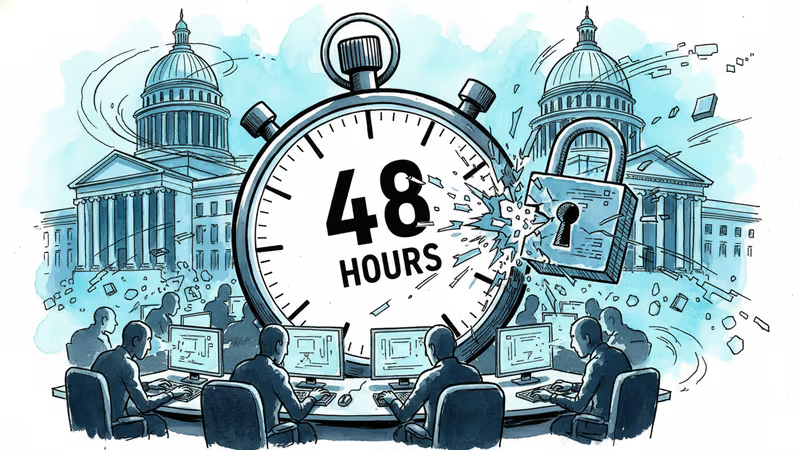
APT28 hackers reverse-engineered a Microsoft Office vulnerability within 48 hours of patch release, targeting diplomatic and transport organizations across multiple countries with sophisticated stealth techniques.
Microsoft handed over BitLocker encryption keys to the FBI, raising questions about Windows PC privacy. Are your files really secure from government access?
Sony and Microsoft are pulling back from multi-platform strategies, signaling a return to console exclusives. What this means for gamers and the industry.
Terradot acquires competitor Eion as big investors demand scale in carbon removal. The consolidation reveals what really matters in climate tech: size, not just innovation.
APT28 hackers reverse-engineered a Microsoft Office vulnerability within 48 hours of patch release, targeting diplomatic and transport organizations across multiple countries with sophisticated stealth techniques.
Microsoft handed over BitLocker encryption keys to the FBI, raising questions about Windows PC privacy. Are your files really secure from government access?
Thoughts
Share your thoughts on this article
Sign in to join the conversation