

Meta Manus AI Acquisition 2025: Tech Giant Swallows $100M Revenue Agent Startup
Meta has acquired Singapore-based AI agent startup Manus. Learn why the Meta Manus AI acquisition 2025 is a critical move for Mark Zuckerberg's automation strategy.
While the industry focuses on chatbots, Meta is buying the muscle to build an autonomous workforce. Meta Platforms announced Tuesday it has acquired Manus, a Singapore-based developer of general-purpose AI agents that boasts an annualized average revenue of over $100 million. This move underscores Meta's relentless push to dominate the next phase of artificial intelligence: Agentic AI.
Inside the Meta Manus AI Acquisition 2025
Manus emerged as a powerhouse this year, claiming its technology outperforms OpenAI's DeepResearch. The startup, which relocated its headquarters from Beijing to Singapore in June 2025, focuses on agents capable of executing complex tasks like market research, coding, and data analysis without human intervention.
The financial metrics are staggering for its age. Just eight months after launch, Manus reported a revenue run rate exceeding $125 million. In April, it closed a $75 million Series B round led by Benchmark, with backing from tech titans like Tencent and HongShan Capital.

Strategizing for the Llama Ecosystem
The acquisition isn't an isolated event. It follows Meta's $14.3 billion investment in Scale AI and its recent takeover of wearables startup Limitless. By bringing Manus's team in-house, Meta aims to accelerate automation across both consumer and enterprise products, potentially integrating these capabilities into its Llama models.
According to CEO Xiao Hong, joining Meta provides a "stronger, more sustainable foundation" for the company's growth. Interestingly, Microsoft had also been testing Manus in Windows 11 recently, highlighting how Meta's acquisition effectively snatches a key tool from its rivals' reach.
Authors
Related Articles
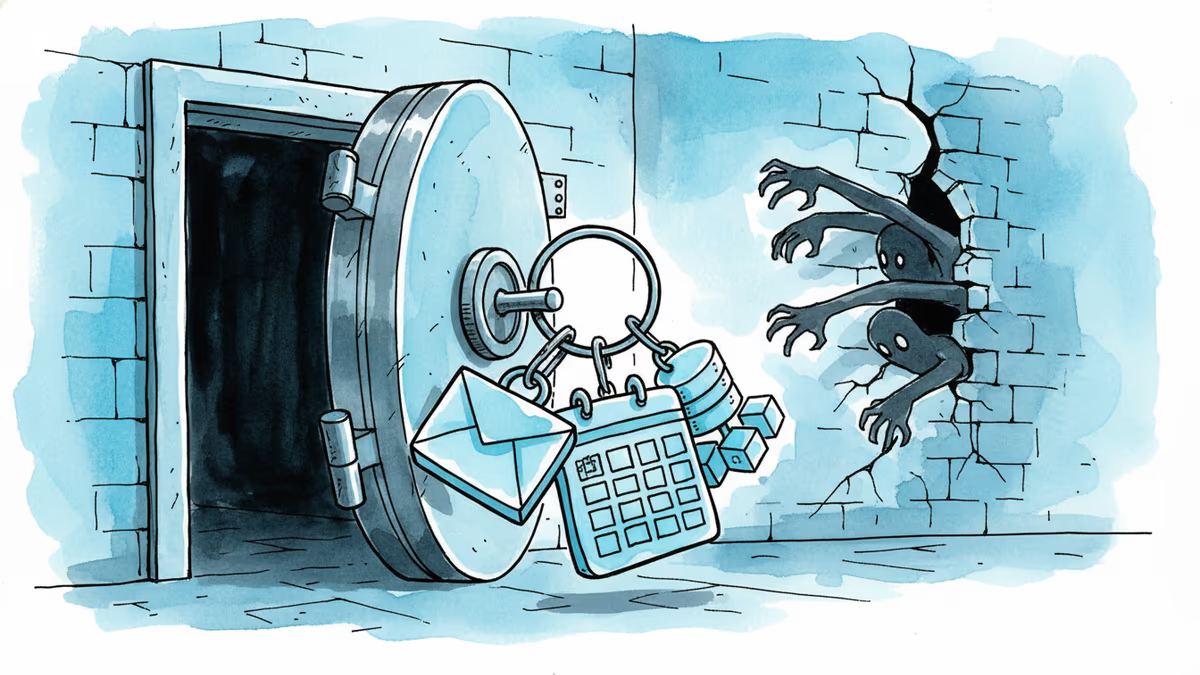
A critical vulnerability in Starlette—downloaded 325 million times per week—puts millions of AI agent servers at risk, exposing stored credentials for email, databases, and third-party services.

A small but growing group of developers has gone all-in on AI coding agents like Claude Code and OpenClaw. History suggests the rest of us won't be far behind.
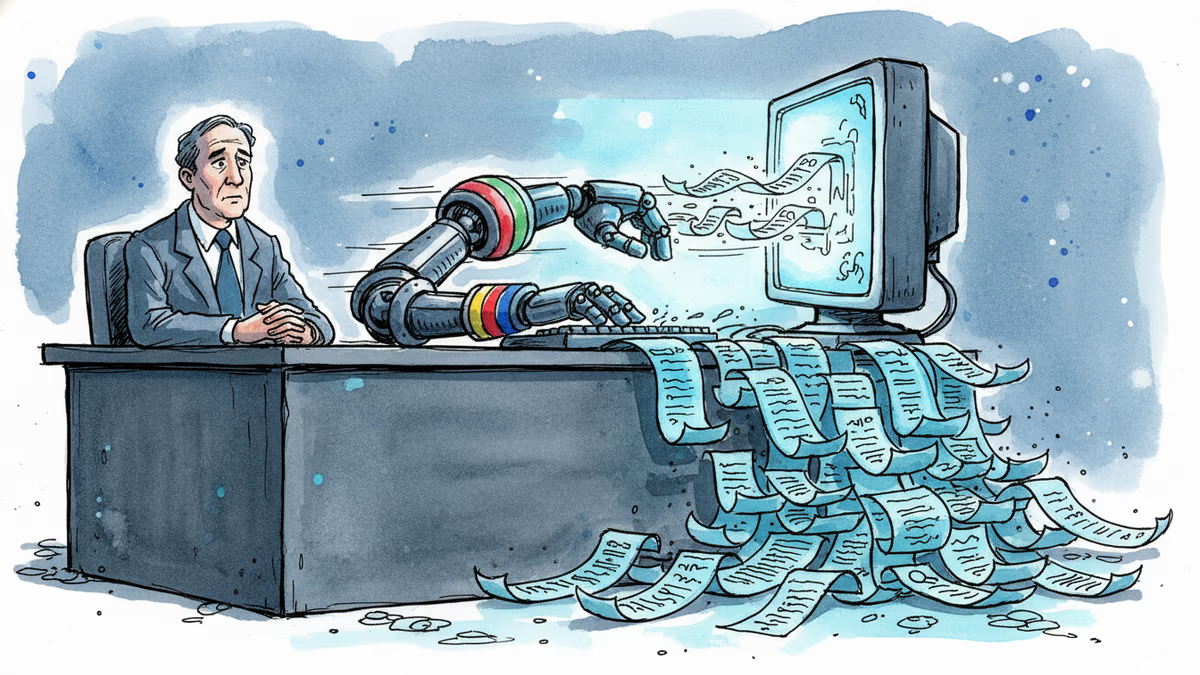
Google is building AI agents that search the web proactively, without user prompting. That's not just a product update — it's a fundamental shift in who controls the information you receive.

A law firm marketing itself on AI-powered legal success submitted fake citations in a federal appeal. Now its lawyers face sanctions — and the broader AI legal industry faces a credibility crisis.
A critical vulnerability in Starlette—downloaded 325 million times per week—puts millions of AI agent servers at risk, exposing stored credentials for email, databases, and third-party services.
A small but growing group of developers has gone all-in on AI coding agents like Claude Code and OpenClaw. History suggests the rest of us won't be far behind.
Google is building AI agents that search the web proactively, without user prompting. That's not just a product update — it's a fundamental shift in who controls the information you receive.
A law firm marketing itself on AI-powered legal success submitted fake citations in a federal appeal. Now its lawyers face sanctions — and the broader AI legal industry faces a credibility crisis.
Thoughts
Share your thoughts on this article
Sign in to join the conversation