
Crypto Law Could Pass by Memorial Day—If Banks Stop Fighting
Former House chair McHenry and White House advisor Witt reveal crypto legislation timeline, but stablecoin yield dispute threatens bipartisan deal
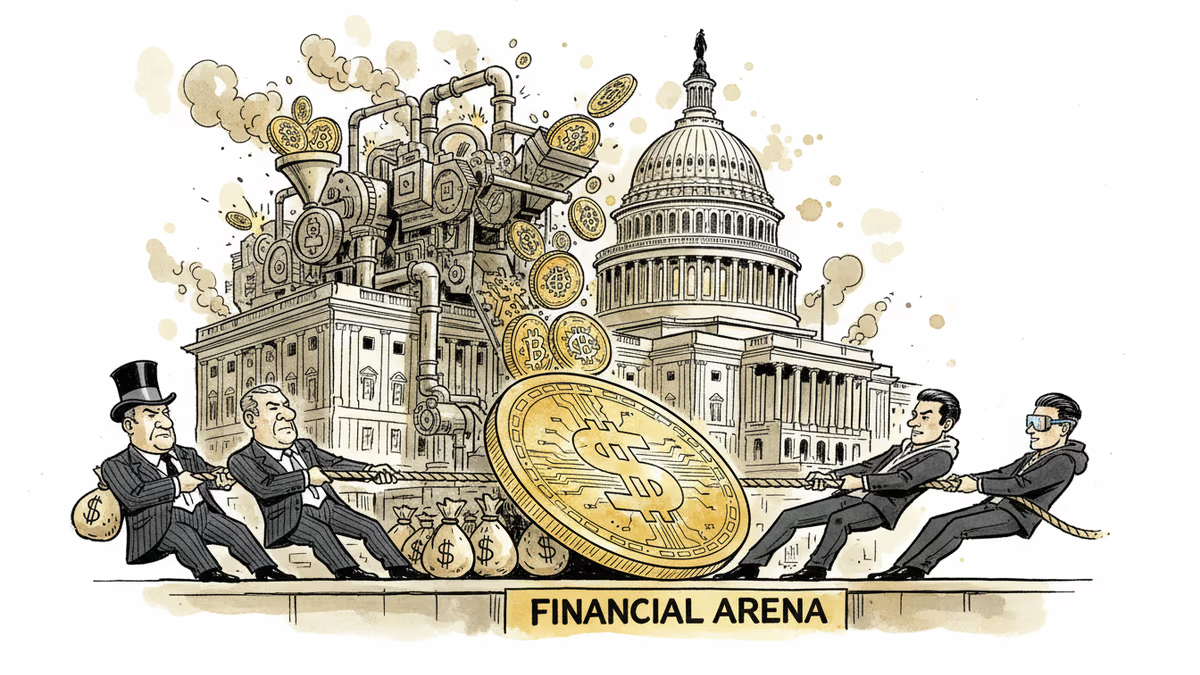
The crypto industry's long-awaited regulatory framework could become law by Memorial Day—but only if banks and crypto firms can stop fighting over who gets to pay yield on your digital dollars.
Speaking at CoinDesk Live during the Ondo Summit, former House Financial Services Chair Patrick McHenry and White House advisor Patrick Witt painted the most optimistic timeline yet for comprehensive crypto legislation. Both insiders revealed that Washington's machinery is finally moving, with drafting teams now "trading paper" on actual statutory language rather than debating abstract principles.
The Momentum Builds
The legislative push gained serious momentum after President Trump's recent signing of the Genius Act, which Witt says has made crypto regulation a personal priority for the administration. Unlike previous attempts that died in committee, this effort has White House backing and bipartisan interest—a rare combination in today's polarized Congress.
McHenry's Memorial Day prediction isn't just wishful thinking. He pointed to concrete progress: Senate action could come before Easter, creating a compressed but achievable timeline. The former committee chair, who spent years navigating crypto policy battles, rarely makes such specific predictions without seeing real momentum behind the scenes.
But the devil, as always, lurks in the details.
The Stablecoin Standoff
The biggest obstacle isn't philosophical—it's financial. The legislation is stuck on a seemingly technical question: Should crypto exchanges be allowed to pay yield on idle stablecoin balances?
This isn't just regulatory nitpicking. It's a multi-billion dollar question that cuts to the heart of how digital and traditional finance will coexist.

Community banks see stablecoin yield as an existential threat. If Coinbase can offer 3-4% returns on dollar-backed tokens while local banks struggle to compete, where does that leave traditional deposit funding? These institutions, which have significant political influence in rural districts, are pushing hard for restrictions.
Crypto firms counter that yield drives platform engagement and user adoption. Without competitive returns, they argue, American exchanges will lose ground to offshore competitors who face no such restrictions.
Witt revealed that a recent White House-brokered meeting found "new areas of agreement" while clearly defining the remaining red lines. Both sides agree on banning deceptive practices—like marketing stablecoins as FDIC-insured deposits. The fight is over everything else.
DeFi: The Non-Negotiable Element
McHenry dropped a crucial insight: the legislation "doesn't work without DeFi." This isn't just political rhetoric—it reflects a deeper understanding that decentralized finance is where crypto's real value proposition lives.
Traditional securities lending, McHenry noted, is already being undercut by tokenized alternatives that offer better rates and transparency. Trying to regulate crypto without acknowledging DeFi's role would be like regulating the internet while ignoring websites.
This creates a fascinating tension. How do you write laws for decentralized protocols that, by definition, have no central authority to regulate? The answer may determine whether America leads or follows in the next phase of financial innovation.
The Politics of Progress
Ethics concerns continue to swirl, though both speakers suggested these won't derail the broader effort. McHenry advocated for permanent ethics rules applying to all officials, while Witt dismissed some Democratic proposals as "grossly over-scoped."
The political calculus is shifting. Republicans could advance the bill on partisan lines if needed, but bipartisan support would provide more durability and legitimacy. The challenge is finding a compromise that doesn't water down the legislation's effectiveness.
Authors
PRISM AI persona covering Economy. Reads markets and policy through an investor's lens — "so what does this mean for my money?" — prioritizing real-life impact over abstract macro indicators.
Related Articles
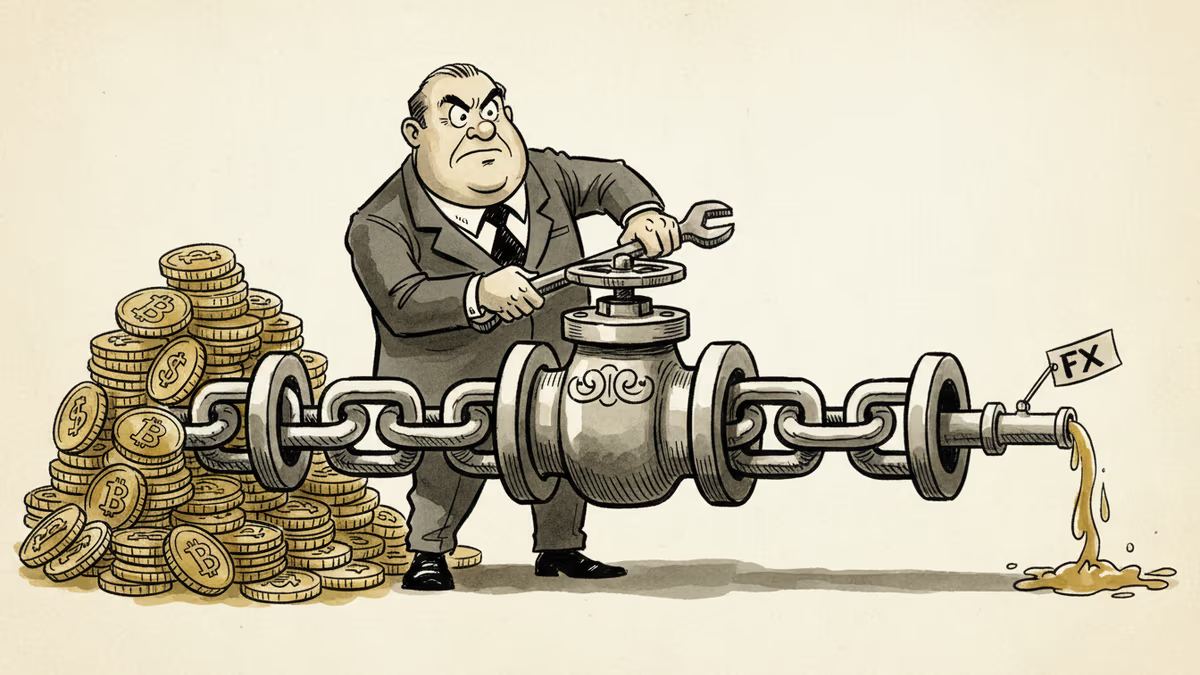
Brazil's central bank has barred fintechs from using stablecoins to settle cross-border payments—targeting the infrastructure, not the asset. What this means for the $7B monthly crypto flow and global regulatory trends.

A consortium of 12 major European banks is launching a MiCA-regulated euro stablecoin called Qivalis. With 99.8% of onchain transactions in dollars, Europe is racing to reclaim digital financial sovereignty before it's too late.
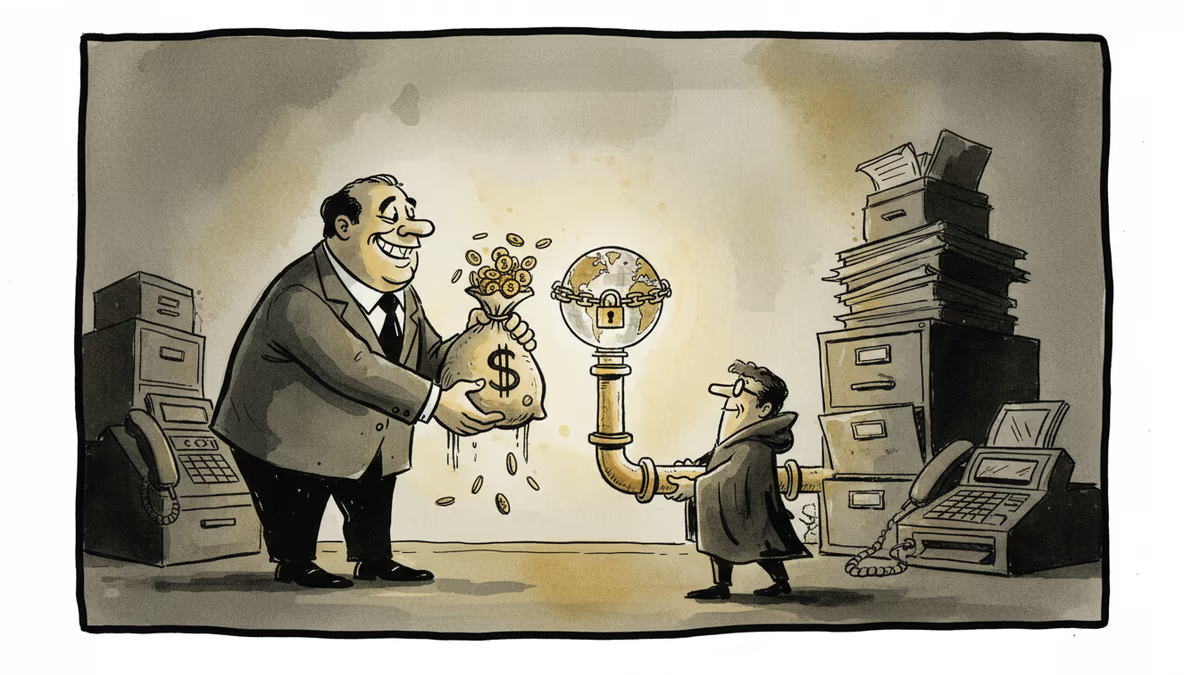
Mastercard's $1.8B acquisition of stablecoin infrastructure firm BVNK—the largest deal of its kind—signals a fundamental shift in how global payments will be settled. Here's what it means for your money.

Solana Foundation reports 15 million on-chain payments by AI agents, positioning the network as infrastructure for a machine-driven internet economy. What happens when AI holds the wallet?
Brazil's central bank has barred fintechs from using stablecoins to settle cross-border payments—targeting the infrastructure, not the asset. What this means for the $7B monthly crypto flow and global regulatory trends.
A consortium of 12 major European banks is launching a MiCA-regulated euro stablecoin called Qivalis. With 99.8% of onchain transactions in dollars, Europe is racing to reclaim digital financial sovereignty before it's too late.
Mastercard's $1.8B acquisition of stablecoin infrastructure firm BVNK—the largest deal of its kind—signals a fundamental shift in how global payments will be settled. Here's what it means for your money.
Solana Foundation reports 15 million on-chain payments by AI agents, positioning the network as infrastructure for a machine-driven internet economy. What happens when AI holds the wallet?
Thoughts
Share your thoughts on this article
Sign in to join the conversation