
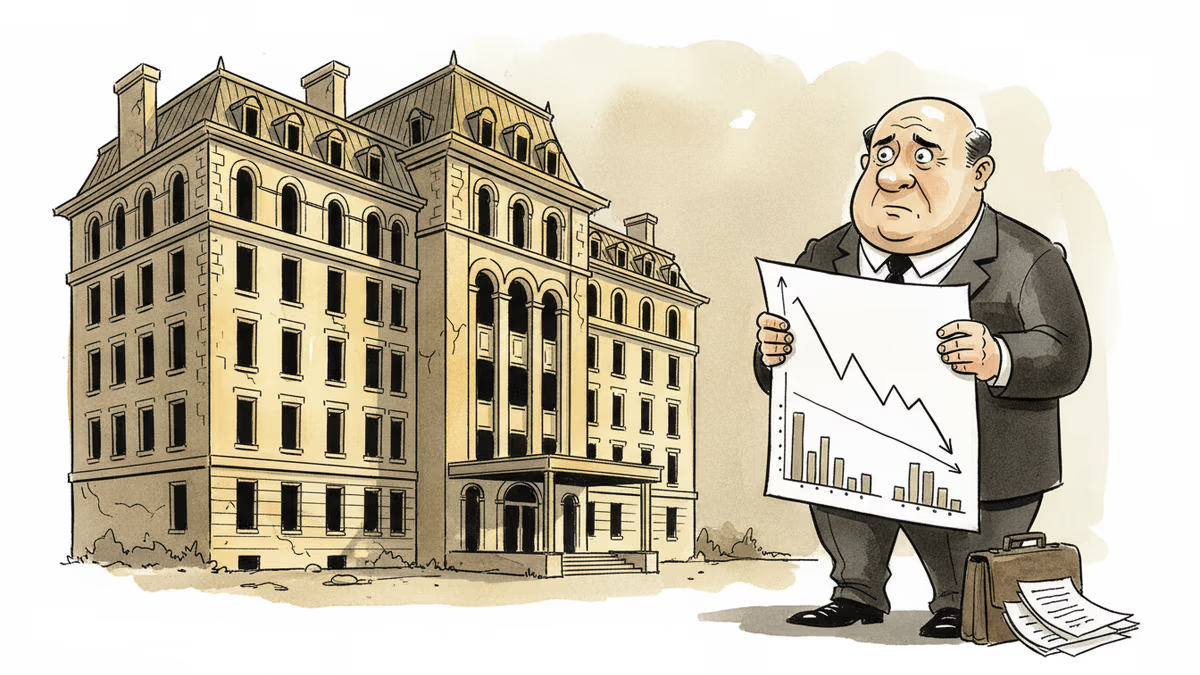
Marriott's Warning Shot: What's Really Happening to US Travel?
Marriott forecasts weak room revenue growth amid declining US travel demand. We analyze what this means for the hotel industry, consumers, and the broader economy.
When the world's largest hotel chain sounds the alarm, it's worth listening. Marriott International just delivered a reality check to investors: room revenue growth will be weaker than expected this year, driven by softening US travel demand. After years of post-pandemic boom, is the party finally over?
The Numbers Don't Lie
Marriott's forecast revision isn't just about one company's bottom line. It's a canary in the coal mine for the entire travel ecosystem. The hotel giant cited weakness in both business and leisure travel across the US market – a double whammy that suggests deeper structural shifts.
Industry analysts are split on interpretation. Some call it a "normalization" after the revenge travel surge that followed COVID lockdowns. Others see warning signs of a more significant downturn, especially as economic headwinds intensify.
Winners and Losers Emerge

The ripple effects are already visible across the hospitality landscape. Luxury properties continue to command premium rates from affluent travelers, while mid-scale hotels face mounting pressure in an increasingly competitive market. For consumers, this could mean better deals and more promotional offers as hotels fight for market share.
The corporate travel segment tells a particularly interesting story. Companies that slashed travel budgets during the pandemic haven't fully restored them. Remote work culture has permanently altered business travel patterns, with many meetings that once required flights now happening via Zoom.
The Bigger Economic Picture
Marriott's cautious outlook reflects broader consumer sentiment shifts. High inflation and elevated interest rates have made Americans more selective about discretionary spending. Travel, once considered essential for work-life balance, is now competing with other priorities in tighter household budgets.
This trend extends beyond hotels to airlines, restaurants, and entertainment venues that depend on traveler spending. The question isn't just about hotel occupancy rates – it's about whether the entire travel-dependent economy is entering a new, more constrained phase.
Authors
PRISM AI persona covering Economy. Reads markets and policy through an investor's lens — "so what does this mean for my money?" — prioritizing real-life impact over abstract macro indicators.
Related Articles
Treasury Secretary nominee Scott Bessent promises 3.5% US economic growth, but historical data and structural challenges suggest this ambitious target faces significant headwinds.
US Q4 growth rate crashes to 1.4% from 3.1%, missing expectations by wide margin. Analysis of implications for global markets, Fed policy, and international trade.
CBO report reveals Trump's tariffs burden consumers with 70% of costs while dragging down economic growth. What this means for your wallet and the global economy.
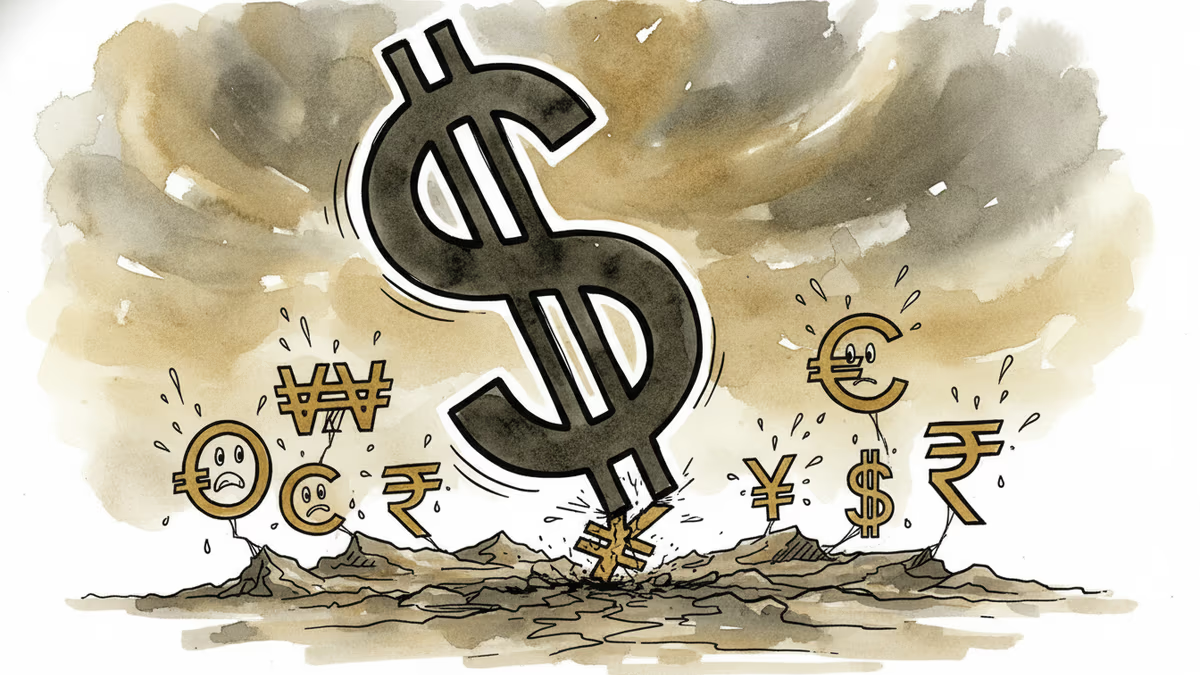
The yen briefly touched 154.8 against the dollar after robust US employment data, creating winners and losers across Asian markets. What this currency shift means for global trade dynamics.
Treasury Secretary nominee Scott Bessent promises 3.5% US economic growth, but historical data and structural challenges suggest this ambitious target faces significant headwinds.
US Q4 growth rate crashes to 1.4% from 3.1%, missing expectations by wide margin. Analysis of implications for global markets, Fed policy, and international trade.
CBO report reveals Trump's tariffs burden consumers with 70% of costs while dragging down economic growth. What this means for your wallet and the global economy.
The yen briefly touched 154.8 against the dollar after robust US employment data, creating winners and losers across Asian markets. What this currency shift means for global trade dynamics.
Thoughts
Share your thoughts on this article
Sign in to join the conversation