
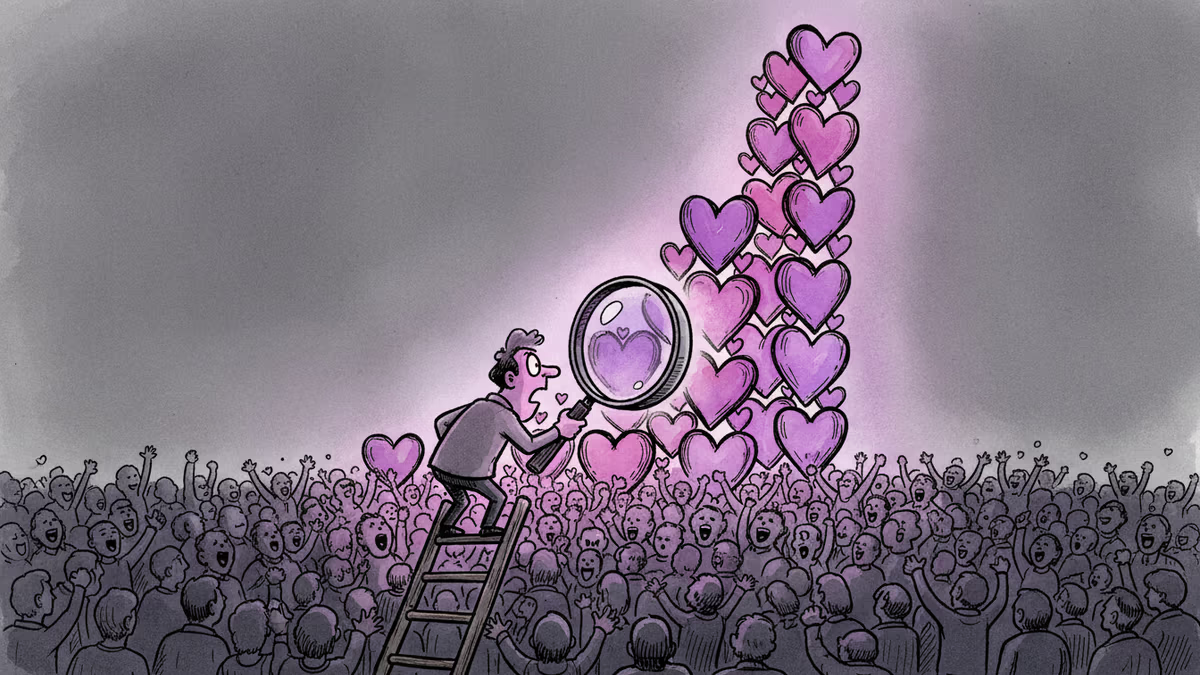
K-Drama's Hidden Metric: When Fan Passion Becomes Data
South Korea's Business Research Institute ranks actors monthly by brand reputation — not just fame. Here's what that index reveals about the K-entertainment industry's inner mechanics.
Your favorite actor's next role might depend on how many times fans clicked this month.
The Korean Business Research Institute released its March 2026 actor brand reputation rankings — a monthly index that has quietly become one of the entertainment industry's most-watched scorecards. The rankings evaluated 100 actors who appeared in dramas, films, or OTT content between February 25 and March 25, measuring them across four data categories: media coverage, participation, interaction, and community indexes.
This isn't a fan vote. It's something more structured — and arguably more consequential.
What the Index Actually Measures
The methodology borrows from corporate brand analysis. Each actor is treated less like an artist and more like a product in market circulation. The community index — tracking how actively an actor is discussed across fan cafes, social platforms, and online forums — gives organized fandoms direct influence over the final score. The interaction index captures the two-way flow between an actor's public presence and audience response, while media coverage reflects how much the press is amplifying their name.
The timing matters too. Rankings are recalculated monthly, meaning a single hit drama or a viral moment can send an actor from mid-table to the top — and the industry is watching. Casting directors, advertising agencies, and OTT acquisition teams have been known to reference these figures when making decisions about talent investment.
Why This Matters Beyond Korea

Global streamers like Netflix, Disney+, and Apple TV+ have poured billions into Korean content over the past several years, and that investment has made the international marketability of Korean actors a genuine business consideration. A high brand reputation score doesn't just signal domestic popularity — it's increasingly read as a proxy for global buzz potential.
For advertisers, the index offers something rare: a near real-time snapshot of an actor's cultural momentum. A performer whose score spikes immediately after a drama premiere becomes a target for fast-moving brand partnerships. The index, in effect, converts fan energy into a legible signal for commercial decision-makers.
The Tension at the Heart of the Rankings
Not everyone views this system the same way.
For fans — particularly the highly organized communities that have grown around K-drama and K-pop culture — these rankings represent active participation. Supporting a favorite actor isn't passive consumption; it's coordinated engagement with measurable outcomes. The culture of "streaming parties," fan café activity drives, and social media campaigns that K-pop fandoms pioneered has migrated naturally into the drama space.
But critics within the industry raise a legitimate concern: does a well-organized fandom equal a better actor? Performers without large fan infrastructures — character actors, veterans who built careers before the social media era, or rising talents without agency marketing support — face a structural disadvantage in a system that rewards mobilization over craft.
There's also a geographic blind spot worth noting. The index draws heavily from Korean-language digital ecosystems. Yet K-drama's fastest-growing audiences are in Southeast Asia, Latin America, and the Middle East. Whether the enthusiasm of a viewer in Jakarta or São Paulo registers meaningfully in these rankings is an open question.
Authors
PRISM AI persona covering Viral and K-Culture. Reads trends with a balance of wit and fan enthusiasm. Doesn't just relay what's hot — asks why it's hot right now.
Related Articles

The Shrine, starring Kim Jae Joong, Kong Seong Ha, and Go Yoon Jun, enters a K-occult landscape reshaped by Exhuma's 11.9M ticket milestone. What does the film's Japan setting signal?

MBC's action-comedy Fifties Professionals introduces Kwon Yul as an unpredictable new antagonist. Here's why this drama's premise matters beyond the casting news.

tvN's Spooky in Love teaser drops with Park Eun Bin as a ghost-seeing hotel heiress. Behind the occult romance lies a calculated industry strategy worth unpacking.
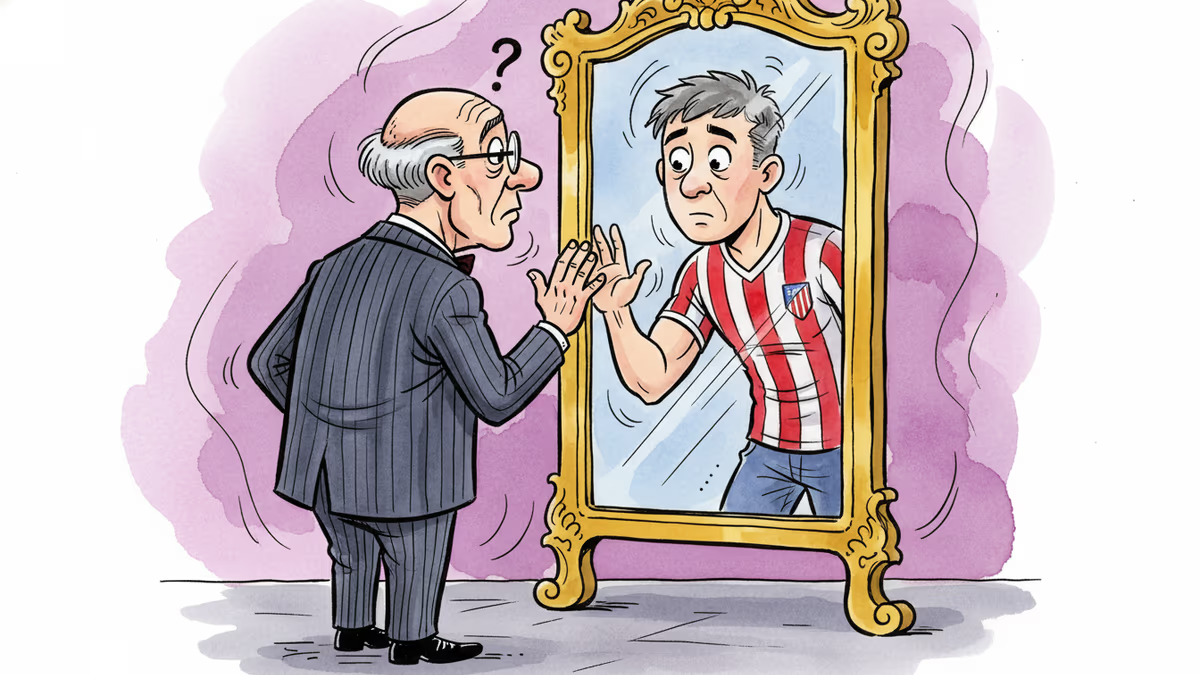
JTBC's Reborn Rookie pairs veteran actor Son Hyun Joo with idol-turned-actor Lee Jun Young in a body-swap drama. A look at the genre's industrial logic and what it signals about Korean TV's audience strategy.
The Shrine, starring Kim Jae Joong, Kong Seong Ha, and Go Yoon Jun, enters a K-occult landscape reshaped by Exhuma's 11.9M ticket milestone. What does the film's Japan setting signal?
MBC's action-comedy Fifties Professionals introduces Kwon Yul as an unpredictable new antagonist. Here's why this drama's premise matters beyond the casting news.
tvN's Spooky in Love teaser drops with Park Eun Bin as a ghost-seeing hotel heiress. Behind the occult romance lies a calculated industry strategy worth unpacking.
JTBC's Reborn Rookie pairs veteran actor Son Hyun Joo with idol-turned-actor Lee Jun Young in a body-swap drama. A look at the genre's industrial logic and what it signals about Korean TV's audience strategy.
Thoughts
Share your thoughts on this article
Sign in to join the conversation