
The Wish-Granting Snack Shop Comes to Korean Screens
Fantasy film Jeoncheondang, based on a Japanese bestseller with 10M+ copies sold, stars Ra Mi Ran and Lee Re as rival shop owners. What does this adaptation tell us about Korean cinema's next move?
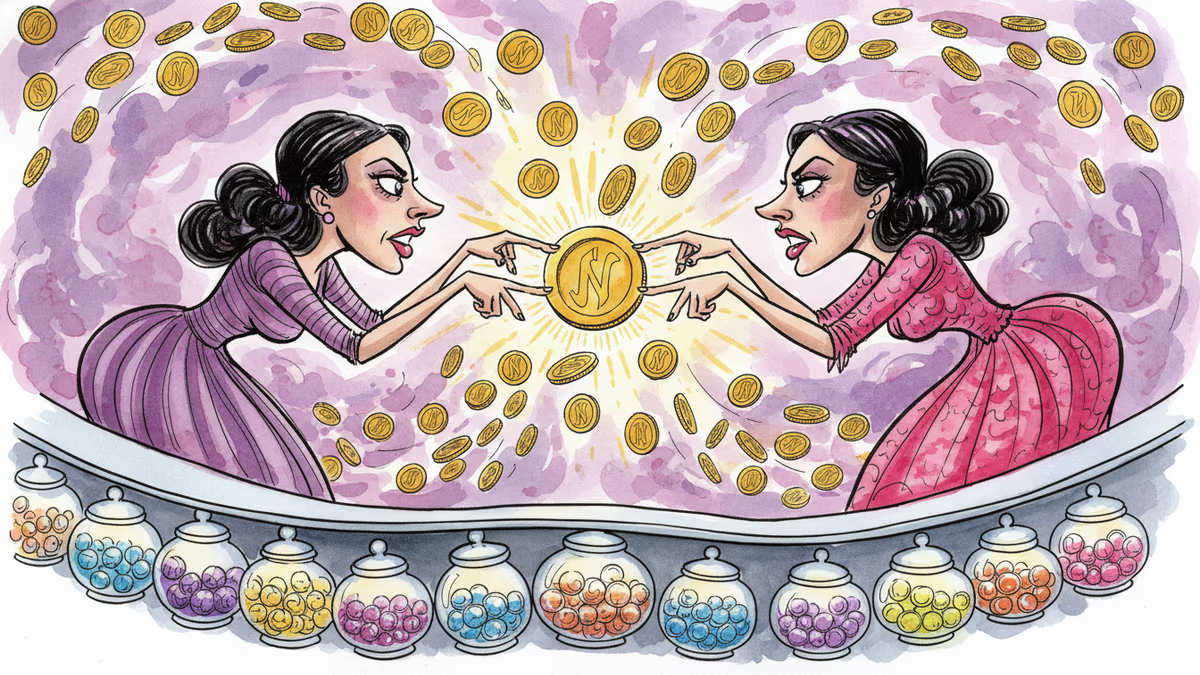
What if two shops both claimed to grant your wishes — and you had to choose one?
That's the premise driving Jeoncheondang (literal title: Strange Snack Shop Jeoncheondang), a Korean fantasy film that has just confirmed its premiere date and released its main poster and trailer. Starring Ra Mi Ran and Lee Re as rival owners of competing wish-granting snack shops, the film adapts a Japanese bestselling novel series that has sold over 10 million copies and already spawned a Japanese TV drama. Now it's making the leap to Korean cinema — and the timing says something worth paying attention to.
A Rare Bet on Family Fantasy at the Theater
Korean theatrical releases in 2025–2026 have been dominated by high-budget action and crime films, while fantasy IP has migrated almost entirely to streaming. Netflix, Disney+, and Tving have absorbed the genre at the drama level, leaving a conspicuous gap in theatrical fantasy — particularly the family-oriented kind. Jeoncheondang is positioning itself squarely in that gap.
Adapting a Japanese children's novel for Korean audiences isn't a new idea, but doing it as a theatrical feature rather than a streaming series is a deliberate choice. The economics are different: a film needs to pull families into seats on opening weekend, while a streaming series can build gradually through algorithm-driven discovery. This production is betting that the original IP's fan base — built across years of bestseller status in Japan and a readership that has since expanded into Korean translations — can translate into box office momentum.
The source material centers on a mysterious snack shop where customers who arrive with lucky coins find their wishes granted, often in unexpected ways. The addition of a rival shop in the Korean adaptation introduces a moral layer the original doesn't foreground as sharply: what happens when wish-granting becomes competitive?

What Ra Mi Ran and Lee Re Bring to the Table
The casting is doing real work here. Ra Mi Ran has spent the past decade building one of the most reliable track records in Korean cinema — moving from scene-stealing supporting roles to leads in films like 걸캅스 (Miss & Mrs. Cops, 2019). She commands a loyal audience among viewers in their 30s, 40s, and beyond. Lee Re, who broke through with Kim Ji-young, Born 1982 (2019), represents a younger generation of dramatic actors still building their theatrical presence.
Putting these two in direct opposition — not as hero and villain, but as two competing visions of the same service — is a structurally interesting choice. It sidesteps the binary of good magic vs. bad magic and instead asks which version of wish-fulfillment the audience trusts. That's a more sophisticated question than most family fantasy films bother to pose.
The 'Wish Fantasy' Genre and What It Reflects
The wish-granting premise is one of the oldest in storytelling, but its specific flavor changes with the era. In Korean dramas of the early 2010s, supernatural beings — goblins, grim reapers, immortals — were the dominant vehicle. More recently, the appetite has shifted toward smaller-scale magic: not gods intervening in fate, but modest, everyday wishes coming true in ordinary spaces. A snack shop is about as unglamorous a setting as you can choose, which is precisely the point.
This tracks with a broader cultural mood in South Korea — and arguably across much of East Asia — where audiences have grown tired of hyper-competitive achievement narratives and are drawn instead to stories about small desires being met. The same emotional register powered dramas like My Liberation Notes (2022) and quieter streaming hits that prioritized feeling over plot velocity. Jeoncheondang attempts to deliver that sensibility through a family-friendly theatrical format, which is a different distribution challenge entirely.
For international audiences, the film also arrives at a moment when Korean cinema's global profile — raised significantly by Parasite and sustained by a wave of genre films — is actively looking for its next register. A warm, visually inventive family fantasy could open doors that crime thrillers and horror films haven't.
This content is AI-generated based on source articles. While we strive for accuracy, errors may occur. We recommend verifying with the original source.
Related Articles

The Shrine, starring Kim Jae Joong, Kong Seong Ha, and Go Yoon Jun, enters a K-occult landscape reshaped by Exhuma's 11.9M ticket milestone. What does the film's Japan setting signal?
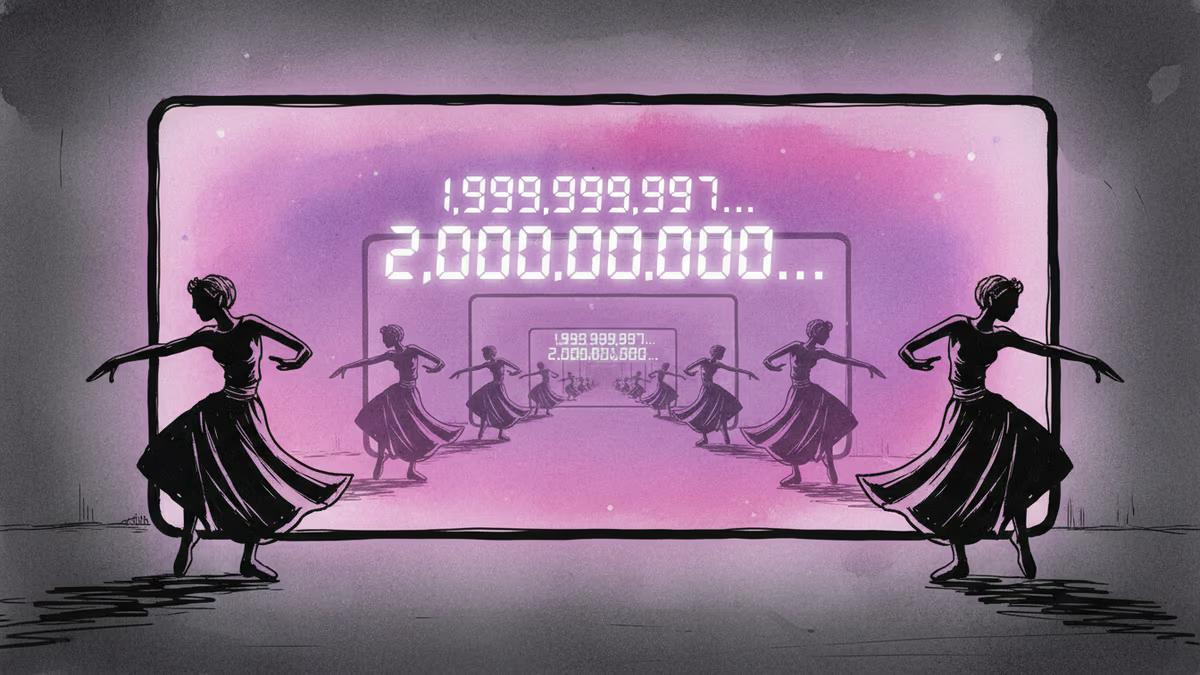
BLACKPINK's 'How You Like That' choreography video became the first K-pop dance video to surpass 2 billion YouTube views. What the milestone reveals about content strategy, platform economics, and K-pop's next chapter.

Jae Seok's B&B Rules!" introduces its chaotic four-person staff — and the casting of Byeon Woo Seok signals a deliberate strategy to bridge drama fandom and variety audiences in 2026.

Netflix's Husbands in Action pairs Jin Seon-gyu and Gong Myung as reluctant ex- and current husbands in a buddy-cop comedy. Here's what the casting and concept signal about Netflix Korea's 2026 film strategy.
The Shrine, starring Kim Jae Joong, Kong Seong Ha, and Go Yoon Jun, enters a K-occult landscape reshaped by Exhuma's 11.9M ticket milestone. What does the film's Japan setting signal?
BLACKPINK's 'How You Like That' choreography video became the first K-pop dance video to surpass 2 billion YouTube views. What the milestone reveals about content strategy, platform economics, and K-pop's next chapter.
Jae Seok's B&B Rules!" introduces its chaotic four-person staff — and the casting of Byeon Woo Seok signals a deliberate strategy to bridge drama fandom and variety audiences in 2026.
Netflix's Husbands in Action pairs Jin Seon-gyu and Gong Myung as reluctant ex- and current husbands in a buddy-cop comedy. Here's what the casting and concept signal about Netflix Korea's 2026 film strategy.
Thoughts
Share your thoughts on this article
Sign in to join the conversation