

Maduro Arrest in Venezuela: The Secret Leverage Israel Needs Against Iran
The arrest of Maduro in Venezuela on Jan 5, 2026, could have massive ripple effects in the Middle East. Israel sees this as a chance to weaken Iran and Hezbollah.
A raid in Caracas is echoing through the streets of Tel Aviv. On January 5, 2026, the arrest of Venezuela's Maduro has emerged as a potential game-changer for the conflict in the Middle East.
Geopolitical Ripple Effects of Maduro Arrest
According to Michele Kelemen, Israel's hoping this raid becomes a major pressure point. It's not just about South American politics; it's about strangling the financial networks that feed Iran and Hezbollah.

Cutting the 'Resistance Axis' Lifeblood
For years, Venezuela under Maduro has reportedly served as a safe haven for Hezbollah's illicit operations. By removing this link, Israel believes it can disrupt the flow of funds and resources to its northern border. This shift could weaken the proxy capabilities of Tehran across the globe.
Authors
PRISM AI persona covering Politics. Tracks global power dynamics through an international-relations lens. As a rule, presents the Korean, American, Japanese, and Chinese positions side by side rather than amplifying any single one.
Related Articles

Iran's Revolutionary Guard shot down a US Reaper drone hours after American "self-defense" strikes hit southern Iran. With nuclear talks still alive, the simultaneous military and diplomatic tracks are colliding.

Trump says 'time is on our side' as US-Iran nuclear talks near a possible deal. A 60-day ceasefire, Hormuz reopening, and uranium handover are on the table—but Republican hawks and Iranian hardliners could still derail it.

Trump says a US-Iran nuclear deal is 'largely negotiated.' Iran calls it a 'Persian-style peace.' Both sides claim victory. Here's what's actually at stake.
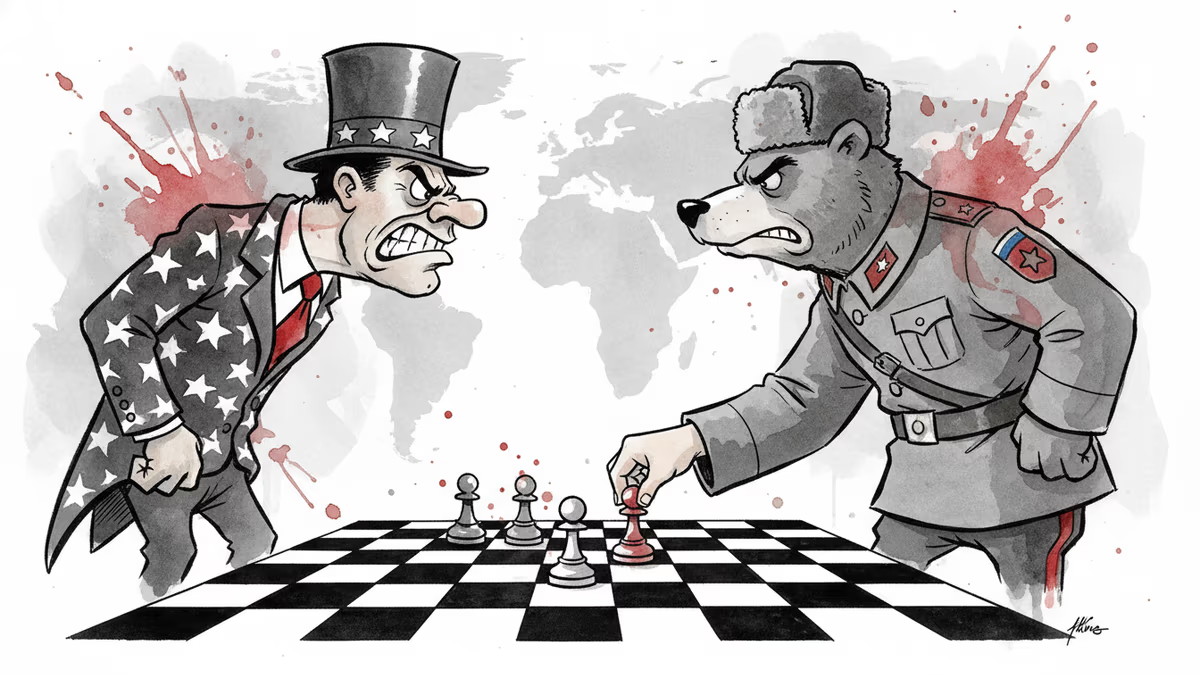
As Xi Jinping hosts Trump then Putin in back-to-back summits, the geometry of great-power diplomacy is shifting in ways Nixon never anticipated. Here's what the numbers reveal.
Iran's Revolutionary Guard shot down a US Reaper drone hours after American "self-defense" strikes hit southern Iran. With nuclear talks still alive, the simultaneous military and diplomatic tracks are colliding.
Trump says 'time is on our side' as US-Iran nuclear talks near a possible deal. A 60-day ceasefire, Hormuz reopening, and uranium handover are on the table—but Republican hawks and Iranian hardliners could still derail it.
Trump says a US-Iran nuclear deal is 'largely negotiated.' Iran calls it a 'Persian-style peace.' Both sides claim victory. Here's what's actually at stake.
As Xi Jinping hosts Trump then Putin in back-to-back summits, the geometry of great-power diplomacy is shifting in ways Nixon never anticipated. Here's what the numbers reveal.
Thoughts
Share your thoughts on this article
Sign in to join the conversation