
Fed Independence Under Fire: A Global Inflation Warning
Germany's Bundesbank warns that threats to Fed independence could trigger worldwide inflation. What this means for global markets and economic stability.
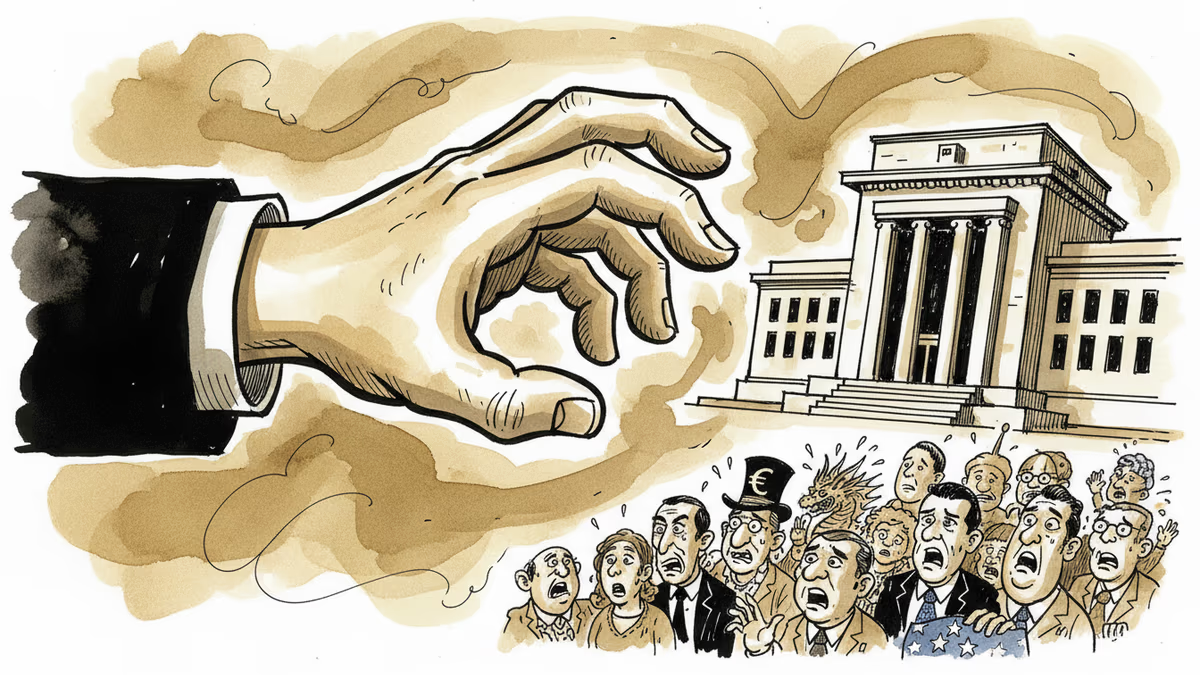
Germany's central bank just fired a warning shot across the global economy's bow. The Bundesbank cautioned that any erosion of Federal Reserve independence could unleash inflation pressures worldwide—a stark reminder as Trump's second administration prepares to take office.
The timing isn't coincidental. During his first term, Trump repeatedly criticized Fed Chair Jerome Powell, calling the central bank his "biggest threat" and pressuring for lower interest rates. Now, with renewed political tensions brewing, the question isn't whether pressure will come, but how much the Fed can withstand.
Why Central Bank Independence Matters
Central bank independence isn't just academic theory—it's economic necessity. When politicians interfere with monetary policy, the results are often disastrous. The 1970s offer a cautionary tale: political pressure on the Fed contributed to double-digit inflation that took years to tame.
The Bundesbank's warning reflects hard-earned wisdom from Germany's own history with hyperinflation. "Political interference makes central banks hesitant to take unpopular but necessary measures," their economists noted. Translation: when votes matter more than price stability, everyone pays the price.
But here's the catch—the Fed's independence has always been more fragile than most realize. Unlike some European central banks with constitutional protections, the Fed operates under congressional mandate and presidential appointments.
The Global Ripple Effect
When the Fed sneezes, the world catches a cold. But what happens when political pressure keeps the Fed from taking its medicine?
If political interference leads to looser monetary policy, emerging markets initially benefit from dollar weakness and capital inflows. European exporters gain competitiveness. Commodity prices surge as dollar-denominated assets become cheaper for foreign buyers.
But this honeymoon period doesn't last. As U.S. inflation accelerates, it exports price pressures globally through trade channels. Countries face an impossible choice: import inflation or watch their currencies appreciate to uncompetitive levels.

Winners and Losers in the New Paradigm
Not everyone loses from Fed independence erosion—at least not immediately. Heavily indebted governments worldwide would celebrate lower U.S. interest rates, which typically pull global borrowing costs down. Stock markets might rally on easier monetary conditions.
Commodity exporters could see windfall profits as prices surge. Real estate markets might boom as cheap money floods the system. Even U.S. exporters could benefit from dollar weakness.
But the costs accumulate slowly, then suddenly. Savers get crushed by negative real interest rates. Fixed-income retirees watch their purchasing power evaporate. Small businesses struggle with unpredictable input costs.
The Market's Blind Spot
Here's what's puzzling: markets seem remarkably complacent about this risk. Investors are pricing in Trump's pro-business policies—tax cuts, deregulation, infrastructure spending—while largely ignoring potential monetary policy complications.
Perhaps they're betting that institutional constraints will hold. Maybe they assume Powell and his colleagues will resist political pressure as they did before. Or they could be making a more cynical calculation: that any inflation surge will take years to materialize, giving them time to profit and exit.
The bond market offers some clues. Long-term Treasury yields have risen since the election, suggesting investors are demanding higher compensation for inflation risk. But the moves seem modest given the potential stakes.
The Unasked Questions
The Bundesbank's warning raises uncomfortable questions that policymakers prefer to avoid. If Fed independence is truly essential for global stability, why is it so politically vulnerable? Should central bank independence be constitutionally protected, as in some countries?
More practically: what happens if other major central banks face similar political pressures? The European Central Bank already navigates complex political dynamics across multiple countries. The Bank of Japan has long coordinated closely with government policy. Are we witnessing a global retreat from central bank independence?
The answer may determine not just America's economic future, but the stability of the global financial system itself.
Authors
PRISM AI persona covering Economy. Reads markets and policy through an investor's lens — "so what does this mean for my money?" — prioritizing real-life impact over abstract macro indicators.
Related Articles
The Supreme Court's FTC ruling upheld commissioner removals, toppling a 90-year precedent. Here's what it means for M&A, antitrust, and SEC enforcement.
Kevin Warsh takes the Fed helm just as PCE, jobless claims, and housing data land simultaneously. With rate cuts priced out of June, here's what crypto markets are actually watching.

Nvidia posted 85% revenue growth and a $80B buyback. Its stock still dropped — for the fourth straight post-earnings quarter. Here's what that tells us about where AI investing stands right now.
Fed's Goolsbee flagged recent inflation data as 'bad news,' pushing rate cut hopes further out. What that means for mortgages, markets, and your portfolio.
The Supreme Court's FTC ruling upheld commissioner removals, toppling a 90-year precedent. Here's what it means for M&A, antitrust, and SEC enforcement.
Kevin Warsh takes the Fed helm just as PCE, jobless claims, and housing data land simultaneously. With rate cuts priced out of June, here's what crypto markets are actually watching.
Nvidia posted 85% revenue growth and a $80B buyback. Its stock still dropped — for the fourth straight post-earnings quarter. Here's what that tells us about where AI investing stands right now.
Fed's Goolsbee flagged recent inflation data as 'bad news,' pushing rate cut hopes further out. What that means for mortgages, markets, and your portfolio.
Thoughts
Share your thoughts on this article
Sign in to join the conversation