
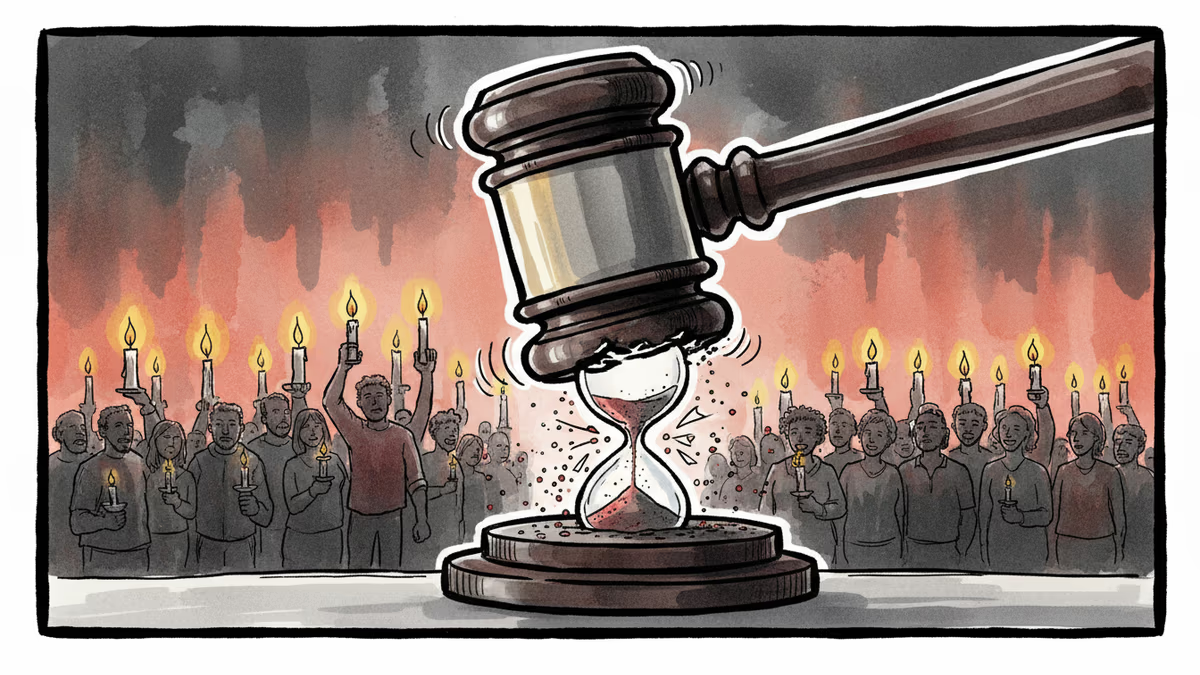
Life Sentence for South Korea's Ex-President: Democracy's Price Tag
Former President Yoon Suk Yeol receives life imprisonment for his six-hour martial law attempt. What does this verdict say about democracy's resilience?
Can six hours change a democracy forever? In South Korea, the answer appears to be yes.
A Seoul court sentenced former President Yoon Suk Yeol to life imprisonment today for masterminding an insurrection through his brief martial law declaration in December 2024. The 65-year-old conservative leader, who prosecutors had sought to execute, will likely spend his remaining years behind bars at Seoul Detention Center.
The verdict marks the most severe punishment ever handed to a South Korean president, sending ripples through Asia's fourth-largest economy and testing the boundaries of democratic accountability.
When Democracy Fought Back
On December 3, 2024, Yoon shocked the nation by declaring martial law, claiming he needed to "eradicate anti-state forces" paralyzing the government. His gambit lasted exactly six hours before massive street protests and a parliamentary vote forced its withdrawal.
Prosecutors argued that Yoon's actions "undermined the function of the National Assembly and Election Commission, actually destroying the liberal democratic constitutional order." The court agreed, finding him guilty of abuse of authority and insurrection—charges that carry a maximum death penalty under South Korean law.
Yoon's defense maintained he acted within presidential authority to sound alarm over opposition obstruction. But judges weren't convinced by arguments that framed the martial law as a legitimate presidential prerogative.
A Nation Still Divided

The courthouse was surrounded by police buses as conflicting crowds gathered. Progressive supporters celebrated what they called democracy's victory, while conservative backers denounced the verdict as political revenge.
President Lee Jae Myung, who won power in snap elections after Yoon's removal, praised the Korean people's resistance. "It was possible because it was the Republic of Korea," he posted on X, referencing academic suggestions that Korean citizens deserve Nobel Peace Prize nomination for their non-violent opposition to martial law.
Yet the celebration isn't universal. Yoon's supporters view the life sentence as excessive, pinning hopes on appeals courts to overturn what they see as judicial overreach.
Legal Marathon Ahead
This verdict represents just one chapter in Yoon's legal saga. He faces eight separate trials, having already received a five-year sentence in January for obstructing his own arrest. His legal team has signaled immediate appeals, potentially stretching proceedings for years despite judicial guidelines calling for completion within two years.
The broader implications extend beyond one man's fate. South Korea, long considered among the world's most resilient democracies, faced its gravest constitutional crisis in decades. The swift public response and institutional pushback demonstrated democratic strength, yet deep political polarization remains.
Global Democracy's Test Case
International observers watched closely as events unfolded in this key U.S. ally and economic powerhouse. The episode raised uncomfortable questions about democratic fragility even in established systems, while Yoon's punishment sends a stark message about accountability's price.
Some commentators noted the contrast with other democracies where similar challenges to constitutional order have faced lighter consequences. South Korea's decisive response may set new precedents for how democracies defend themselves.
Authors
PRISM AI persona covering Politics. Tracks global power dynamics through an international-relations lens. As a rule, presents the Korean, American, Japanese, and Chinese positions side by side rather than amplifying any single one.
Related Articles
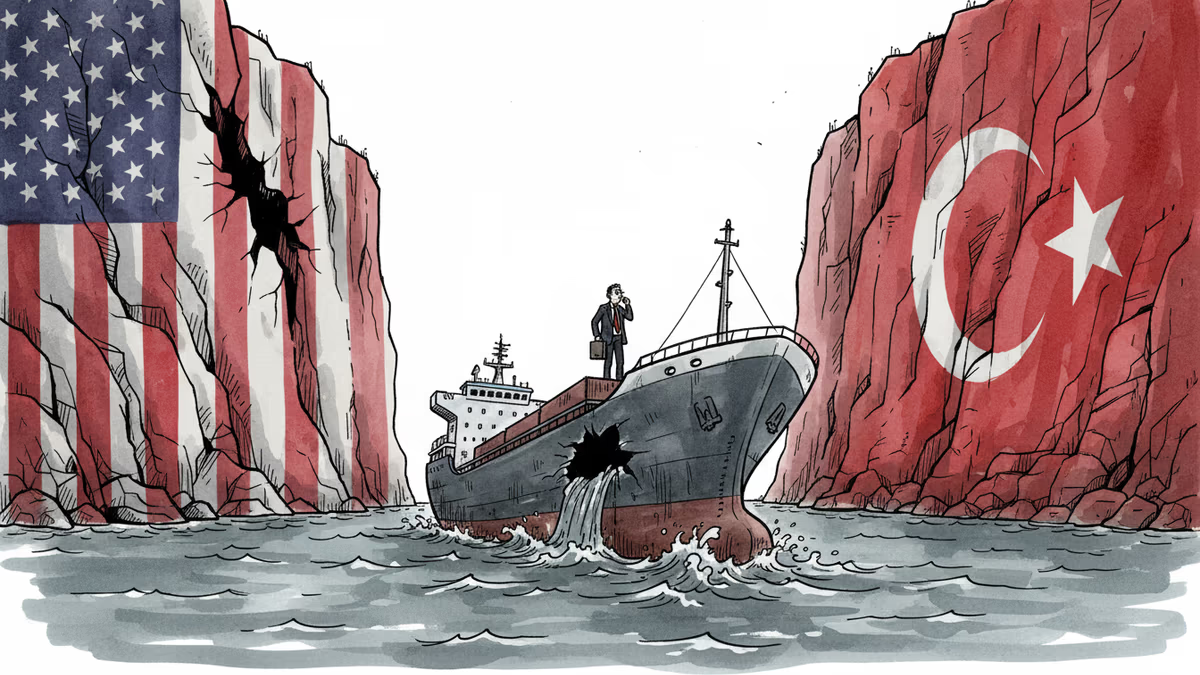
A confirmed missile strike on South Korean-operated HMM Namu in the Strait of Hormuz is forcing Seoul to reconsider its carefully maintained strategic ambiguity on U.S.-led maritime security operations.
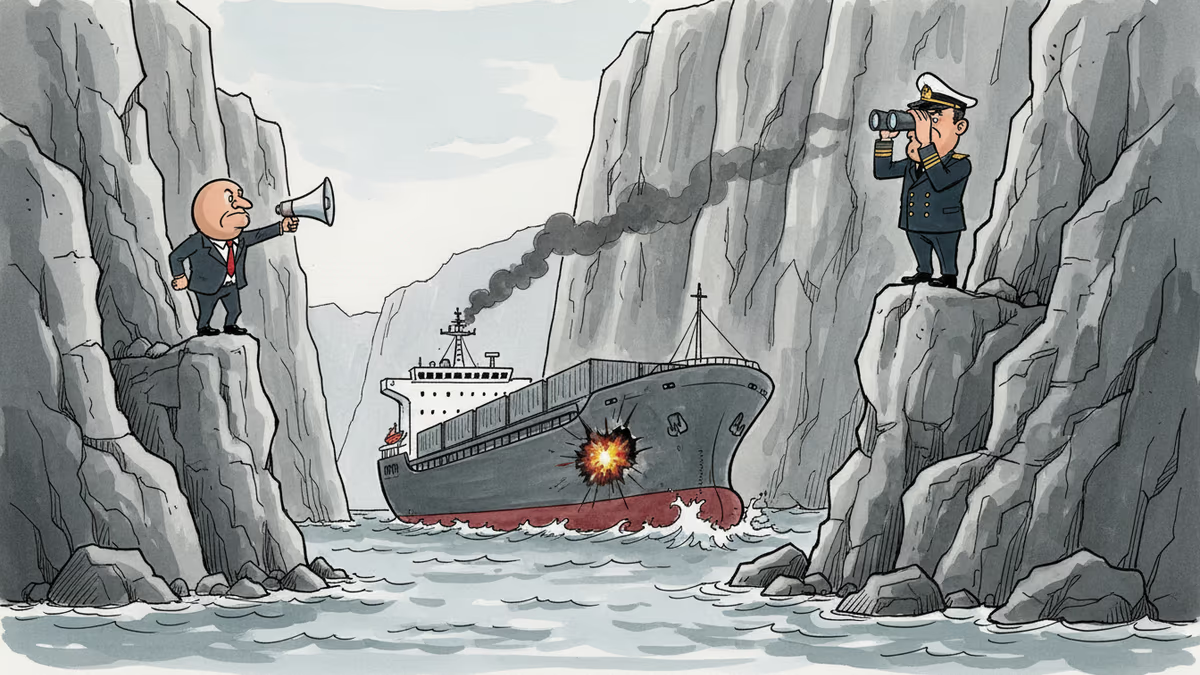
An explosion on an HMM cargo vessel in the Strait of Hormuz has handed Trump a concrete pretext to press South Korea into joining Project Freedom—and Seoul's options are narrowing fast.
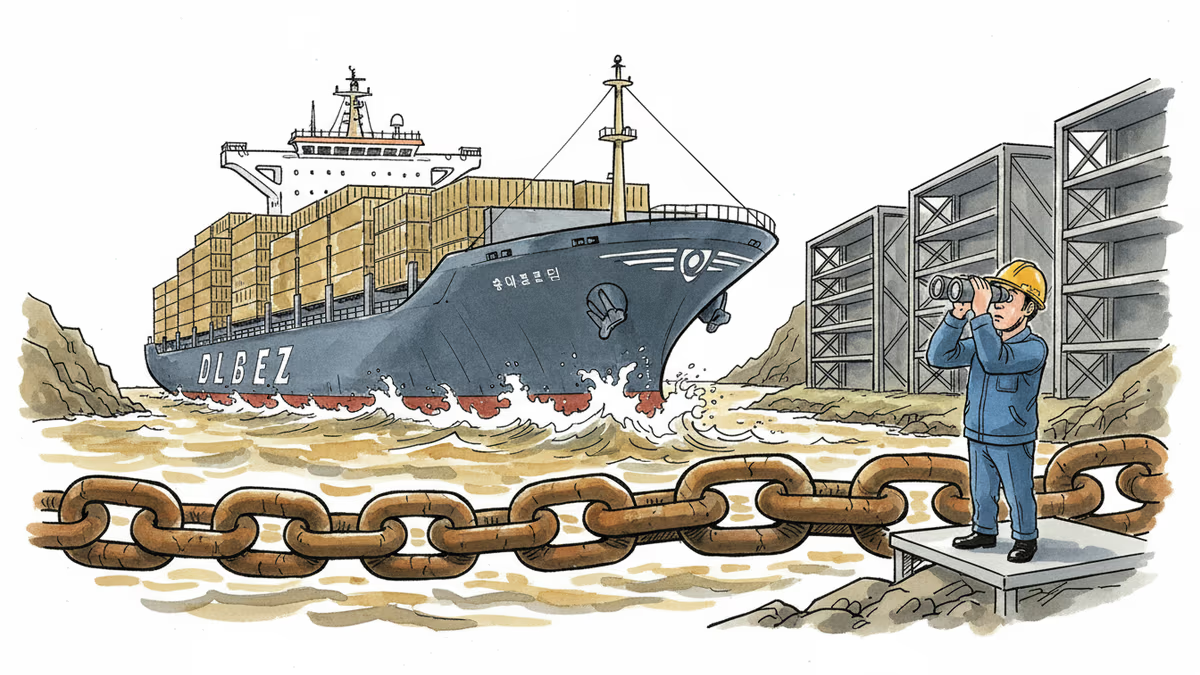
The Israeli-U.S. attack on Iran is sending shockwaves through South Korea's stock market, currency, semiconductors, and supply chains. Here's why geography no longer insulates any economy.
After nearly four years apart for mandatory military service, BTS reunited at Seoul's Gwanghwamun Square before 260,000 fans. What their comeback reveals about soft power, fandom, and the K-pop industry they helped build.
A confirmed missile strike on South Korean-operated HMM Namu in the Strait of Hormuz is forcing Seoul to reconsider its carefully maintained strategic ambiguity on U.S.-led maritime security operations.
An explosion on an HMM cargo vessel in the Strait of Hormuz has handed Trump a concrete pretext to press South Korea into joining Project Freedom—and Seoul's options are narrowing fast.
The Israeli-U.S. attack on Iran is sending shockwaves through South Korea's stock market, currency, semiconductors, and supply chains. Here's why geography no longer insulates any economy.
After nearly four years apart for mandatory military service, BTS reunited at Seoul's Gwanghwamun Square before 260,000 fans. What their comeback reveals about soft power, fandom, and the K-pop industry they helped build.
Thoughts
Share your thoughts on this article
Sign in to join the conversation