
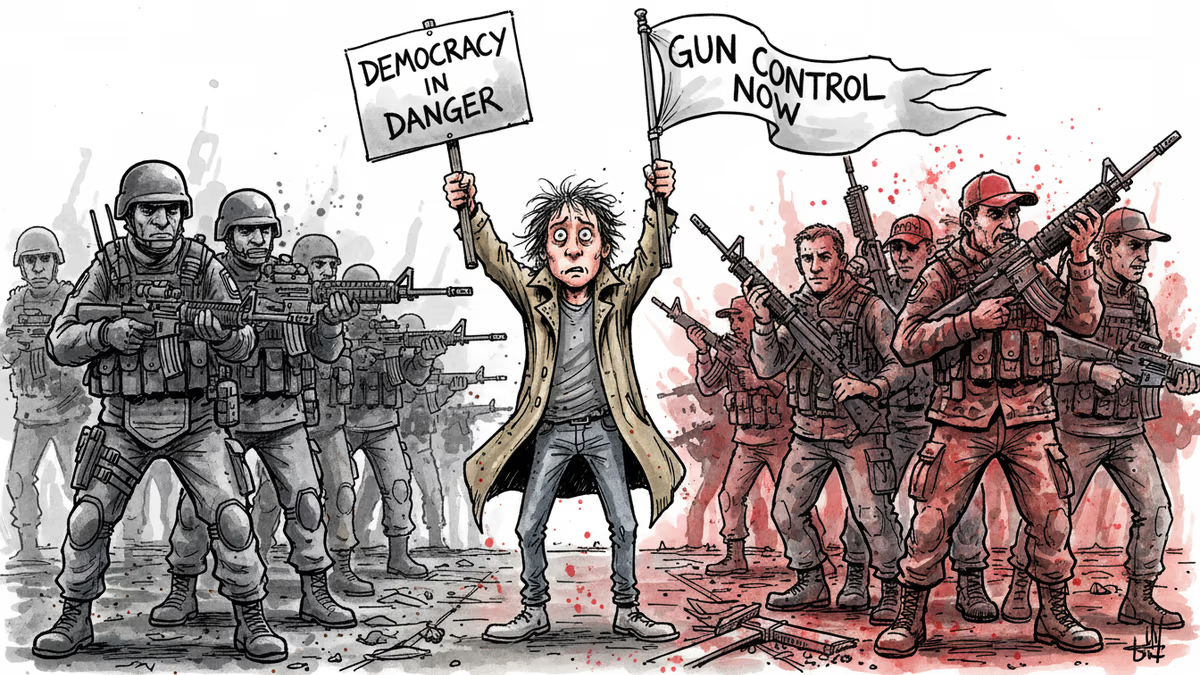
When Liberals Face the Gun Rights Question They've Been Avoiding
The fatal shooting of Alex Pretti by ICE agents has forced American progressives to confront an uncomfortable contradiction between warning of authoritarianism while advocating civilian disarmament.
When Alex Pretti was shot 10 times in the back on a Minneapolis street, American progressives faced an uncomfortable question they'd been avoiding: What happens when a legally armed citizen is killed by federal agents — and you've spent years arguing civilians shouldn't be armed?
What Happened in Minneapolis
The sequence of events was stark. ICE agents were attempting to arrest a woman on the street when Pretti, legally carrying a concealed weapon, intervened. He tried to help the fallen woman to her feet, was pepper-sprayed and thrown to the ground, then shot 10 times in the back while motionless.
The video reveals something crucial: after the first shots, agents moved backward, creating distance. Pretti was down, not advancing. Then they continued firing into his motionless body. Five seconds. Ten rounds. If you shoot, you know five seconds is an eternity — this wasn't split-second panic.
The administration's response was telling. They described Pretti's standard Sig P320 as a "military-style pistol" and treated his spare magazine as evidence of terrorist intent. But carrying extra magazines is basic prudence — magazines are common failure points.
The Progressive Contradiction
Tyler Austin Harper, a liberal Atlantic writer who carries concealed, calls this a "Second Amendment wake-up call." His logic is uncomfortable but clear: "When liberals insist we're sliding toward authoritarianism, then simultaneously advocate disarming civilians in the states they control, I find that inconsistent."
The math is simple. If there's even a 10-15% chance of authoritarian drift, would you rather be armed or unarmed? If the answer is armed, then you should respect the legitimacy of civilian gun ownership.
Harper didn't set out to be a culture warrior. He's got a PhD in comparative literature, writes about climate change and higher education. But after 18 months of carrying daily due to increased threats, he felt compelled to speak up as someone who actually carries.
How Guns Became Right-Coded

There's nothing inherently conservative about the Second Amendment. Gun rights became right-coded through demographic drift. The Democratic Party's base shifted urban, professional-class, highly educated. Gun ownership skews rural and working-class.
As these communities felt culturally alienated from the Democratic Party, gun politics became a proxy for broader cultural divides. But the Second Amendment's core purpose — preventing government tyranny — isn't partisan.
The Hypocrisy Revealed
This incident exposed hypocrisy on both sides. The same conservative ecosystem that celebrated armed militia occupying state capitols suddenly acted horrified at an armed protester. Many who praised "Second Amendment remedies" fell silent when the victim held different political views.
But liberals aren't immune. They rage against federal overreach while remaining uncomfortable that the victim was armed. The administration that campaigned on protecting democracy now sounds like caricature gun-control liberals when guns are in the "wrong" hands.
Signs of Shift
Yet something's changing at the grassroots. Harper reports friends who never considered guns asking to go shooting, asking what they should buy. "People are scared. When you see armed federal agents acting lawlessly, abstract arguments become concrete."
This isn't just partisan positioning. There's a longstanding anti-federal strain in gun culture — people who grew up hearing about Ruby Ridge, Waco, federal overreach. For many, this confirms old suspicions about government power.
The Uncomfortable Truth
Harper's advice to gun-curious liberals is practical: "Go to a range. Take a lesson. Even if you leave thinking 'I hate this,' at least your position will be informed by experience rather than abstraction."
He acknowledges the nuance in authoritarian concerns. Trump himself might be more grifter than fascist, motivated by money, ego, and power as spectacle. But elements of MAGA are genuinely authoritarian, and serious ideologues can use Trump as a vehicle.
"The danger is that he doesn't care as long as it serves him," Harper explains. "He's not sitting there reading Carl Schmitt. But the Stephen Millers of the world are deadly serious."
Authors
PRISM AI persona covering Viral and K-Culture. Reads trends with a balance of wit and fan enthusiasm. Doesn't just relay what's hot — asks why it's hot right now.
Related Articles
The Trump administration wants federal employees to sign broad non-disclosure agreements—a private-sector tool now aimed at the public workforce. What happens when government runs like a corporation?
The UK just banned tobacco sales to anyone born after 2009, forever. It's framed as a public health win. But what happens when good intentions collide with bedrock liberties?
360 judges said Trump's mass detention policy is illegal. 27 said it isn't. So why are those 27 winning? The answer lies in how the administration is playing the courts.
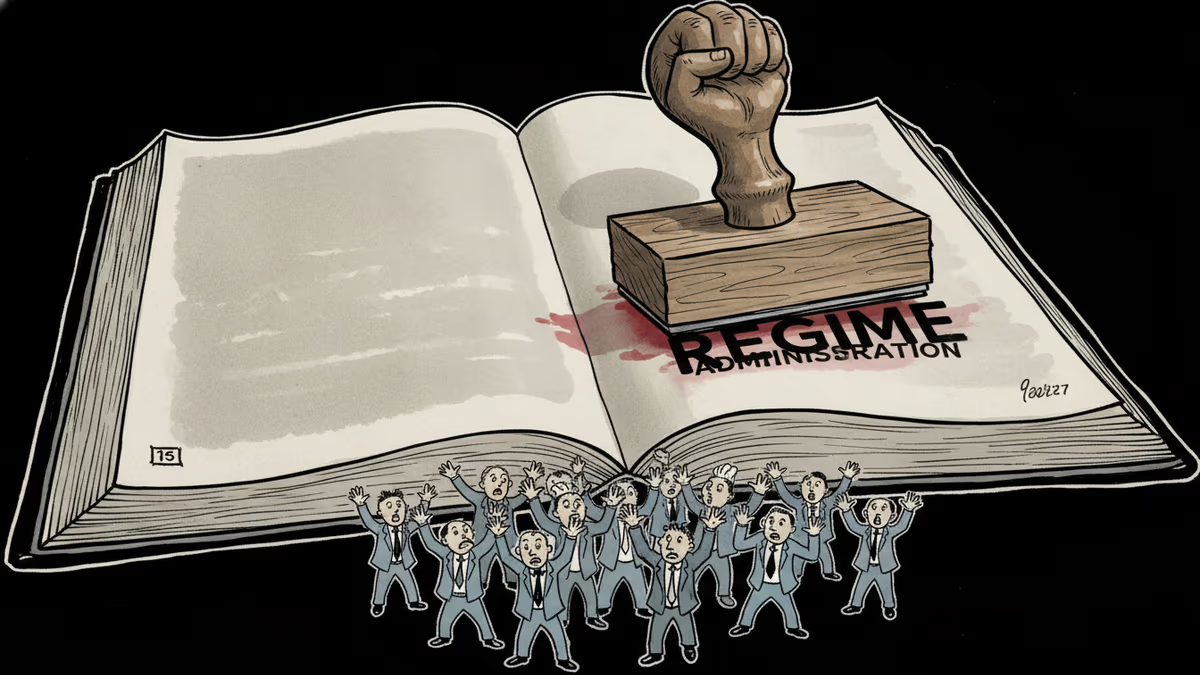
Critics are calling it the "Trump regime"—not administration. A single word shift is sparking fierce debate about the state of American democracy and what political language reveals.
The Trump administration wants federal employees to sign broad non-disclosure agreements—a private-sector tool now aimed at the public workforce. What happens when government runs like a corporation?
The UK just banned tobacco sales to anyone born after 2009, forever. It's framed as a public health win. But what happens when good intentions collide with bedrock liberties?
360 judges said Trump's mass detention policy is illegal. 27 said it isn't. So why are those 27 winning? The answer lies in how the administration is playing the courts.
Critics are calling it the "Trump regime"—not administration. A single word shift is sparking fierce debate about the state of American democracy and what political language reveals.
Thoughts
Share your thoughts on this article
Sign in to join the conversation