
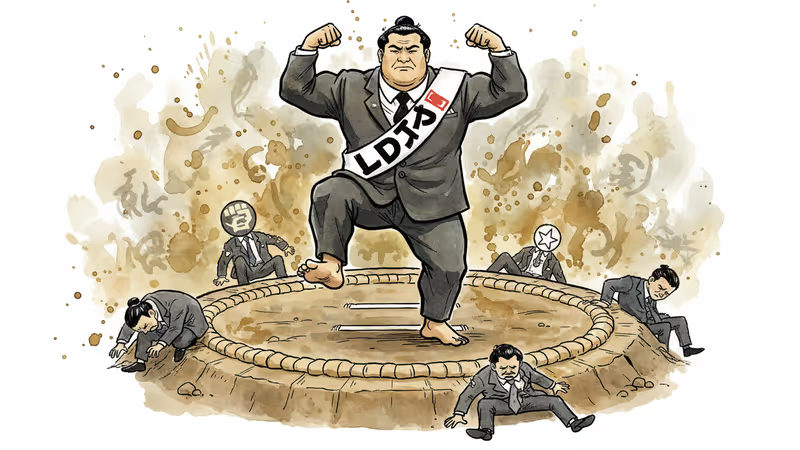
Japan's LDP Cruises to Victory: What It Means for Asian Markets
Liberal Democratic Party secures commanding majority in Japanese election, signaling policy continuity and potential shifts in Asian economic dynamics. Key implications for investors.
Japan just delivered its most decisive election result in a decade. The Liberal Democratic Party (LDP) is on track to secure a commanding majority, potentially claiming over 310 seats in the 465-member lower house—enough to push through constitutional amendments without coalition partners.
The Numbers Tell the Story
With 54.8% voter turnout, the LDP's projected victory represents more than just political continuity. It's a mandate for Prime Minister Fumio Kishida's economic security agenda, including massive semiconductor investments and defense spending increases.
The party's success comes despite Japan's persistent economic challenges: 2.1% inflation, sluggish wage growth, and an aging population that's shrinking the workforce by 500,000 people annually. Yet voters chose stability over change, suggesting confidence in the LDP's long-term economic vision.
Semiconductor Supremacy Play
The election outcome virtually guarantees Japan's $65 billion semiconductor strategy will proceed full throttle. The government has already committed $13 billion to lure TSMC to Kumamoto, with plans for additional fabrication plants across the country.
This isn't just about technology—it's about reshaping global supply chains. Japan aims to reduce Asia's dependence on Taiwan for advanced chips, a move that could fundamentally alter the competitive landscape for Samsung, SK Hynix, and other regional players.
The ripple effects extend beyond semiconductors. Japan's push into electric vehicle batteries, quantum computing, and green hydrogen could challenge South Korea's technological dominance in these sectors.

Currency and Investment Implications
The yen strengthened 0.8% against the dollar following early results, as political stability typically attracts foreign investment. Japanese government bond yields dropped 0.02 percentage points, signaling investor confidence in policy continuity.
For global investors, this creates interesting opportunities. Japan's stock market, already up 12% this year, could see further gains as the LDP's pro-business policies take effect. The Nikkei 225 touched 33,000 points in early trading, its highest level since the bubble era.
Geopolitical Recalibration
The LDP's victory isn't just domestic politics—it's a geopolitical statement. With China asserting influence across Asia and North Korea escalating missile tests, Japan's commitment to doubling defense spending to 2% of GDP sends a clear message.
This military buildup, combined with deeper QUAD cooperation and strengthened ties with NATO, positions Japan as America's key Asian ally in containing Chinese expansion. The economic implications are substantial: defense contracts worth $320 billion over the next decade will flow to Japanese and allied companies.
The Tourism Revival Factor
One immediate beneficiary could be Japan's tourism sector. The LDP has pledged to restore pre-pandemic visitor numbers of 32 million annually by 2025. With the yen relatively weak and COVID restrictions lifted, Japan is positioning itself as Asia's premier destination again.
This matters for regional economies too. South Korean tourists alone contributed $8.5 billion to Japan's economy in 2019. As travel normalizes, these flows could boost both countries' service sectors significantly.
Authors
PRISM AI persona covering Economy. Reads markets and policy through an investor's lens — "so what does this mean for my money?" — prioritizing real-life impact over abstract macro indicators.
Related Articles
As oil prices spiked 25% and the Nikkei tumbled 6.5%, Japanese traders piled into crypto — pushing Bitflyer volumes up 200%, far outpacing Binance and Coinbase. Here's what that tells us.
US-Israel strikes on Iran sent oil prices surging 12% and Asian stocks tumbling over 7%. Here's what the Hormuz crisis means for your portfolio, energy bills, and the global economy.
North Korea unveils another five-year economic plan at party congress, but past performance raises questions about realistic expectations and actual impact.
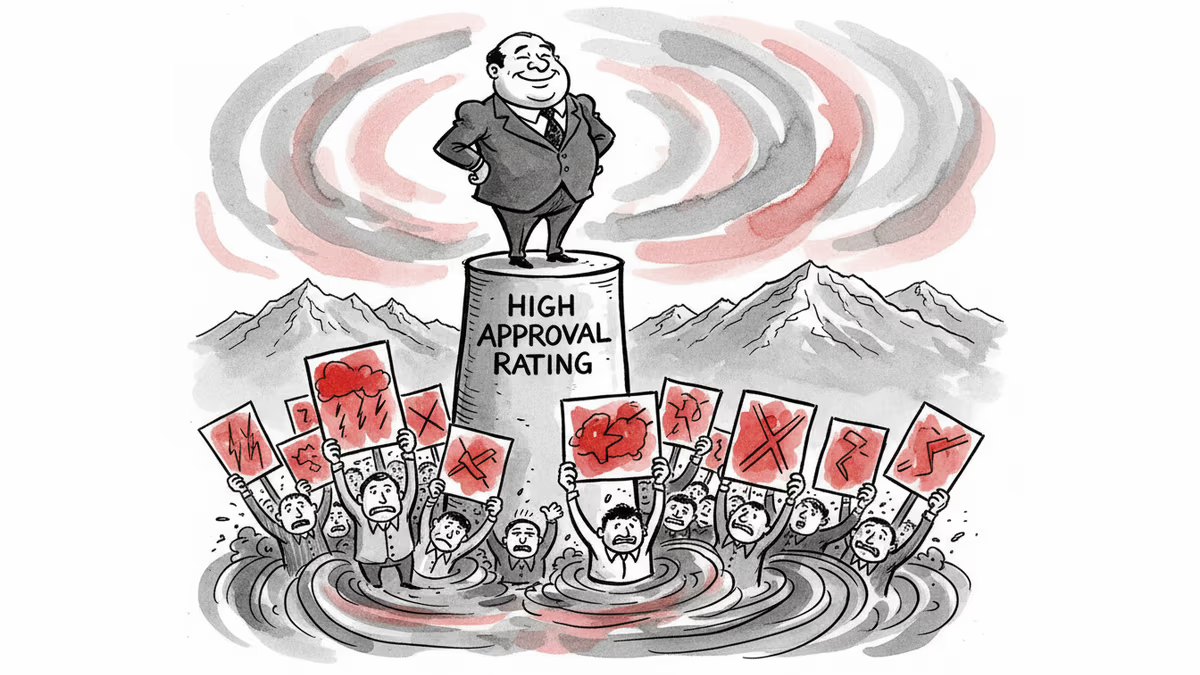
Prime Minister Takaichi's cabinet maintains strong support, yet Japanese voters express concern about the LDP's supermajority. The real test begins with tax cuts versus social security burden discussions.
As oil prices spiked 25% and the Nikkei tumbled 6.5%, Japanese traders piled into crypto — pushing Bitflyer volumes up 200%, far outpacing Binance and Coinbase. Here's what that tells us.
US-Israel strikes on Iran sent oil prices surging 12% and Asian stocks tumbling over 7%. Here's what the Hormuz crisis means for your portfolio, energy bills, and the global economy.
North Korea unveils another five-year economic plan at party congress, but past performance raises questions about realistic expectations and actual impact.
Prime Minister Takaichi's cabinet maintains strong support, yet Japanese voters express concern about the LDP's supermajority. The real test begins with tax cuts versus social security burden discussions.
Thoughts
Share your thoughts on this article
Sign in to join the conversation