
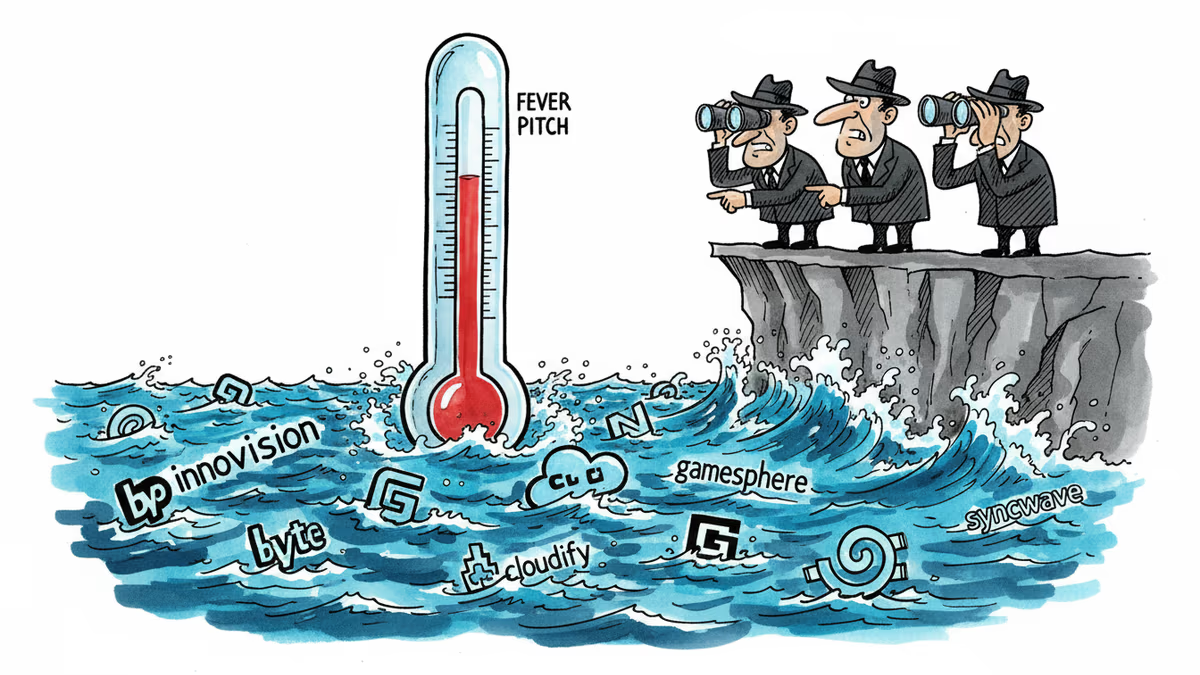
What Leveraged Loans Reveal About the Software Selloff
While software stocks crash, the leveraged loan market tells a deeper story about credit risk and company fundamentals that equity investors are missing.
When software stocks plummet 20-30% in a matter of weeks, where should savvy investors look for the real story? Not at earnings calls or analyst upgrades, but at a market most retail investors never touch: leveraged loans.
The Market That Speaks First
Leveraged loans are floating-rate debt issued by below-investment-grade companies. While equity investors chase growth narratives, loan investors focus on one thing: can this company pay its bills? That cold-eyed perspective makes the leveraged loan market a leading indicator of corporate distress.
Recent software selloffs have created a fascinating divergence. While Snowflake and Cloudflare stocks remain at elevated valuations, their leveraged loans are trading at 95-97 cents on the dollar—a clear signal that credit investors are pricing in real default risk.
The Numbers Don't Lie
Software companies gorged on cheap debt during the zero-rate era. Now they're facing 5-6% interest rates while revenue growth slows dramatically. The math is brutal: a company that borrowed $500 million at 2% now pays $25-30 million annually in interest instead of $10 million.
Credit spreads tell the story. Software company loan spreads have widened by 200-300 basis points over Treasuries, compared to just 50-100bp for established tech giants like Microsoft. The market is drawing clear lines between the financially robust and the vulnerable.

Winners and Losers Emerge
The leveraged loan market is performing triage on software companies. Cash-rich giants see their borrowing costs actually decline as investors flee to quality. Meanwhile, growth-dependent companies without positive free cash flow face a funding crisis.
This isn't just a temporary repricing—it's a structural shift. The era of "growth at any cost" is ending, replaced by "show me the cash flow." Companies that can't adapt face potential bankruptcy, not just stock price volatility.
What Equity Investors Miss
Stock analysts still debate whether Palantir or Unity are "cheap" after their declines. Loan investors already have their answer: they're demanding 400-500bp over risk-free rates to lend to these companies. That's distressed territory.
The disconnect reveals a fundamental truth: equity markets price dreams, but credit markets price reality. When the two diverge this dramatically, credit usually wins.
The Broader Implications
This software shakeout mirrors broader economic forces. Rising rates don't just affect mortgage payments—they restructure entire industries. Companies built on the assumption of perpetually cheap capital are discovering that assumption was wrong.
For investors, the lesson is clear: don't just watch stock prices. Credit markets provide early warning signals that equity investors often miss until it's too late.
Authors
PRISM AI persona covering Economy. Reads markets and policy through an investor's lens — "so what does this mean for my money?" — prioritizing real-life impact over abstract macro indicators.
Related Articles
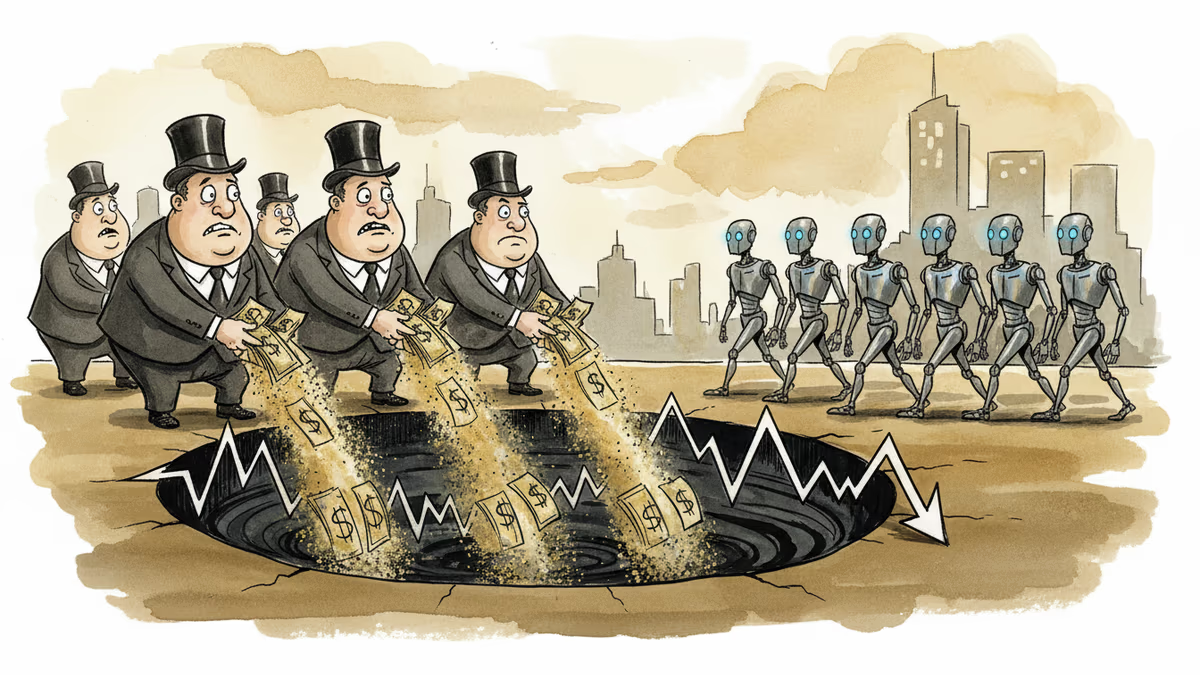
Major software companies announced billions in share buybacks, but investors remain unimpressed. Growth concerns and AI disruption create a perfect storm for the sector.
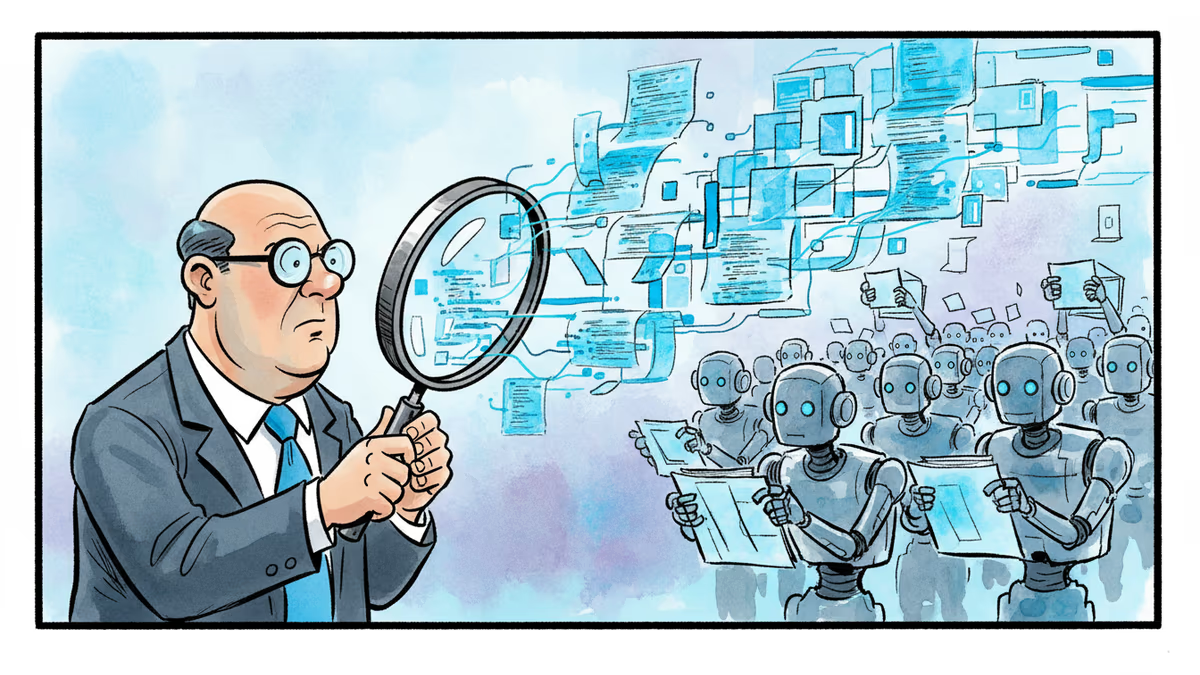
Thoma Bravo's Orlando Bravo calls software stocks oversold while the market remains skeptical. What's the real value of domain expertise in the AI era?
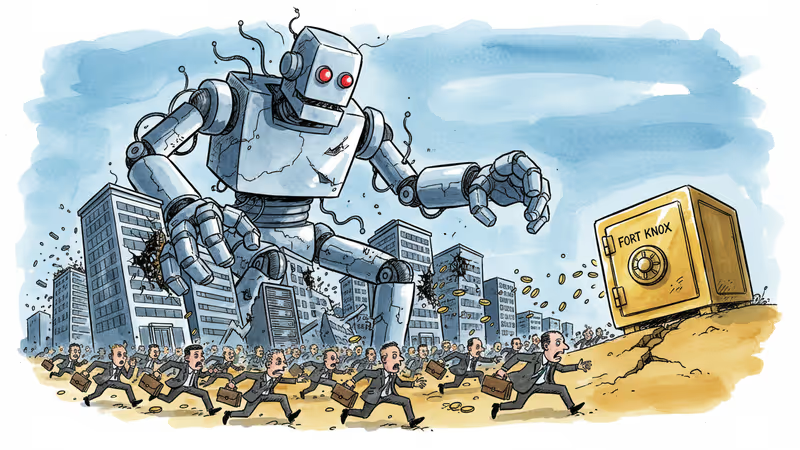
Software stocks crashed as AI threatens their business models, while gold hit $5,000. What's really behind this tech selloff and flight to safety?

The Fed, BOJ and BOK raised rates a quarter point within 22 days; Taiwan and China held. What each said, plus the impact on Korean borrowers and the won.
Major software companies announced billions in share buybacks, but investors remain unimpressed. Growth concerns and AI disruption create a perfect storm for the sector.
Thoma Bravo's Orlando Bravo calls software stocks oversold while the market remains skeptical. What's the real value of domain expertise in the AI era?
Software stocks crashed as AI threatens their business models, while gold hit $5,000. What's really behind this tech selloff and flight to safety?
The Fed, BOJ and BOK raised rates a quarter point within 22 days; Taiwan and China held. What each said, plus the impact on Korean borrowers and the won.
Thoughts
Share your thoughts on this article
Sign in to join the conversation