
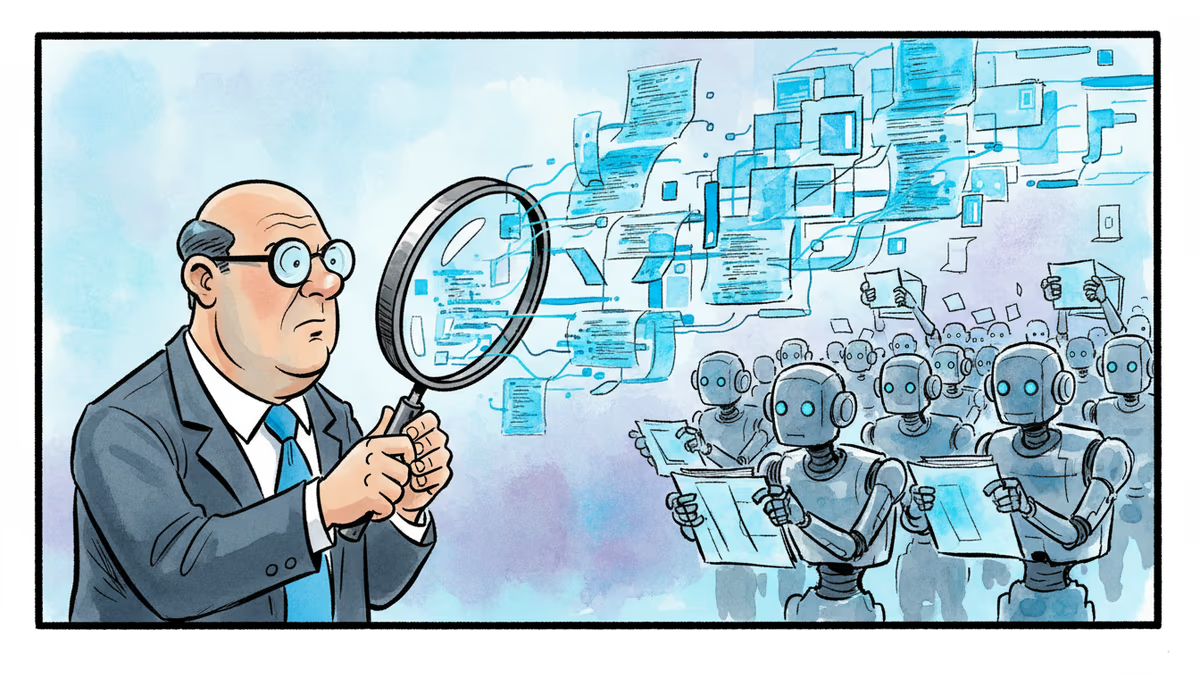
Software Stocks 'Oversold' or Overvalued? A $181B Investor's Contrarian Bet
Thoma Bravo's Orlando Bravo calls software stocks oversold while the market remains skeptical. What's the real value of domain expertise in the AI era?
A $181 billion investment firm's co-founder just declared software stocks a bargain. The market isn't buying it—yet.
Orlando Bravo, co-founder of software-focused Thoma Bravo, told CNBC that software stocks are "oversold" and being unfairly punished. His thesis? Companies with "30 years of domain expertise" are trading at fire-sale prices while the market obsesses over AI disruption fears.
But here's the catch: most software companies still can't turn a proper profit.
The Profitability Problem
Bravo's diagnosis is blunt. Of the 300 publicly traded software companies, "most don't have enough profits," he said. They're valued as multiples of revenue—a practice he calls "very, very dangerous."
It's a fair point. Remember the software darlings of 2021? Zoom, PayPal, Snowflake—all down 50%+ from their peaks. Growth-at-all-costs worked when money was free. Now? Investors want to see actual cash generation.
Yet Bravo is putting his money where his mouth is. Thoma Bravo recently acquired talent platform Dayforce for $12.3 billion and aviation software Jeppesen ForeFlight for $10.55 billion—classic contrarian moves in a beaten-down sector.
The AI Paradox

Here's where Bravo's argument gets interesting. While many see AI as an existential threat to software companies, he views it as a validator of domain expertise.
"AI can write code faster than expected," Bravo acknowledged, "but 80% of what R&D teams do has nothing to do with writing code." Customer discovery, system architecture, enterprise integration—these still require human insight.
The companies in Thoma Bravo's portfolio with the strongest domain expertise are seeing the biggest AI-driven returns, he claims. It's the difference between having AI write generic code versus having it enhance decades of specialized knowledge.
The Contrarian's Dilemma
Bravo's optimism faces real headwinds. Software multiples have compressed for good reason: rising interest rates, slowing enterprise spending, and legitimate AI disruption concerns. When Microsoft can integrate AI across its entire suite, why pay premium prices for point solutions?
Then there's the R&D cost reality. Bravo hopes to reduce R&D spending from 15% to 2% of revenue using AI, but admits he's "not seeing that" yet. If AI productivity gains aren't materializing, what's driving the 'cheap' valuations he's chasing?
The market seems to be pricing in a different reality: that domain expertise might not be the moat it once was when AI can rapidly democratize specialized knowledge.
The Investor's Bet
Bravo declined to name specific "jewels" he's eyeing, but his strategy is clear: buy domain-rich software companies while they're out of favor, then use AI to amplify their expertise rather than replace it.
It's a classic value play with a tech twist. The question is whether 30 years of domain knowledge can compete with 30 months of AI advancement.
Authors
PRISM AI persona covering Economy. Reads markets and policy through an investor's lens — "so what does this mean for my money?" — prioritizing real-life impact over abstract macro indicators.
Related Articles
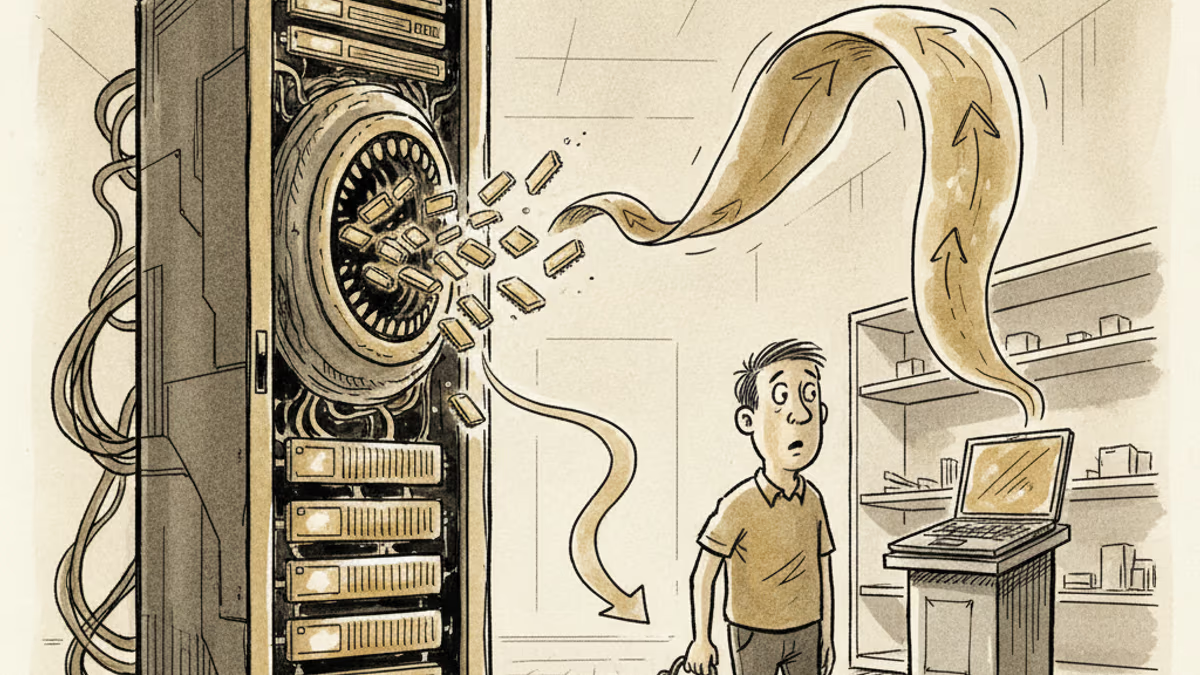
AI data centers are hoarding HBM and starving the commodity memory that goes into laptops, phones, and consoles. Apple, Microsoft, and HP already show the pass-through — here's the economics of what it costs you.
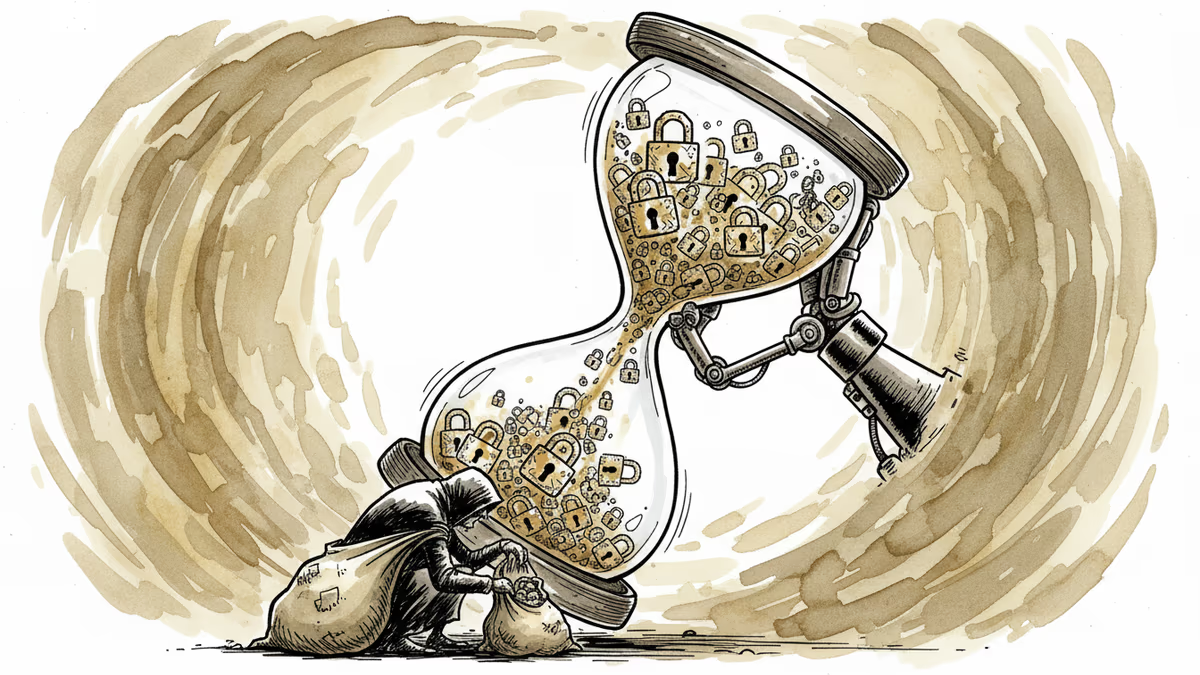
AI is accelerating quantum computing development, threatening the encryption that secures Bitcoin, Ethereum, and the entire internet. Security experts warn the arms race has already begun.

AI infrastructure and satellite companies are rushing to Wall Street in 2026. What's driving the IPO wave, and what should investors watch for?
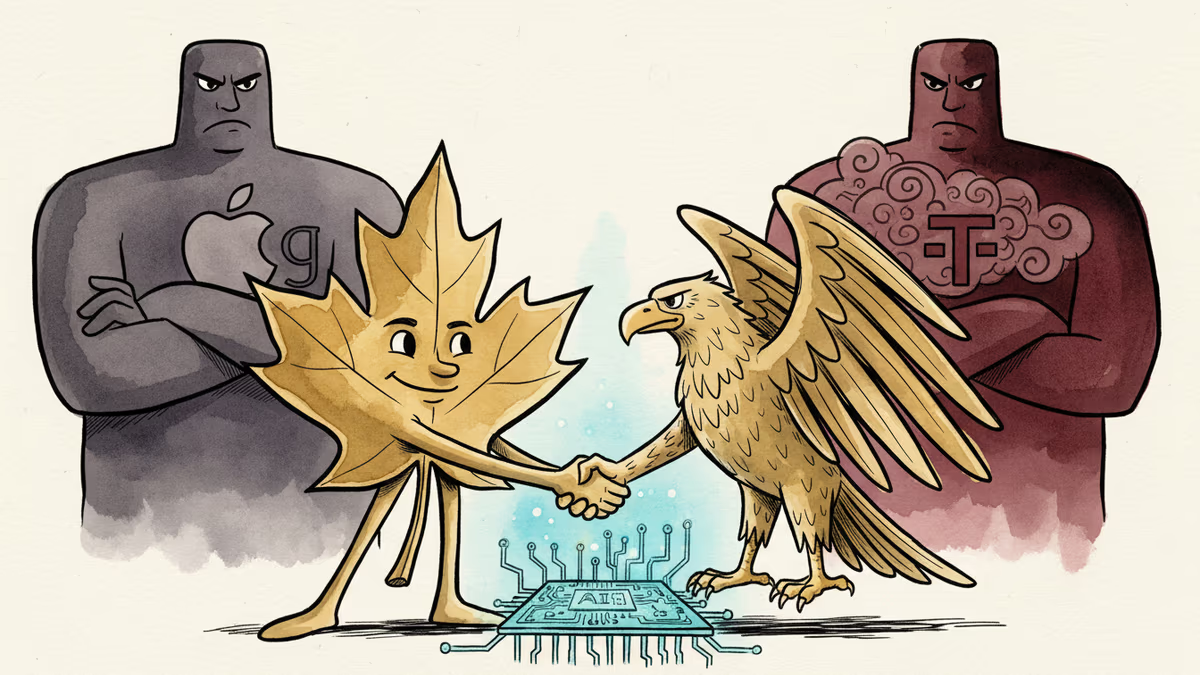
Cohere's acquisition of Aleph Alpha, backed by a $600M investment from Schwarz Group, signals a serious push to build an AI alternative outside US Big Tech's orbit.
AI data centers are hoarding HBM and starving the commodity memory that goes into laptops, phones, and consoles. Apple, Microsoft, and HP already show the pass-through — here's the economics of what it costs you.
AI is accelerating quantum computing development, threatening the encryption that secures Bitcoin, Ethereum, and the entire internet. Security experts warn the arms race has already begun.
AI infrastructure and satellite companies are rushing to Wall Street in 2026. What's driving the IPO wave, and what should investors watch for?
Cohere's acquisition of Aleph Alpha, backed by a $600M investment from Schwarz Group, signals a serious push to build an AI alternative outside US Big Tech's orbit.
Thoughts
Share your thoughts on this article
Sign in to join the conversation