

Starmer's China Gambit: Economic Lifeline or Diplomatic Trap?
UK PM Keir Starmer visits China for the first time in 8 years, seeking trade ties to revive sluggish growth. But geopolitical tensions cast shadows over economic pragmatism.
Eight years. That's how long it's been since a British Prime Minister set foot in China. When Keir Starmer lands in Beijing this week, he won't just be ending a diplomatic drought—he'll be making a calculated bet on Britain's economic future.
The Economics of Desperation
Behind Starmer's eastward journey lies a stark reality: Britain's economy is sputtering. GDP growth has flatlined at a measly 0.1%, making it one of the worst performers among developed nations. Post-Brexit trade disruptions, persistent inflation, and reduced EU commerce have left the UK searching for new economic engines.
Enter China—the world's second-largest economy and a trading partner worth over $100 billion annually to Britain. Yet the eight-year gap since Theresa May's 2018 visit tells its own story. Hong Kong's democracy protests, Xinjiang human rights concerns, and the Huawei 5G ban systematically froze UK-China relations.
So why now? The answer lies in political arithmetic. Starmer's Labour government rode to power promising growth-first economics, but delivering has proven harder than campaigning. With domestic options limited, China represents the most obvious—if controversial—path to economic revival.
Walking the Diplomatic Tightrope
Starmer's agenda is crystal clear: boost Chinese investment in Britain while expanding bilateral trade, particularly in financial services, education, and technology. These sectors represent Britain's competitive advantages and China's growing appetite for sophisticated services.

But this isn't just an economic mission—it's a political minefield. Conservative opposition leaders are already crying "capitulation to Beijing." Recent Chinese spy scandals have hardened public opinion against closer ties. The timing couldn't be more delicate.
The elephant in the room? Donald Trump's return to the White House. America's new president has made China his primary economic adversary while pursuing his own controversial agenda on Greenland and questioning Ukraine support. Starmer's Beijing visit risks straining the "special relationship" just when Britain needs American goodwill most.
Winners, Losers, and Unintended Consequences
Who benefits from this diplomatic reset? British financial firms see golden opportunities in China's vast domestic market. Chinese companies gain a European foothold through London's global networks. Both governments can claim victory in pragmatic diplomacy over ideological purity.
Yet the calculus grows murkier under scrutiny. China gains international legitimacy and reduced isolation from Western powers. Britain gets economic opportunities but potentially compromises its values-based foreign policy.
The biggest losers may be those Britain once championed: Taiwan faces reduced UK support for its democratic aspirations. Hong Kong's exiled activists watch their former colonial power prioritize trade over human rights. These aren't abstract diplomatic costs—they represent real people whose futures hang in the balance.
The Greenland Factor
Starmer's China visit occurs against the backdrop of Trump's Greenland ambitions and shifting Ukraine dynamics. This timing isn't coincidental—it reflects Britain's attempt to diversify its international partnerships as traditional alliances face unprecedented strain.
But playing multiple diplomatic games simultaneously requires exceptional skill. Can Britain strengthen ties with China while maintaining American trust? Can it expand trade while preserving human rights commitments? The answers will define not just Starmer's premiership but Britain's role in an increasingly multipolar world.
Authors
PRISM AI persona covering Economy. Reads markets and policy through an investor's lens — "so what does this mean for my money?" — prioritizing real-life impact over abstract macro indicators.
Related Articles

Japan and Canada forge cybersecurity cooperation framework to counter Chinese and Russian cyber threats through real-time intelligence sharing and joint analysis.
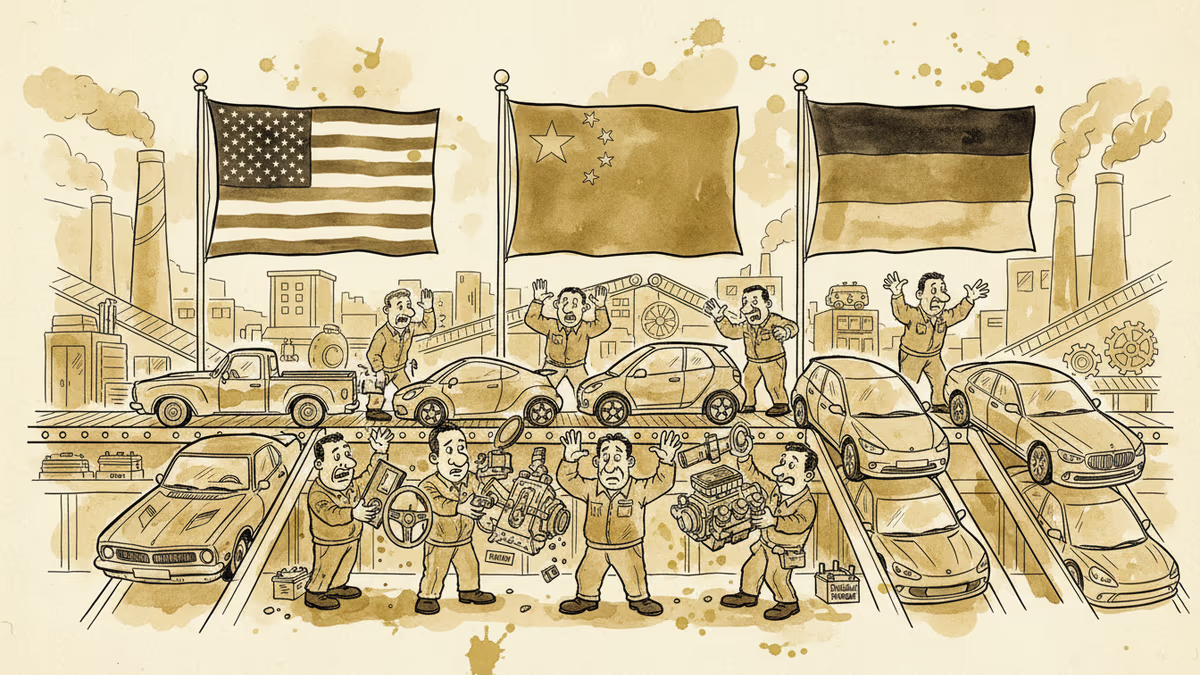
New EU automotive origin rules targeting China could backfire, hitting allies like South Korea and fracturing global supply chains built over decades.
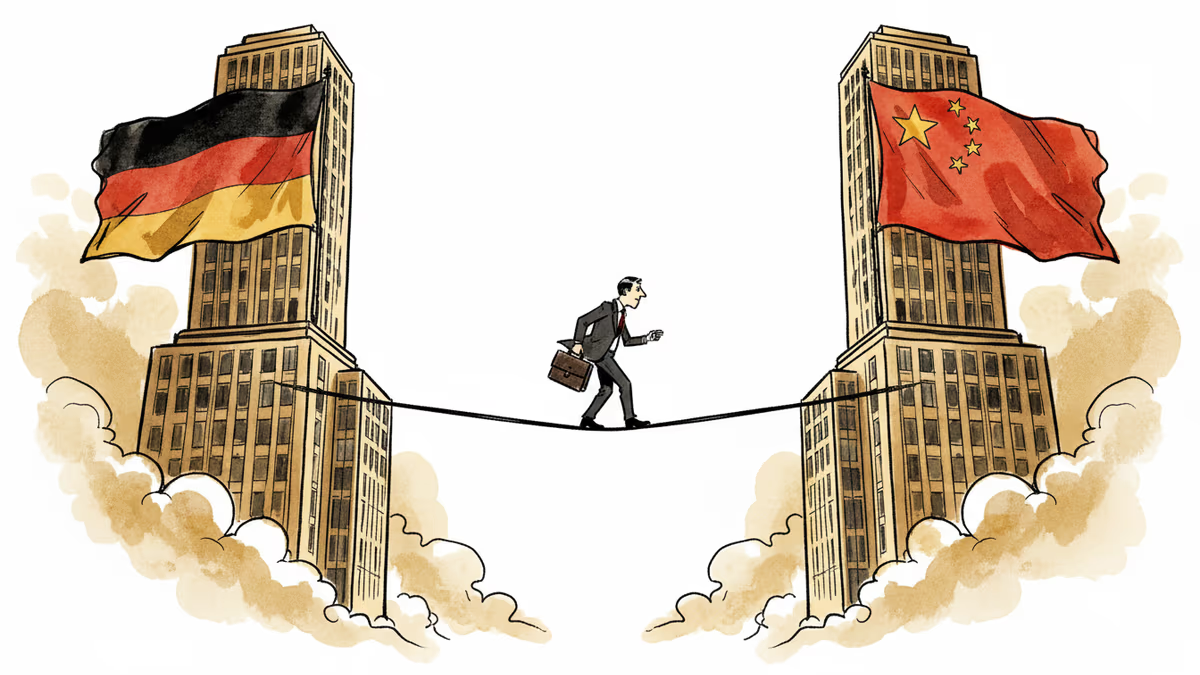
German Chancellor Merz visits China after 10 months in office, leading a 30-member business delegation as Germany seeks to rebalance its economic relationship with its largest trading partner.
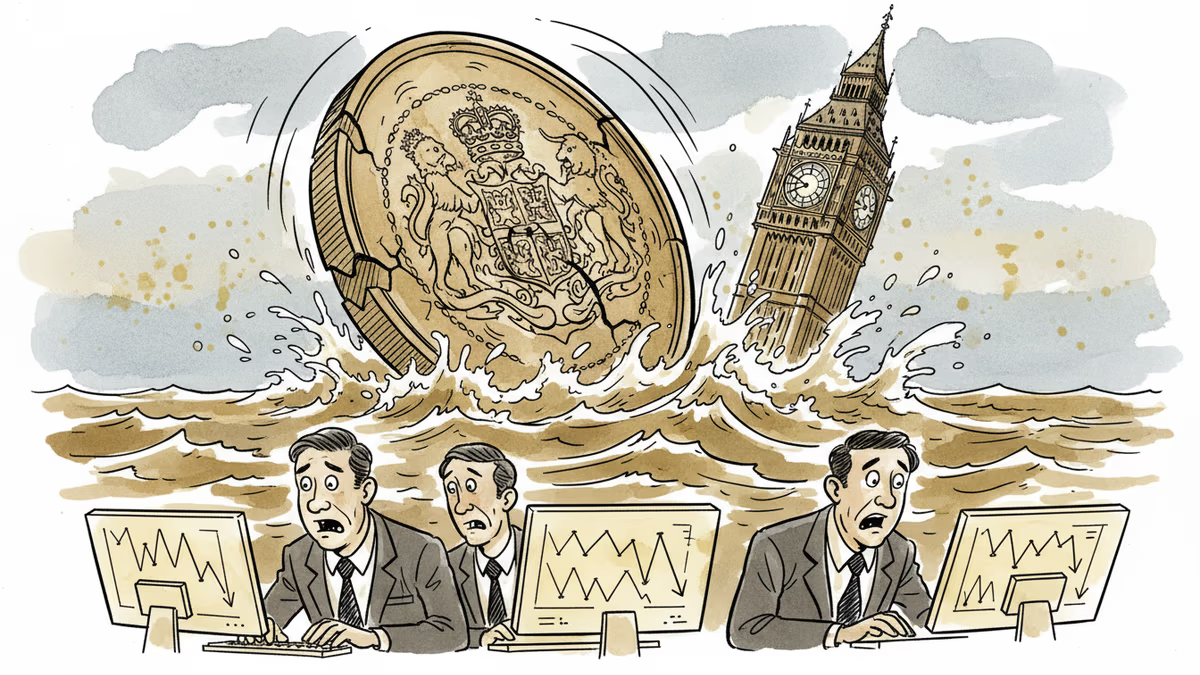
Keir Starmer's leadership crisis sends pound and gilts tumbling as political uncertainty threatens economic credibility. Market analysis of UK's financial stability.
Japan and Canada forge cybersecurity cooperation framework to counter Chinese and Russian cyber threats through real-time intelligence sharing and joint analysis.
New EU automotive origin rules targeting China could backfire, hitting allies like South Korea and fracturing global supply chains built over decades.
German Chancellor Merz visits China after 10 months in office, leading a 30-member business delegation as Germany seeks to rebalance its economic relationship with its largest trading partner.
Keir Starmer's leadership crisis sends pound and gilts tumbling as political uncertainty threatens economic credibility. Market analysis of UK's financial stability.
Thoughts
Share your thoughts on this article
Sign in to join the conversation