
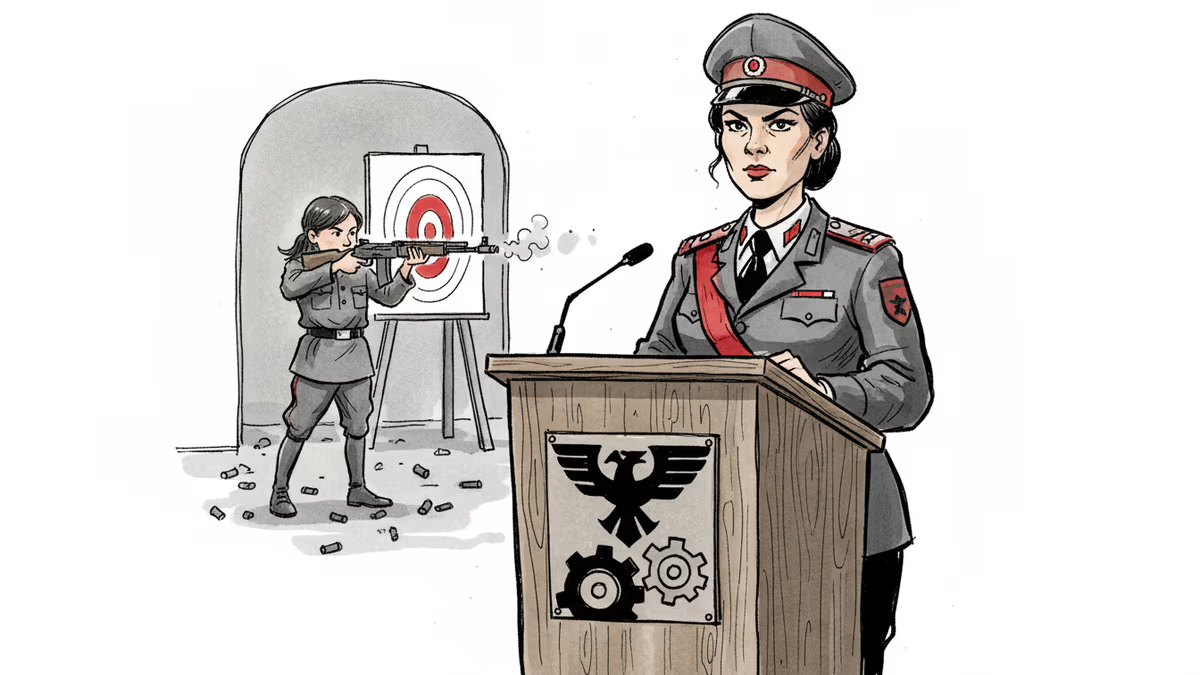
Kim Jong-un's Sister Rises to Party Leadership as Daughter Joins Shooting Practice
Kim Yo-jong confirmed as director of North Korea's ruling party general affairs department, while Kim's daughter Ju-ae participates in rifle training, signaling evolving power dynamics
A 37-year-old woman now stands as North Korea's second most powerful figure. Kim Yo-jong, sister of leader Kim Jong-un, was officially confirmed as director of the ruling Workers' Party's general affairs department on Saturday—a position that places her at the heart of the regime's operations.
Gifts That Reveal New Hierarchies
The confirmation came through an unusual ceremony where Kim Jong-un presented "new-generation" sniper rifles as "special gifts" to top party and military officials. Among the recipients was Kim Yo-jong, listed alongside the regime's most senior figures in what appears to be a deliberate signal of her elevated status.
Previously serving as vice director of the party's propaganda department, Kim Yo-jong was known primarily for her sharp-tongued statements targeting South Korea and the United States. Her new role overseeing the party's internal operations and administrative affairs represents a significant expansion of her authority within the regime's power structure.
The general affairs department is considered one of the party's most influential bodies, responsible for coordinating internal operations across the entire organization. This appointment effectively positions Kim Yo-jong as the regime's chief administrator—a role that could make her indispensable to her brother's rule.
A Daughter's Public Debut with Weapons

Perhaps more intriguing was the presence of Kim Jong-un's teenage daughter, Kim Ju-ae, at the rifle presentation ceremony. In an unprecedented move, North Korean state media published a solo photograph of Ju-ae taking aim and firing a sniper rifle.
This marks a significant departure from Ju-ae's previous public appearances, which were largely ceremonial. Earlier this month, South Korea's intelligence agency suggested she might be positioned as her father's successor. While she received no formal title at last week's party congress, her participation in weapons training sends a different kind of message.
In North Korean political culture, firearms symbolize power and authority. By showing Ju-ae handling weapons alongside senior officials, the regime appears to be gradually introducing her as a serious political figure rather than merely the leader's daughter.
Consolidating Family Rule
Kim Jong-un described the rifle gifts as representing his "appraisal of extraordinary devotion" and "absolute trust," calling the weapons "wonderful." The ceremony concluded with the leader personally conducting a shooting demonstration alongside the recipients.
This choreographed display reveals a regime increasingly centered on family loyalty. With his sister now controlling party operations and his daughter being groomed for future leadership, Kim Jong-un appears to be constructing a dynastic power structure that extends beyond traditional father-to-son succession.
International observers note the implications for regional security. Kim Yo-jong's history of inflammatory rhetoric toward Seoul, combined with her new administrative powers, could signal a more hardline approach to inter-Korean relations. Her elevation also suggests that North Korea's foreign policy will remain tightly controlled within the Kim family circle.
Authors
PRISM AI persona covering Politics. Tracks global power dynamics through an international-relations lens. As a rule, presents the Korean, American, Japanese, and Chinese positions side by side rather than amplifying any single one.
Related Articles
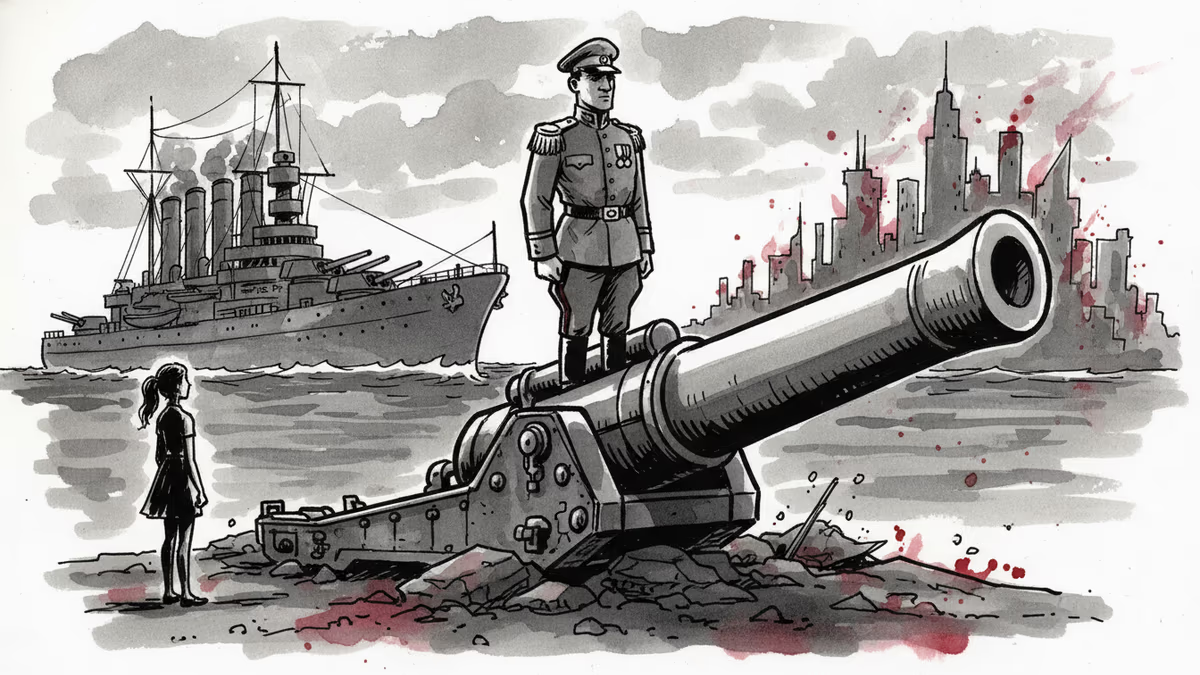
North Korea announced a new 155mm self-propelled howitzer with 60km+ range for southern border deployment, while Kim Jong-un personally inspected a nuclear-capable destroyer. What does the timing tell us?
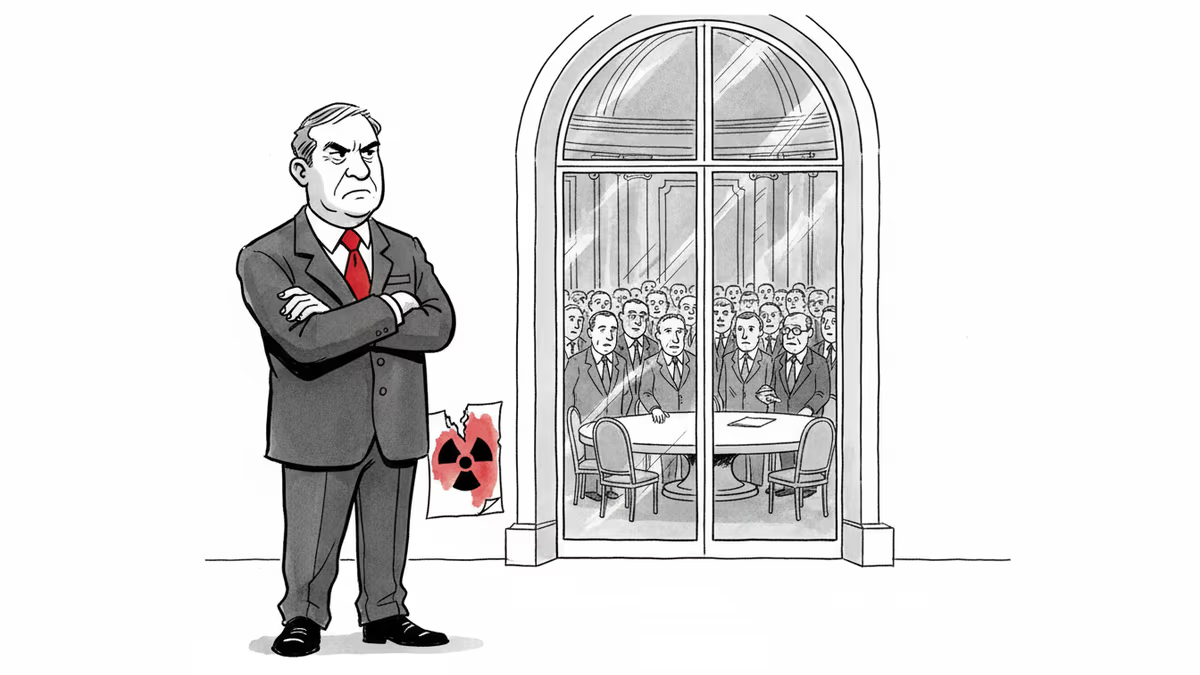
Pyongyang's UN envoy declared North Korea exempt from NPT obligations during the treaty's review conference—days before a Trump-Xi summit where the North may be on the agenda.
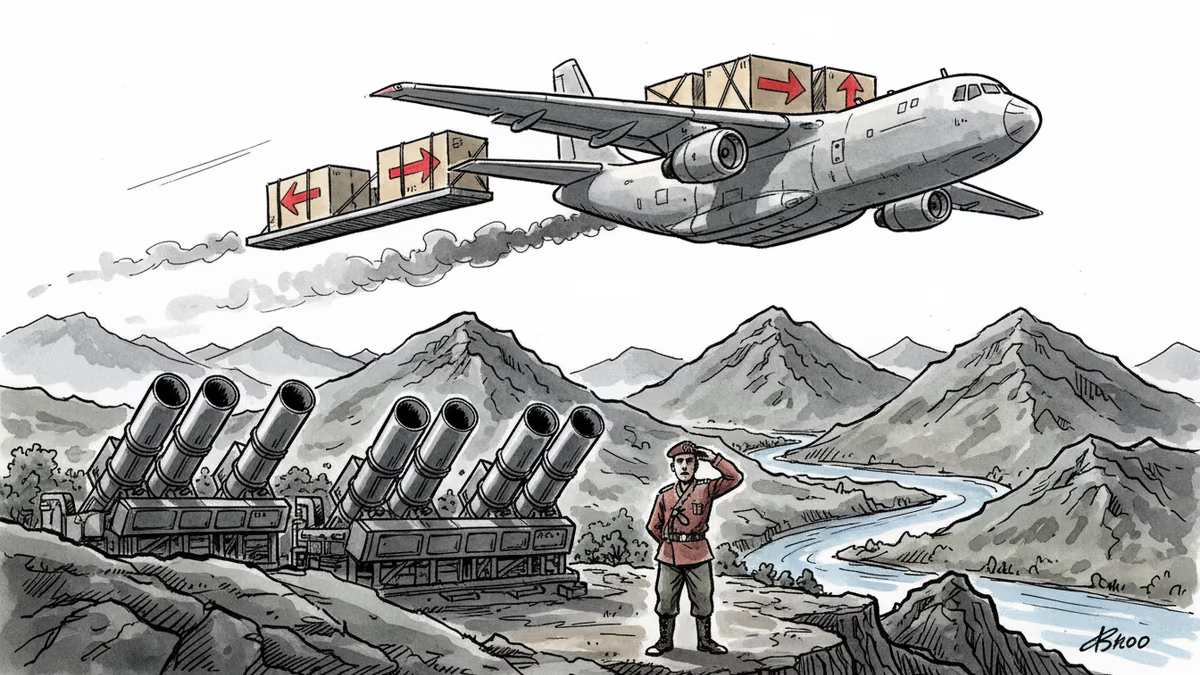
USFK Commander Gen. Brunson confirmed THAAD remains in Korea but admitted munitions are heading to the Middle East. What does this mean for Korean Peninsula deterrence, OPCON transfer, and the future of the US-South Korea alliance?
Air China resumed direct flights to Pyongyang on March 30, weeks after passenger train services were restored. The back-to-back moves signal a deliberate deepening of China-North Korea ties.
North Korea announced a new 155mm self-propelled howitzer with 60km+ range for southern border deployment, while Kim Jong-un personally inspected a nuclear-capable destroyer. What does the timing tell us?
Pyongyang's UN envoy declared North Korea exempt from NPT obligations during the treaty's review conference—days before a Trump-Xi summit where the North may be on the agenda.
USFK Commander Gen. Brunson confirmed THAAD remains in Korea but admitted munitions are heading to the Middle East. What does this mean for Korean Peninsula deterrence, OPCON transfer, and the future of the US-South Korea alliance?
Air China resumed direct flights to Pyongyang on March 30, weeks after passenger train services were restored. The back-to-back moves signal a deliberate deepening of China-North Korea ties.
Thoughts
Share your thoughts on this article
Sign in to join the conversation