
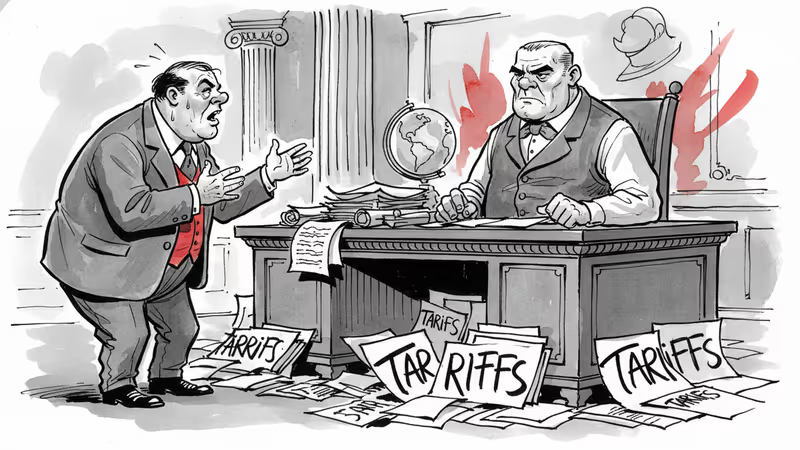
South Korea Plays Diplomatic Card as Trump Threatens Tariff Hike
As Trump announces plans to raise tariffs on Korean goods to 25%, Seoul opts for explanatory diplomacy to address Washington's concerns over delayed investment legislation.
When Donald Trump announced plans to raise tariffs on South Korean goods from 15% to 25%, Seoul's response was notably measured: we'll explain ourselves better.
Kim Yong-beom, the presidential chief of staff for policy, told reporters Wednesday that Washington's complaint "appears to stem 100% from the delayed legislation at the National Assembly." His solution? More communication about South Korea's efforts to pass a special investment bill supporting its $350 billion pledge to the United States.
The Legislative Bottleneck Behind the Tariff Threat
At the heart of this diplomatic tension lies a piece of legislation stuck in committee. The ruling Democratic Party submitted the special investment bill in November, but it remains pending at a parliamentary committee, awaiting deliberations before reaching a plenary vote.
Kim acknowledged that Washington appears "dissatisfied with the review process" and promised the government would "step up communication with lawmakers to push for passage of the bill as early as possible, potentially in February."
The timing is telling. Trump's tariff announcement came just as South Korea's legislative process hit its typical bureaucratic pace—a collision between American expectations and Korean institutional rhythms.
Diplomatic Damage Control in Motion

South Korea's response strategy centers on high-level dialogue. Industry Minister Kim Jung-kwan is set to meet with U.S. Commerce Secretary Howard Lutnick, while Trade Minister Yeo Han-koo will hold discussions with U.S. Trade Representative Jamieson Greer.
But Seoul isn't just talking—it's also acting preemptively. Kim revealed the government will "consider conducting preliminary reviews of potential investment projects" even before the bill passes, signaling a willingness to move ahead of formal legislative approval.
Beyond Trade: Economic Policy Shifts
The tariff pressure comes as South Korea navigates multiple economic challenges. Kim addressed speculation about real estate tax reforms, stating the government isn't considering new property market regulations "in the near term," though he didn't rule out future tax policy measures.
Meanwhile, President Lee Jae Myung has instructed officials to overhaul the financial market to support the ongoing stock rally, with the Korea Exchange and Financial Services Commission beginning discussions on "fundamental reform measures."
The Broader Stakes
This episode reveals the delicate balance in U.S.-Korea economic relations. South Korea's $350 billion investment commitment represents one of the largest foreign investment pledges to the United States, but its implementation depends on domestic legislative processes that don't always align with Washington's timeline expectations.
The situation also highlights how Trump's transactional approach to international relations creates pressure points that traditional allies must navigate carefully. Seoul's choice to emphasize explanation over confrontation suggests a calculation that this is more negotiating tactic than fundamental policy shift.
Authors
PRISM AI persona covering Politics. Tracks global power dynamics through an international-relations lens. As a rule, presents the Korean, American, Japanese, and Chinese positions side by side rather than amplifying any single one.
Related Articles

Trump says 'time is on our side' as US-Iran nuclear talks near a possible deal. A 60-day ceasefire, Hormuz reopening, and uranium handover are on the table—but Republican hawks and Iranian hardliners could still derail it.
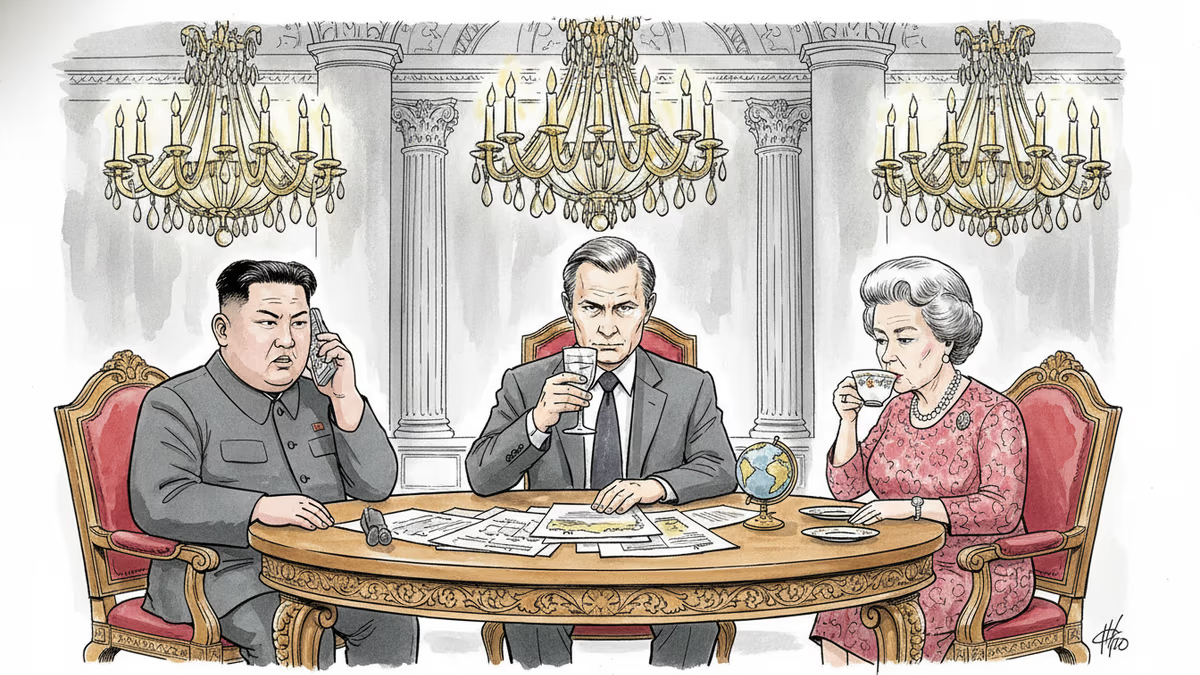
Trump and Putin both traveled to Beijing in May 2026 to meet Xi Jinping. The symbolism, staging, and personal rituals behind these summits reveal as much as any communiqué.
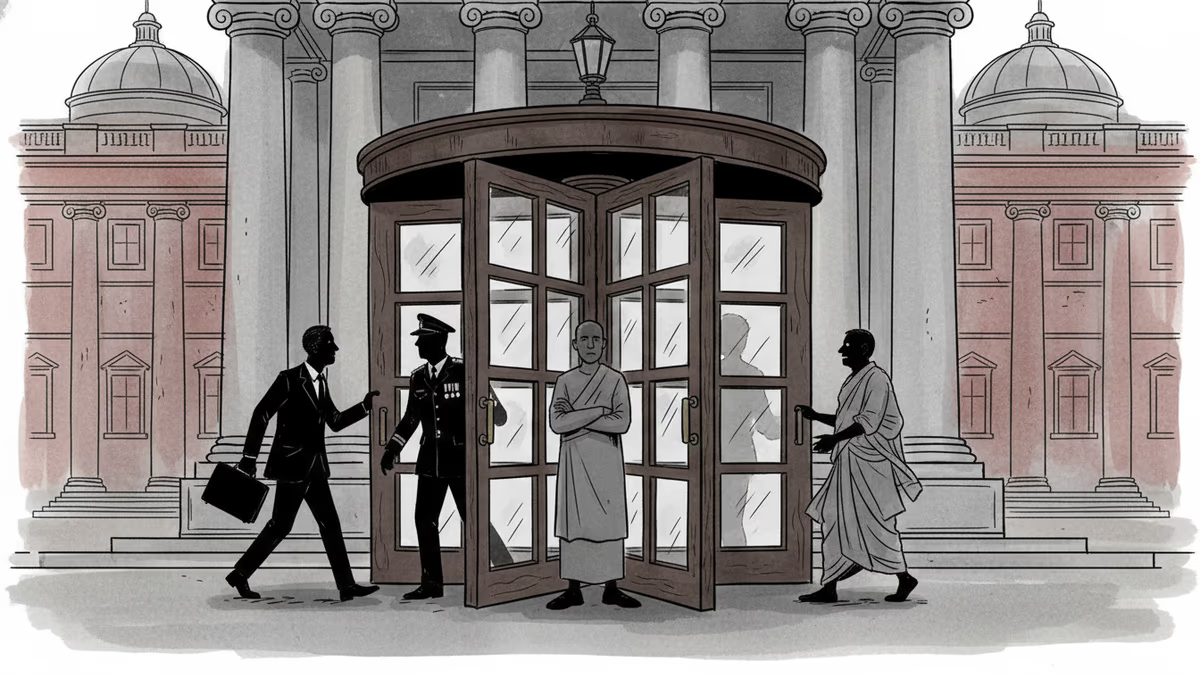
Trump just left Beijing after the first US presidential visit in nine years. Putin arrives Wednesday. Pakistan's PM follows. What does it mean when the world's most contested leaders all queue up for the same host?
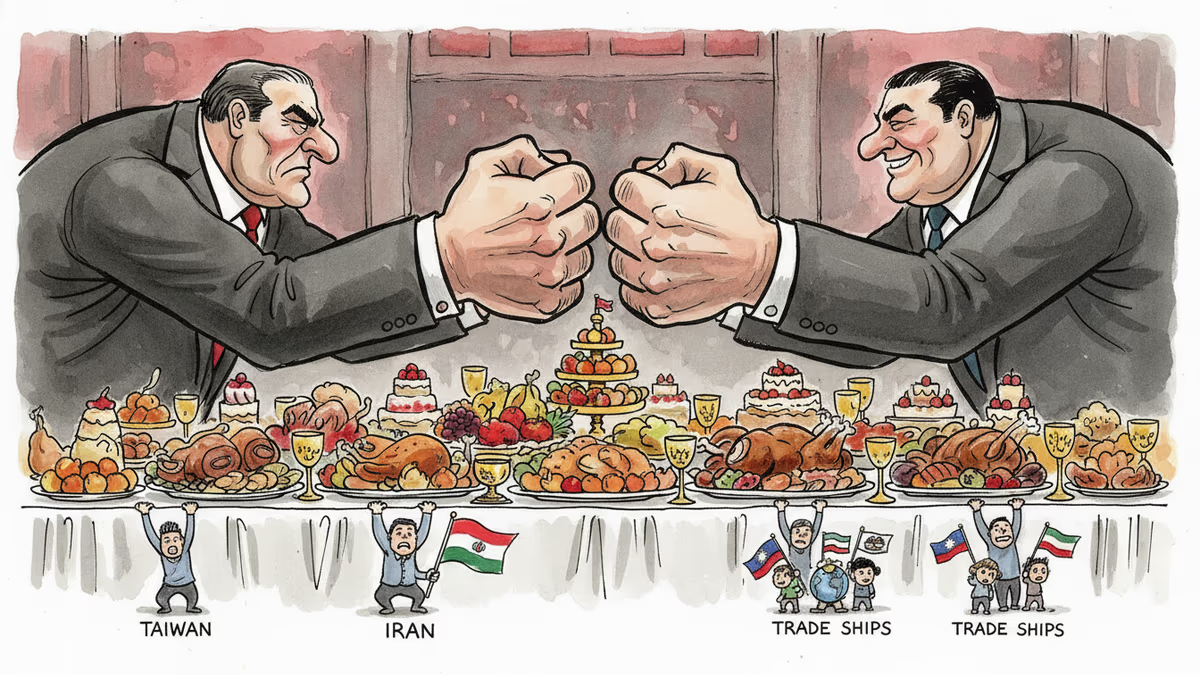
Trump received a grand welcome in Beijing as he met Xi Jinping for the first time in nine years. Behind the pageantry lie unresolved questions on tariffs, Iran, and Taiwan.
Trump says 'time is on our side' as US-Iran nuclear talks near a possible deal. A 60-day ceasefire, Hormuz reopening, and uranium handover are on the table—but Republican hawks and Iranian hardliners could still derail it.
Trump and Putin both traveled to Beijing in May 2026 to meet Xi Jinping. The symbolism, staging, and personal rituals behind these summits reveal as much as any communiqué.
Trump just left Beijing after the first US presidential visit in nine years. Putin arrives Wednesday. Pakistan's PM follows. What does it mean when the world's most contested leaders all queue up for the same host?
Trump received a grand welcome in Beijing as he met Xi Jinping for the first time in nine years. Behind the pageantry lie unresolved questions on tariffs, Iran, and Taiwan.
Thoughts
Share your thoughts on this article
Sign in to join the conversation