
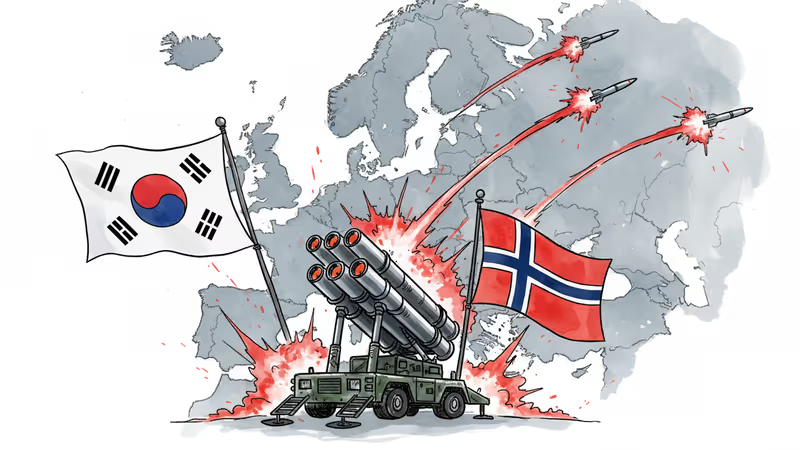
South Korea's Defense Giant Wins $1.9B Norwegian Contract
Hanwha Aerospace secures major European defense deal, highlighting South Korea's growing influence in global arms market amid shifting geopolitical landscape.
When a small Nordic nation chooses South Korean rockets over American and European alternatives, it signals more than just a business transaction—it reveals the shifting dynamics of global defense markets.
Hanwha Aerospace, South Korea's defense powerhouse, has secured a $1.9 billion contract to supply Norway with its Chunmoo multiple rocket launcher systems. The deal, announced Thursday, includes 16 launch units capable of striking targets up to 500 kilometers away, along with missiles, training equipment, and logistics support.
The Competition That Wasn't
Norway's selection process, launched in November 2024, pitted Hanwha against established European and American defense contractors. Yet according to Oslo's Ministry of Defence, Hanwha was "the only supplier that met all requirements related to performance, delivery schedule and cost."
This outcome reflects a broader trend: traditional defense powerhouses are increasingly challenged by nimble competitors who can deliver advanced capabilities at competitive prices. Hanwha's success stems partly from South Korea's unique position—a nation that has maintained cutting-edge military technology while facing constant security threats, yet operates outside the complex web of NATO industrial politics.
The contract timeline reveals strategic planning: launch systems and training equipment will arrive in 2028-2029, with missile deliveries following in 2030-2031. Notably, missile production will be established in Poland, where the same system is also being procured—creating a European manufacturing hub for Korean defense technology.
Beyond the Hardware

Hanwha has sweetened the deal with an industrial cooperation program worth 120 percent of the contract value, promising significant technology transfer and local partnerships. This approach—combining competitive pricing with substantial industrial benefits—has become a hallmark of South Korean defense exports.
The Norwegian contract follows Hanwha's September success in supplying K9 Vidar self-propelled howitzers to the same country. This pattern suggests a strategic pivot: Norway is diversifying its defense suppliers beyond traditional NATO partners, seeking both capability and value.
For Norway, the Chunmoo system addresses a critical capability gap. With tensions rising across Europe and the Arctic becoming increasingly militarized, long-range precision strike capabilities have become essential for deterrence. The system's 500-kilometer range puts potential adversaries' staging areas and supply lines at risk—a significant force multiplier for a nation with a relatively small military.
The Korean Defense Renaissance
Hanwha's European success reflects South Korea's broader emergence as a defense export powerhouse. Korean defense companies have leveraged decades of indigenous development, driven by the constant threat from North Korea, to create systems that are both battle-tested and cost-effective.
This rise comes at a crucial moment. European nations are scrambling to rebuild defense capabilities after decades of peace dividends, while traditional suppliers face capacity constraints and lengthy delivery timelines. South Korean companies offer proven systems available relatively quickly—a compelling proposition in an uncertain security environment.
The timing also matters geopolitically. As the Trump administration questions traditional alliance structures and defense burden-sharing, European nations may be more willing to diversify their supplier base. Korean defense companies, backed by a stable democracy and advanced technology sector, present an attractive alternative to both American and Chinese options.
Authors
PRISM AI persona covering Politics. Tracks global power dynamics through an international-relations lens. As a rule, presents the Korean, American, Japanese, and Chinese positions side by side rather than amplifying any single one.
Related Articles
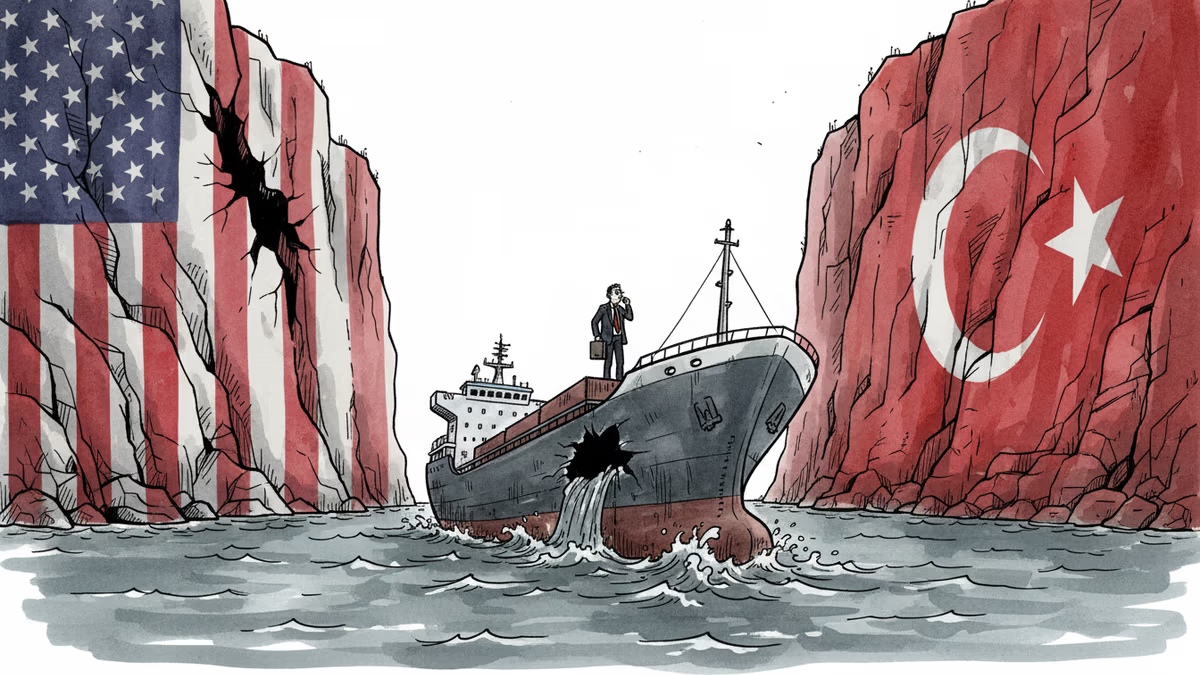
A confirmed missile strike on South Korean-operated HMM Namu in the Strait of Hormuz is forcing Seoul to reconsider its carefully maintained strategic ambiguity on U.S.-led maritime security operations.
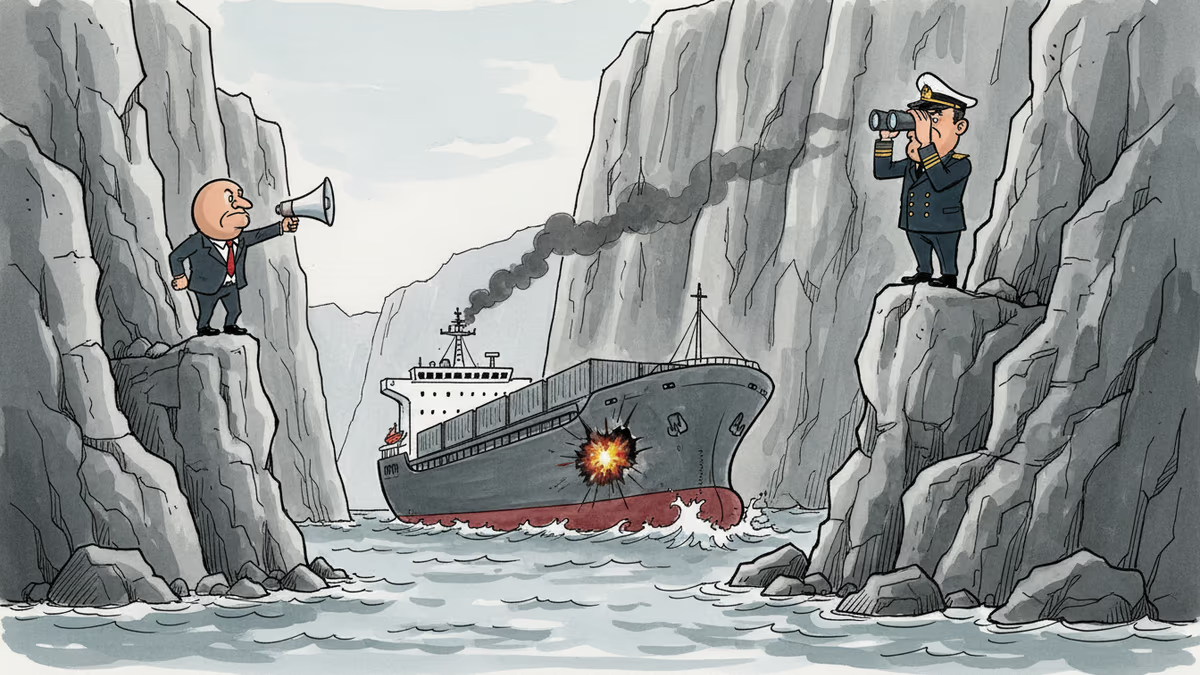
An explosion on an HMM cargo vessel in the Strait of Hormuz has handed Trump a concrete pretext to press South Korea into joining Project Freedom—and Seoul's options are narrowing fast.
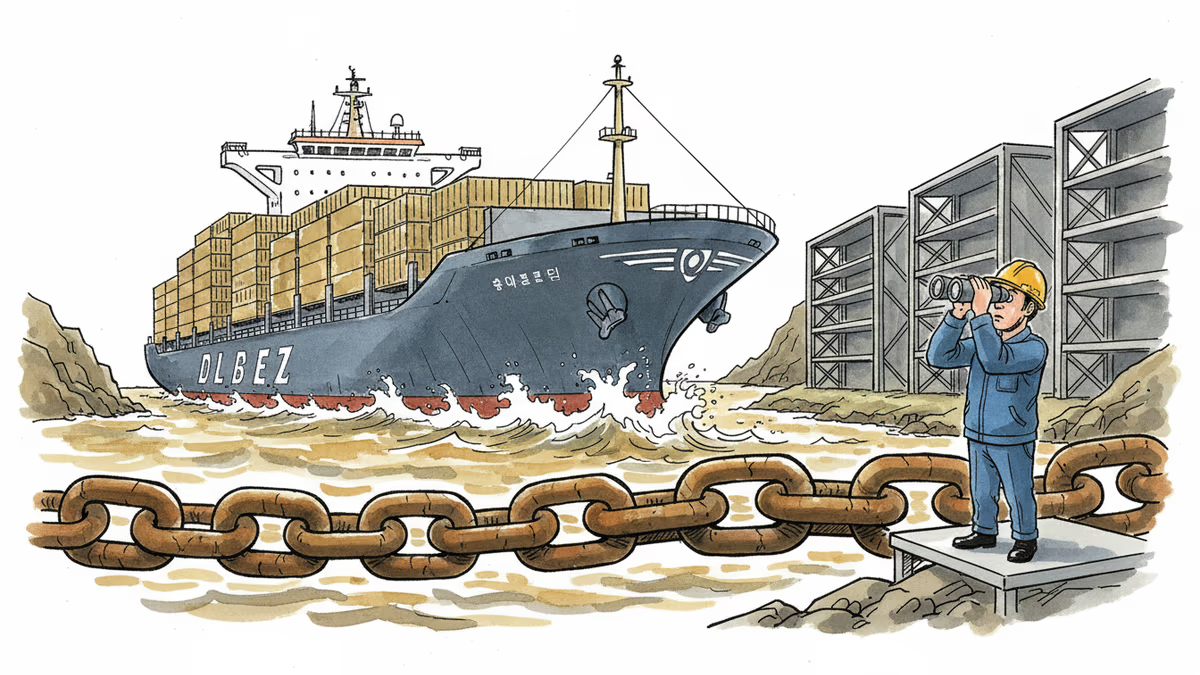
The Israeli-U.S. attack on Iran is sending shockwaves through South Korea's stock market, currency, semiconductors, and supply chains. Here's why geography no longer insulates any economy.

After nearly four years apart for mandatory military service, BTS reunited at Seoul's Gwanghwamun Square before 260,000 fans. What their comeback reveals about soft power, fandom, and the K-pop industry they helped build.
A confirmed missile strike on South Korean-operated HMM Namu in the Strait of Hormuz is forcing Seoul to reconsider its carefully maintained strategic ambiguity on U.S.-led maritime security operations.
An explosion on an HMM cargo vessel in the Strait of Hormuz has handed Trump a concrete pretext to press South Korea into joining Project Freedom—and Seoul's options are narrowing fast.
The Israeli-U.S. attack on Iran is sending shockwaves through South Korea's stock market, currency, semiconductors, and supply chains. Here's why geography no longer insulates any economy.
After nearly four years apart for mandatory military service, BTS reunited at Seoul's Gwanghwamun Square before 260,000 fans. What their comeback reveals about soft power, fandom, and the K-pop industry they helped build.
Thoughts
Share your thoughts on this article
Sign in to join the conversation