
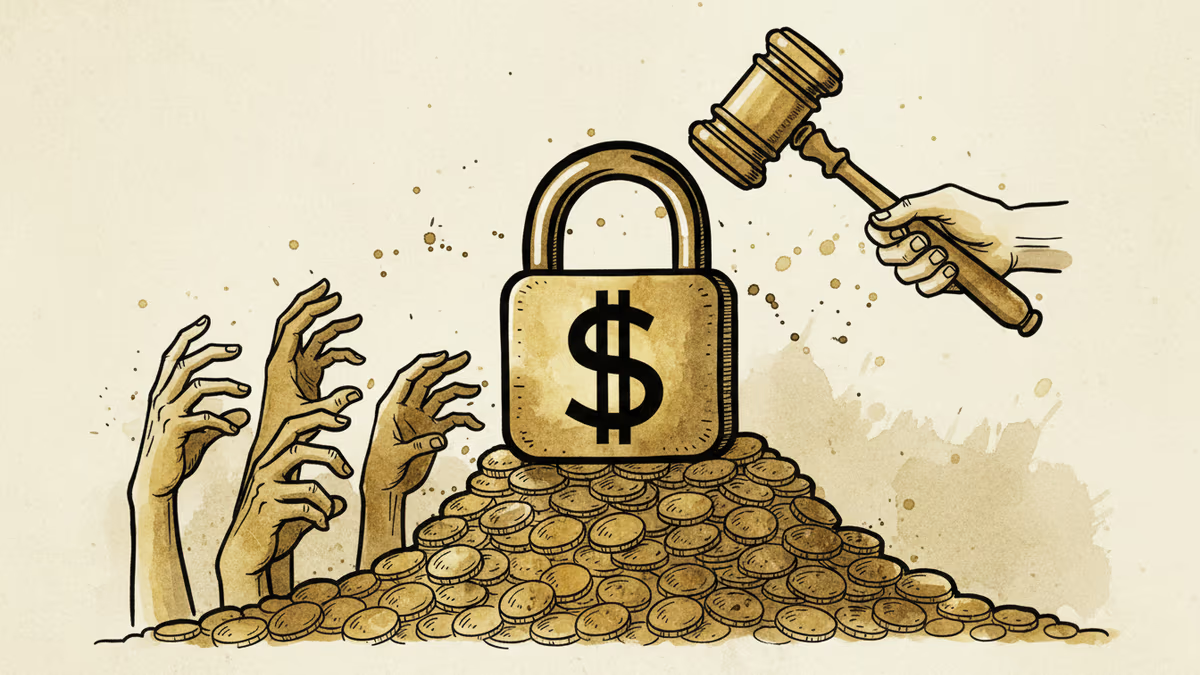
Terrorism Victims Want Tether to Hand Over Frozen USDT
Attorney Charles Gerstein is asking a federal judge to order Tether to transfer OFAC-frozen USDT linked to Iran's Revolutionary Guard directly to terrorism judgment creditors. A case that could redefine stablecoin liability.
They won in court. They just can't collect. Now a lawyer thinks frozen crypto might finally change that.
The Claim
Attorney Charles Gerstein has filed a request asking a federal judge to order Tether — the issuer of the world's largest stablecoin — to transfer OFAC-frozen USDT directly to victims holding unpaid terrorism judgments. The frozen assets in question are linked to Iran's Islamic Revolutionary Guard Corps (IRGC), a U.S.-designated foreign terrorist organization.
The legal logic is deceptively simple: Tether already has the technical ability to freeze specific wallet addresses at OFAC's request. It has done so repeatedly. If Tether can freeze those funds unilaterally, Gerstein argues, a court can order it to move them — to people who have already won judgments against Iran-linked entities but have seen not a dollar of compensation.
This is the gap the lawsuit is trying to close. U.S. courts have awarded billions of dollars in terrorism-related judgments against Iran over the past two decades. Collecting on those judgments is another matter entirely. Traditional Iranian state assets are difficult to seize, heavily litigated, and often politically entangled. Crypto sitting on a blockchain, controlled by a U.S.-accessible company, looks different.
Why This Case Is Harder Than It Sounds
The distinction between freezing and transferring assets is not a technicality — it's the entire legal battleground.

When OFAC sanctions a wallet, it prohibits transactions. The assets are immobilized. But immobilized is not the same as forfeited, and forfeited is not the same as redistributed to private claimants. Each step requires separate legal authority. Gerstein's argument essentially asks a federal court to compress all three steps into one order directed at a private company.
Tether will almost certainly contest this. The company has long positioned itself as a neutral infrastructure provider — it follows government directives but does not consider itself a party to the underlying disputes. Accepting that it can be ordered to transfer frozen assets to specific creditors would expose Tether to similar demands from courts in other jurisdictions, for other reasons, involving other parties. The liability surface expands dramatically.
There's also the question of which frozen assets qualify. Not every OFAC-sanctioned USDT wallet is cleanly attributable to the IRGC. Establishing that chain of custody — from a specific frozen address to a specific terrorist act to a specific judgment — is the kind of evidentiary work that can take years.
What's at Stake Beyond This Case
For compliance officers and legal professionals, the significance here isn't the outcome — it's the theory. If a court accepts that a stablecoin issuer's technical control over frozen assets creates a legal obligation to transfer them on judicial command, the implications ripple outward fast.
Every stablecoin issuer with freeze capabilities — and most centralized ones have them — would need to reassess their exposure. The argument doesn't stop at terrorism judgments. Creditors in commercial disputes, divorce proceedings, fraud cases: anyone with a judgment and a theory could test the same logic.
For crypto investors, the case is a reminder that USDT's centralization is a two-edged feature. The same administrative control that makes Tether useful for compliance also makes it legally targetable in ways that truly decentralized assets are not. Whether that's a bug or a feature depends entirely on which side of a frozen wallet you're on.
For policymakers, the case arrives at a useful moment. The GENIUS Act and competing stablecoin bills moving through Congress are trying to define exactly what obligations stablecoin issuers carry. A federal court ruling on Tether's liability for frozen assets could hand legislators a concrete data point — or preempt their work entirely.
This content is AI-generated based on source articles. While we strive for accuracy, errors may occur. We recommend verifying with the original source.
Related Articles
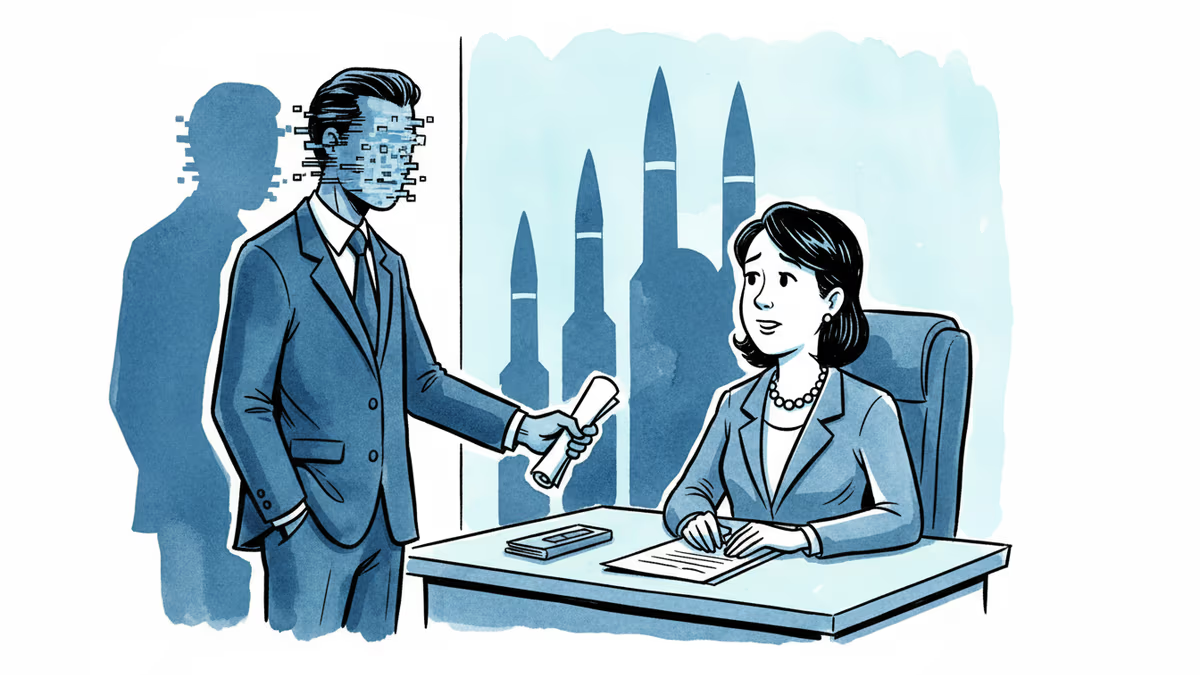
The U.S. Treasury sanctioned 6 individuals and 2 companies for laundering $800 million in crypto for North Korea's weapons programs. Fake resumes, stolen identities, and DeFi bridges were the tools. Your hiring process may be the vulnerability.
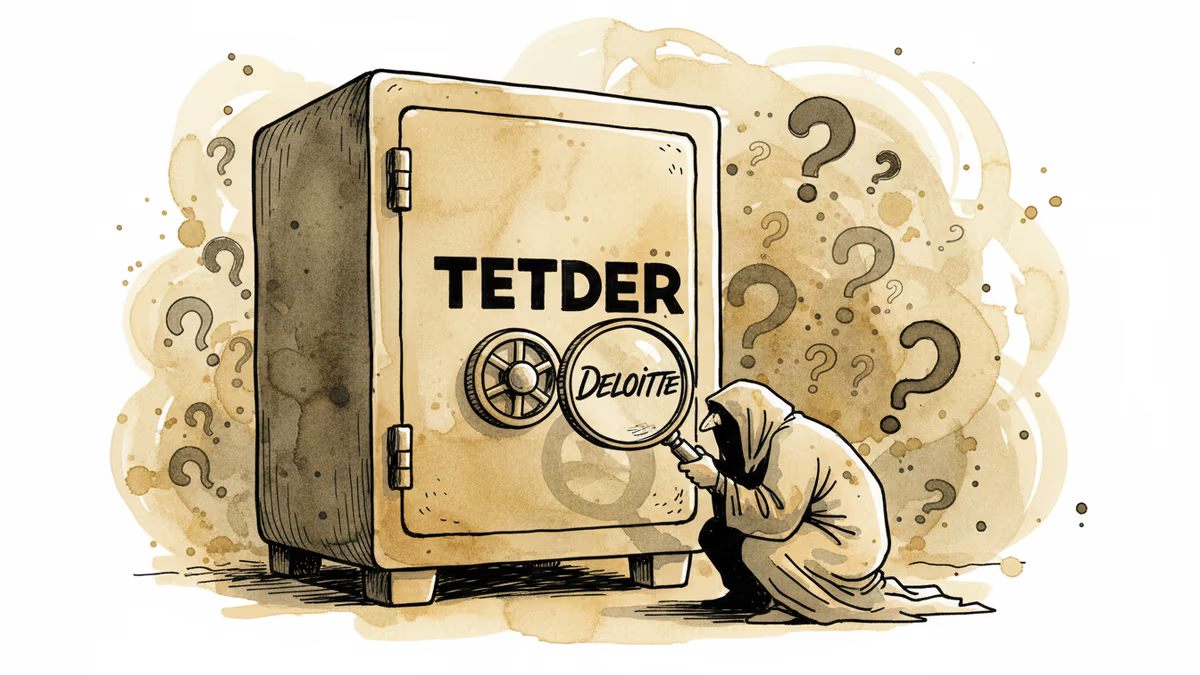
Stablecoin giant Tether secured Deloitte's approval for its first USAT reserve report. But does a snapshot really solve the transparency problem that's plagued crypto's biggest player?
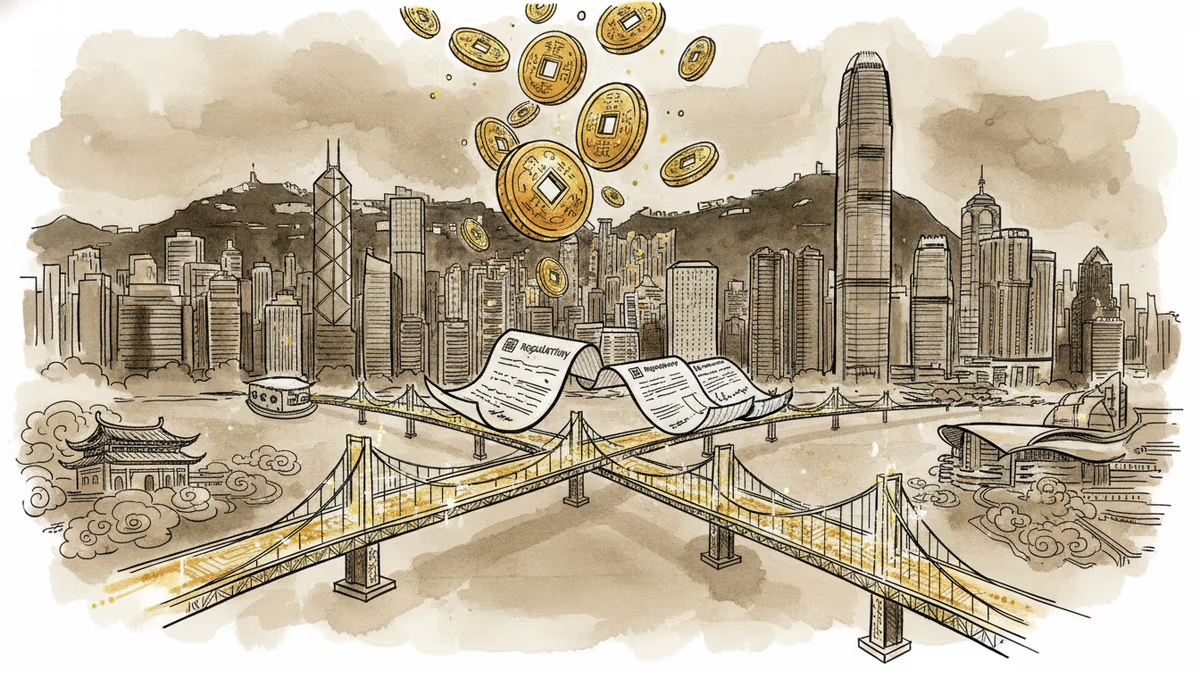
Hong Kong's chief executive announces imminent stablecoin licensing while positioning the city as a global Web3 hub, challenging Singapore's crypto dominance in Asia.
Tether's strategic investment in LayerZero isn't just about cross-chain tech. With USDt0 moving $70B in under a year, it's betting on autonomous AI finance and blockchain-agnostic money.
The U.S. Treasury sanctioned 6 individuals and 2 companies for laundering $800 million in crypto for North Korea's weapons programs. Fake resumes, stolen identities, and DeFi bridges were the tools. Your hiring process may be the vulnerability.
Stablecoin giant Tether secured Deloitte's approval for its first USAT reserve report. But does a snapshot really solve the transparency problem that's plagued crypto's biggest player?
Hong Kong's chief executive announces imminent stablecoin licensing while positioning the city as a global Web3 hub, challenging Singapore's crypto dominance in Asia.
Tether's strategic investment in LayerZero isn't just about cross-chain tech. With USDt0 moving $70B in under a year, it's betting on autonomous AI finance and blockchain-agnostic money.
Thoughts
Share your thoughts on this article
Sign in to join the conversation