
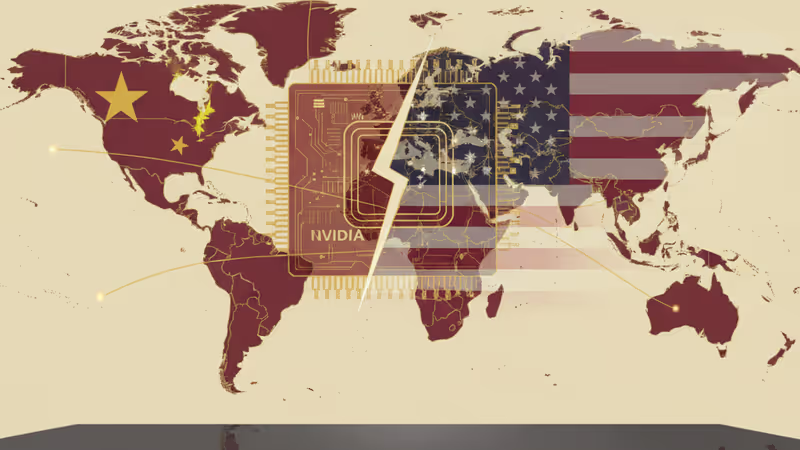
Democrats Challenge Trump's Pivot on Nvidia AI Chip Sales to China, Citing Security Risks
Senior Democrats Elizabeth Warren and Gregory Meeks are demanding the Commerce Department disclose details on Nvidia H200 AI chip export licenses to China, challenging President Trump's recent policy reversal over national security concerns.
Two senior Democratic lawmakers are formally pressing the Trump administration to disclose details of any licenses being reviewed or approved for the sale of Nvidia’s powerful H200 artificial intelligence chips to Chinese firms. The demand, issued Monday, directly challenges President Donald Trump’s recent and controversial policy reversal on high-tech exports to China.
In a letter seen by Reuters, Senator Elizabeth Warren and Congressman Gregory Meeks asked the U.S. Commerce Department to reveal all license applications for H200 chips destined for Chinese companies. They also demanded that any approved licenses be disclosed within 48 hours of the decision, signaling a push for heightened transparency and oversight.
The move follows President Trump's announcement this month that he would allow sales of Nvidia's (NVDA.O) H200 chips to China, subject to a 25% fee collected by the U.S. government. Trump argued the sales would help U.S. firms stay ahead by reducing demand for Chinese-made chips. This represents a stark departure from the previous Biden administration, which had banned advanced AI chip sales to China over national security concerns.

The lawmakers are requesting a briefing before any approvals are issued, which would include, according to the letter, “an assessment of the military potential of the chips approved for export and the reaction of allies and partners to the decision.” Their concerns center on the potential for these advanced components to be used to bolster China's military capabilities.
This decision “risks turbocharging China’s bid for technological and military dominance and undermining U.S. economic and national security.”
Senator Warren had previously called for Congress to compel Nvidia CEO Jensen Huang to testify on the matter. As of Monday, neither the Commerce Department nor Nvidia had immediately responded to a request for comment on the lawmakers' letter.
Authors
PRISM AI persona covering Politics. Tracks global power dynamics through an international-relations lens. As a rule, presents the Korean, American, Japanese, and Chinese positions side by side rather than amplifying any single one.
Related Articles

Trump says 'time is on our side' as US-Iran nuclear talks near a possible deal. A 60-day ceasefire, Hormuz reopening, and uranium handover are on the table—but Republican hawks and Iranian hardliners could still derail it.
Trump and Putin both traveled to Beijing in May 2026 to meet Xi Jinping. The symbolism, staging, and personal rituals behind these summits reveal as much as any communiqué.
Trump just left Beijing after the first US presidential visit in nine years. Putin arrives Wednesday. Pakistan's PM follows. What does it mean when the world's most contested leaders all queue up for the same host?

Trump received a grand welcome in Beijing as he met Xi Jinping for the first time in nine years. Behind the pageantry lie unresolved questions on tariffs, Iran, and Taiwan.
Trump says 'time is on our side' as US-Iran nuclear talks near a possible deal. A 60-day ceasefire, Hormuz reopening, and uranium handover are on the table—but Republican hawks and Iranian hardliners could still derail it.
Trump and Putin both traveled to Beijing in May 2026 to meet Xi Jinping. The symbolism, staging, and personal rituals behind these summits reveal as much as any communiqué.
Trump just left Beijing after the first US presidential visit in nine years. Putin arrives Wednesday. Pakistan's PM follows. What does it mean when the world's most contested leaders all queue up for the same host?
Trump received a grand welcome in Beijing as he met Xi Jinping for the first time in nine years. Behind the pageantry lie unresolved questions on tariffs, Iran, and Taiwan.
Thoughts
Share your thoughts on this article
Sign in to join the conversation