

When Farmers Fight Back Against Big Tech
Iowa's right-to-repair bill for farm equipment signals a seismic shift in digital ownership. John Deere's monopoly is cracking, and it could reshape how we own everything.
57 Bills Are Moving Simultaneously
A single bill passed by Iowa lawmakers last week is sending shockwaves across America. It's legislation that would let farmers freely repair their own tractors—simple enough on the surface, but it's actually the opening shot in a 57-state battle that could redefine digital ownership entirely.
Here's the problem: Right now, farmers can't fix their own equipment. When a $500,000 tractor breaks down during harvest season, they can't just pop the hood and get to work. They need manufacturer approval or have to haul it to an authorized dealer. Miss the harvest window? That's a year's income gone.
The 20-Year War Between John Deere and Farmers
At the center of this fight sits John Deere, the agricultural equipment giant that's spent decades perfecting the art of repair restriction. The company claims to "support farmers' ability to repair their equipment" while simultaneously using software locks to prevent exactly that.
But something's shifting. Traditional John Deere allies like the Iowa Corn Growers Association and Iowa Soybean Association have flipped sides, now supporting the repair bill. It's a crack in a 20-year alliance that seemed unbreakable.
"The massive base of support that John Deere has had from dealers, corn and soybean groups, and so on—that's starting to break down," says Elizabeth Chamberlain, director of sustainability at iFixit.

Beyond Tractors: Your Phone, Your Car, Your Future
This isn't just about farming. It's about everything you "own" but can't actually control. Your iPhone that needs Apple's blessing for repairs. Your Tesla that requires manufacturer approval for parts. Your smart TV that decides which apps you can use.
The Iowa bill mandates that manufacturers provide documentation, manuals, and software access—all without charging extra fees or requiring internet authorization. It limits digital locks that prevent owners from accessing their own equipment's features.
John Deere calls this "government interference," but farmers see it differently. When your livelihood depends on equipment that can be remotely disabled by a corporation, who really owns what?
The Ripple Effect Across Industries
If Iowa succeeds, expect similar battles in automotive, consumer electronics, and medical devices. Tesla already faces pressure over repair restrictions. Apple has grudgingly opened some repair pathways. Medical device companies could be next.
The stakes are enormous. The global repair economy is worth $4 trillion annually, but much of it flows through manufacturer-controlled channels. Breaking those barriers could democratize repair, reduce e-waste, and shift power back to consumers.
Authors
Related Articles

The auto aftermarket's resistance to EV mandates signals the true future of electric vehicles. Discover why SEMA's stance is the key indicator for investors.

Beyond speed and range, the e-scooter market is now a battle over repairability and safety. Discover the critical factors that define a smart investment.
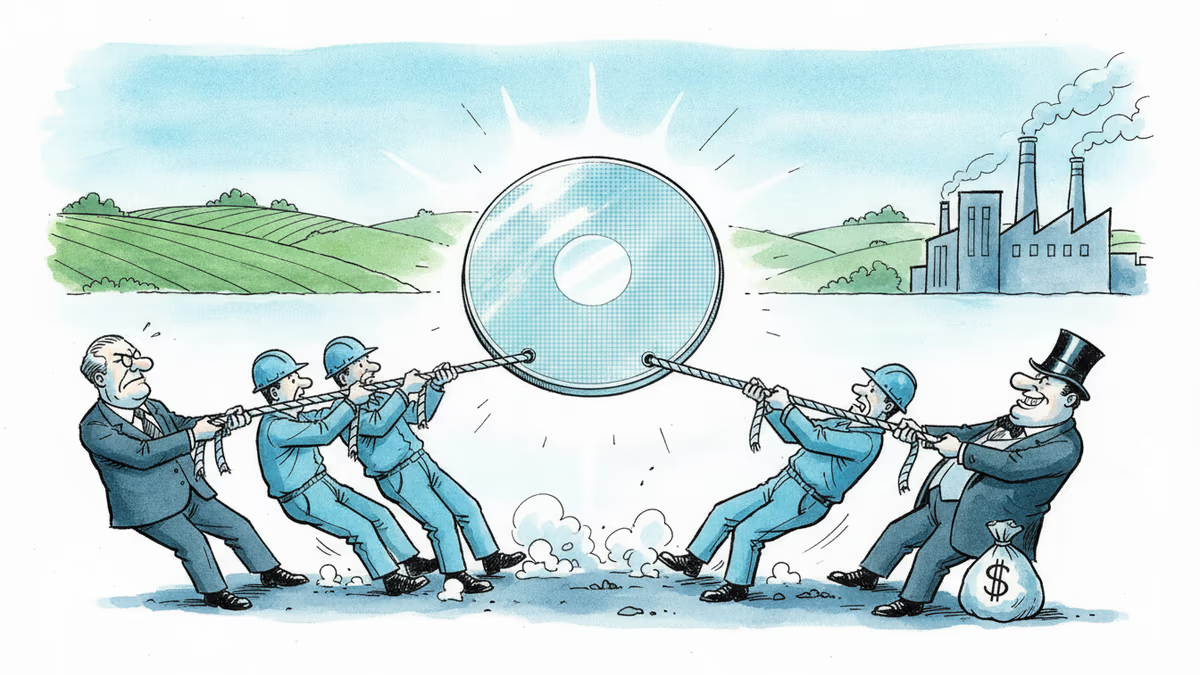
Samsung Electronics' union branch revealed that 84% of survey respondents oppose the government's roughly $290 billion (₩400 trillion) semiconductor megaproject in Gwangju. Government, management, the union and shareholders are all reading the same national project in sharply different ways.
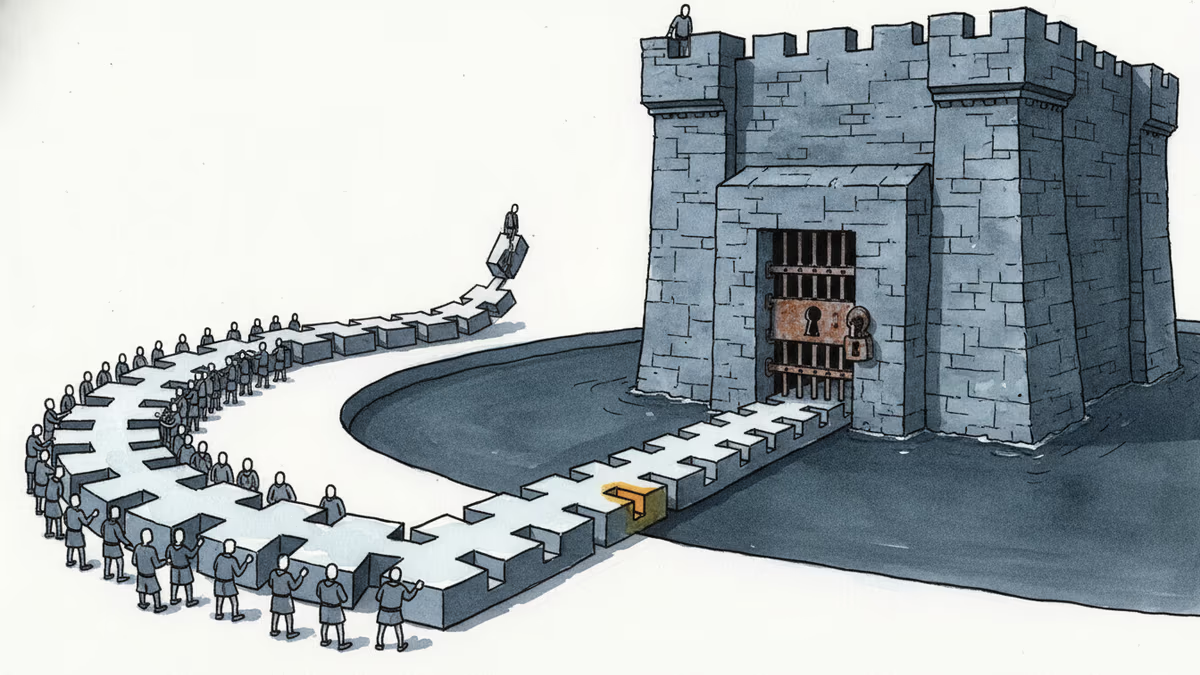
Nvidia shipped roughly a billion RISC-V cores in 2024, then announced it would run CUDA on the open standard. We break down how royalty-free instruction sets and open software stacks are trying to route around CUDA's lock-in. Part 2 of the Semiconductor Sovereignty series.
The auto aftermarket's resistance to EV mandates signals the true future of electric vehicles. Discover why SEMA's stance is the key indicator for investors.
Beyond speed and range, the e-scooter market is now a battle over repairability and safety. Discover the critical factors that define a smart investment.
Samsung Electronics' union branch revealed that 84% of survey respondents oppose the government's roughly $290 billion (₩400 trillion) semiconductor megaproject in Gwangju. Government, management, the union and shareholders are all reading the same national project in sharply different ways.
Nvidia shipped roughly a billion RISC-V cores in 2024, then announced it would run CUDA on the open standard. We break down how royalty-free instruction sets and open software stacks are trying to route around CUDA's lock-in. Part 2 of the Semiconductor Sovereignty series.
Thoughts
Share your thoughts on this article
Sign in to join the conversation