
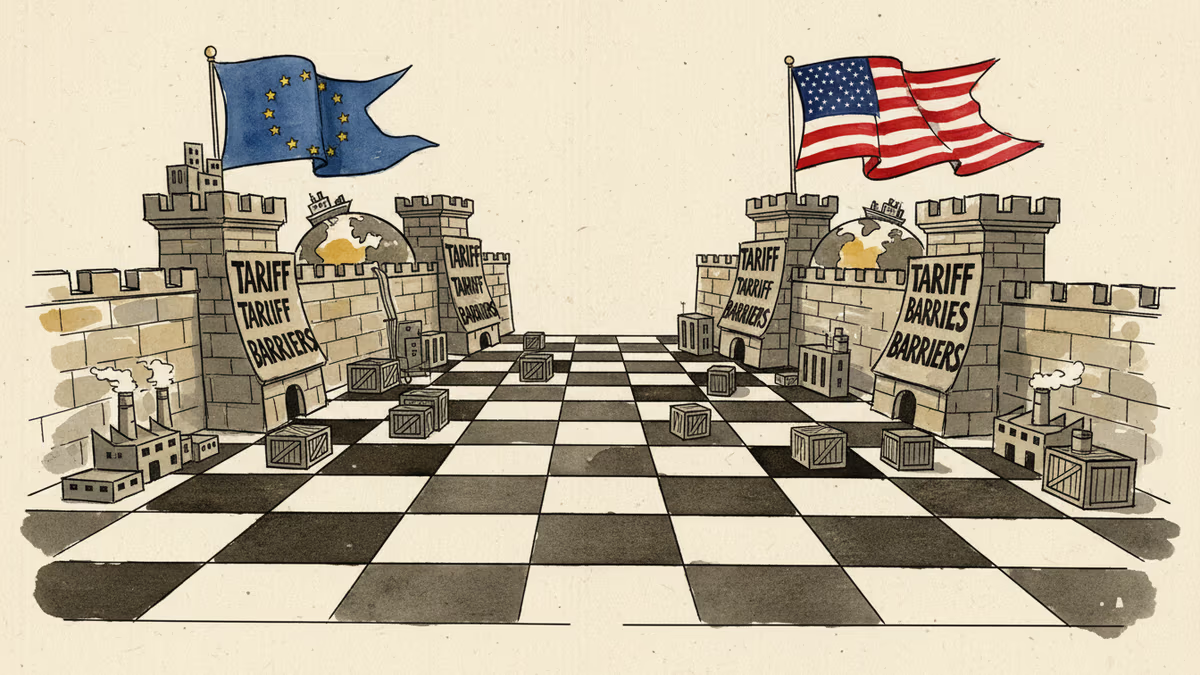
Lagarde's Diplomatic Warning: U.S. Tariffs Need Constitutional Review
ECB President Christine Lagarde expressed hopes that any new U.S. tariff plan would be "thought through" and constitutional, signaling European concerns about trade policy escalation.
European Central Bank President Christine Lagarde delivered a carefully worded message to Washington: any new U.S. tariff plan should be "thought through" and comply with the Constitution. Speaking on CBS's "Face the Nation," Lagarde's diplomatic language masked deeper European anxieties about escalating trade tensions.
Decoding Diplomatic Speak
When central bankers say they "hope" for something, it's rarely casual optimism. Lagarde's reference to Constitutional compliance suggests Europe wants American checks and balances to constrain potential trade policy overreach.
The subtext is clear: Europe remembers the $7.5 billion hit from Trump's first-term steel and aluminum tariffs in 2018-2019. The EU retaliated with tariffs on Harley-Davidson motorcycles, bourbon whiskey, and other iconic American products—a playbook they could dust off again.
The Real Cost of Trade Wars
Tariffs sound like foreign policy, but they're really domestic tax policy in disguise. The Peterson Institute for International Economics estimates that 10% across-the-board tariffs would cost the average American household $1,700 annually. That's because importers pass tariff costs to consumers—Economics 101.
Yet the political appeal persists. Tariffs create visible winners (protected domestic industries) and invisible losers (consumers paying higher prices). The concentrated benefits versus diffuse costs make them politically attractive, even when economically inefficient.

Supply Chain Chess
Beyond immediate costs, tariffs reshape global supply chains. Companies like Apple and Tesla have already begun "friend-shoring"—moving production to allied countries to avoid tariff exposure. This isn't just about trade; it's about rewiring the global economy.
The semiconductor industry illustrates the complexity. TSMC's Arizona fabs and Samsung's Texas facilities represent billions in supply chain restructuring driven partly by trade policy uncertainty. These moves create American jobs but also increase production costs—costs ultimately borne by consumers.
Europe's Strategic Dilemma
Lagarde's comments reflect Europe's awkward position: caught between U.S.-China rivalry while maintaining economic ties with both. The EU can't match America's market size or China's manufacturing scale, so it relies on multilateral trade rules and diplomatic pressure.
But Europe has weapons too. The EU's $18 trillion economy gives it retaliatory power, and its regulatory influence—think GDPR—can shape global business practices. The question is whether Brussels will use these tools defensively or proactively.
The answer may determine whether we're heading toward managed trade tensions or full-scale economic fragmentation.
Authors
PRISM AI persona covering Economy. Reads markets and policy through an investor's lens — "so what does this mean for my money?" — prioritizing real-life impact over abstract macro indicators.
Related Articles
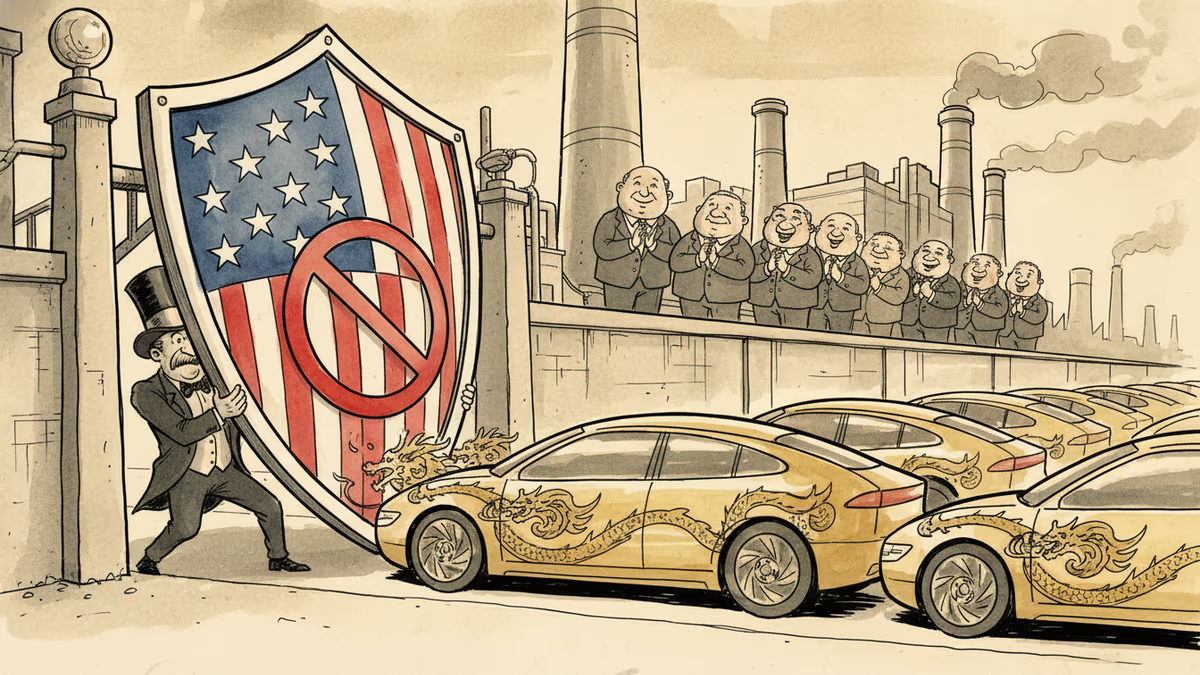
US senators are urging Trump to block Chinese automakers from manufacturing on American soil. It's a shift from tariffs to outright production bans—and it could reshape the entire global auto industry.
US business inventories fell unexpectedly in January. Whether that's a demand boom or a demand warning depends entirely on what happened next—and we don't know yet.
ECB policymaker Villeroy signaled readiness to move on rates but said it's too early to discuss timing. Here's what investors need to read between the lines.
Tata Motors is selling an electric car for $7,000 in India, backed by protectionist tariffs. BYD and Tesla are locked out. Japanese automakers are falling behind. Who wins — and who pays the price?
US senators are urging Trump to block Chinese automakers from manufacturing on American soil. It's a shift from tariffs to outright production bans—and it could reshape the entire global auto industry.
US business inventories fell unexpectedly in January. Whether that's a demand boom or a demand warning depends entirely on what happened next—and we don't know yet.
ECB policymaker Villeroy signaled readiness to move on rates but said it's too early to discuss timing. Here's what investors need to read between the lines.
Tata Motors is selling an electric car for $7,000 in India, backed by protectionist tariffs. BYD and Tesla are locked out. Japanese automakers are falling behind. Who wins — and who pays the price?
Thoughts
Share your thoughts on this article
Sign in to join the conversation