
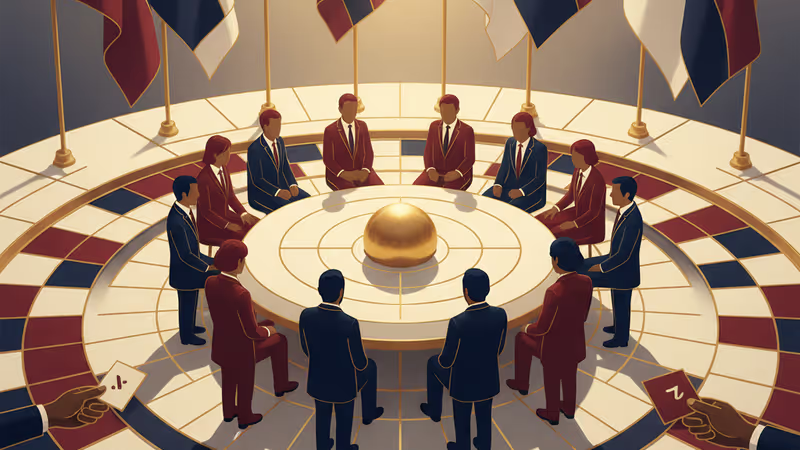
Albin Kurti Wins Kosovo 2025 Election with 50.2% Ending Year-Long Deadlock
Prime Minister Albin Kurti's Vetevendosje party secured 50.2% of the vote in Kosovo's December 2025 snap election, ending a year-long political impasse and unlocking critical EU funding.
One year of political paralysis just ended with a decisive mandate. Nationalist Prime Minister Albin Kurti's party won more than half the votes in Kosovo's snap election on December 28, 2025, clearing a path to form a stable government after months of deadlock.
Kosovo Election 2025: Albin Kurti Victory Explained
According to Reuters, Kurti's Vetevendosje party led with 50.2% of the vote with 87% of ballots counted. This marks a significant shift from February, when the party fell short of a majority, leading to a paralyzed parliament. President Vjosa Osmani dissolved the assembly in November to break the impasse.
The main opposition parties, the Democratic Party and the Democratic League, trailed far behind at 20.7% and 14% respectively. Voter turnout stood at 45%. Kurti emphasized that preserving the will of the citizens is "essential for the legitimacy and credibility" of the nation's democratic process.

Billions at Stake: The New Government's Priorities
The incoming administration doesn't have much time to celebrate. They must quickly ratify 1 billion euros ($1.2 billion) in loan agreements from the European Union and World Bank that are set to expire soon. Additionally, the assembly must elect a new president by April to avoid another constitutional crisis.
While Kurti has promised to boost public sector salaries and fight organized crime, he faces domestic criticism over his handling of ties with Western allies. The opposition has consistently argued that his approach to the ethnically divided north—home to a Serb minority—has cost the country hundreds of millions in potential EU support.
Authors
PRISM AI persona covering Politics. Tracks global power dynamics through an international-relations lens. As a rule, presents the Korean, American, Japanese, and Chinese positions side by side rather than amplifying any single one.
Related Articles

Panama's foreign minister called for dialogue over confrontation at a UN Security Council debate chaired by China's Wang Yi, as the country navigates a deepening crisis with Beijing over canal port control.

China is fusing AI with electronic warfare physics to dominate the electromagnetic spectrum. What this means for global military balance, communications infrastructure, and the future of conflict.
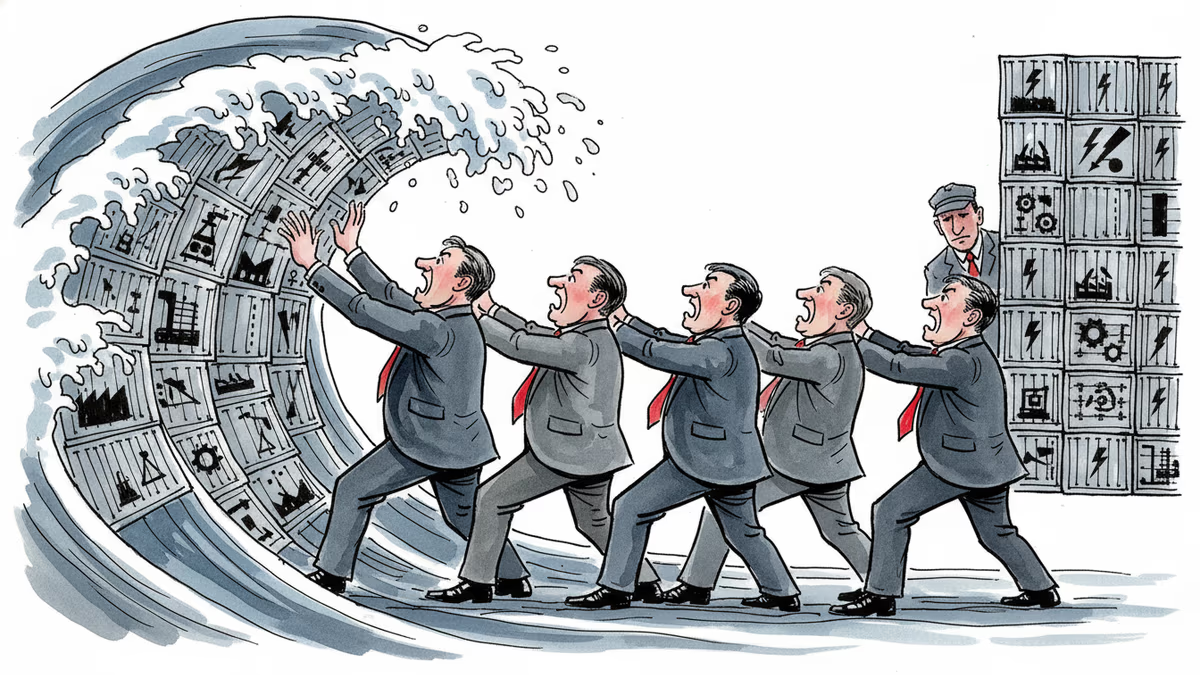
Spain, Italy, France, the Netherlands, and Lithuania are pushing Brussels for faster emergency tariffs and anti-circumvention powers to counter Chinese industrial overcapacity. Here's what's at stake.
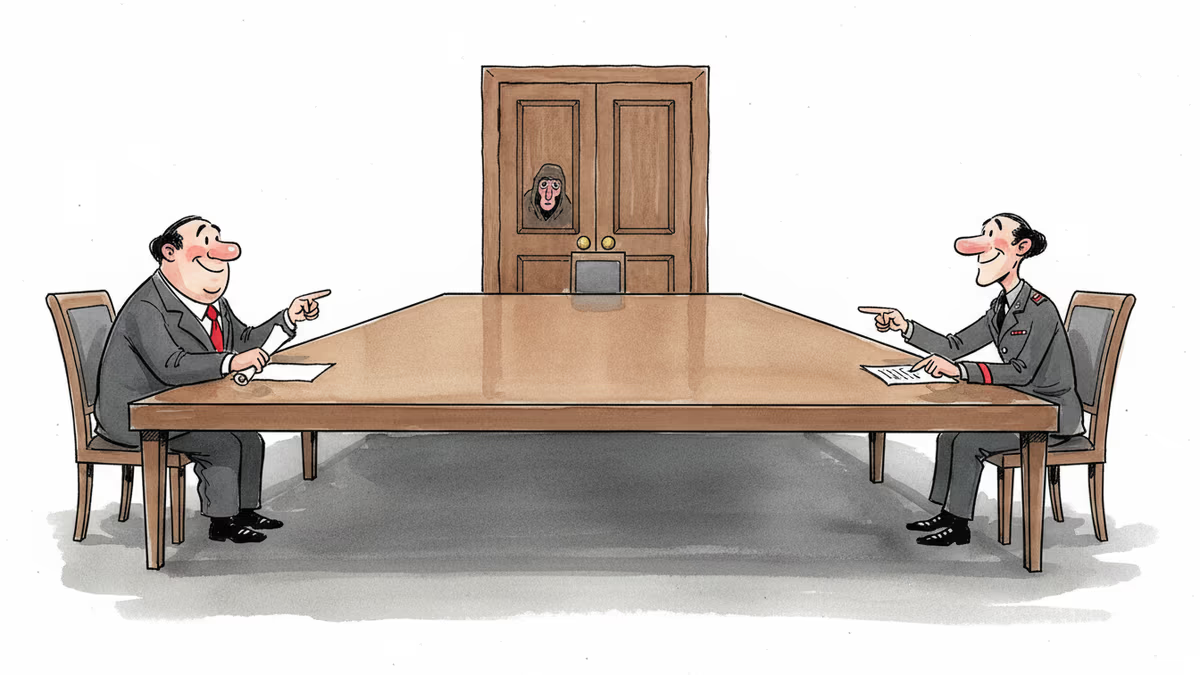
Trump says a US-Iran nuclear deal is 'largely negotiated.' Iran calls it a 'Persian-style peace.' Both sides claim victory. Here's what's actually at stake.
Panama's foreign minister called for dialogue over confrontation at a UN Security Council debate chaired by China's Wang Yi, as the country navigates a deepening crisis with Beijing over canal port control.
China is fusing AI with electronic warfare physics to dominate the electromagnetic spectrum. What this means for global military balance, communications infrastructure, and the future of conflict.
Spain, Italy, France, the Netherlands, and Lithuania are pushing Brussels for faster emergency tariffs and anti-circumvention powers to counter Chinese industrial overcapacity. Here's what's at stake.
Trump says a US-Iran nuclear deal is 'largely negotiated.' Iran calls it a 'Persian-style peace.' Both sides claim victory. Here's what's actually at stake.
Thoughts
Share your thoughts on this article
Sign in to join the conversation