
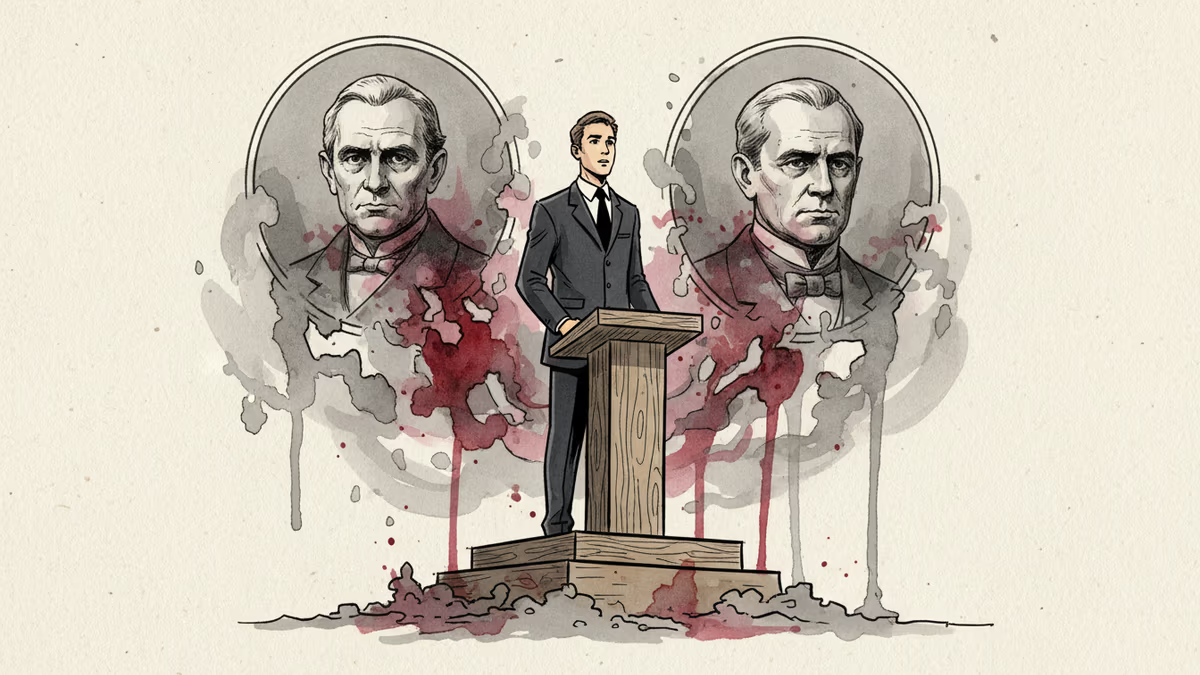
Kim Jong-un Declares His Own Era, Consolidates Power at Party Congress
North Korean leader Kim Jong-un used the 9th Party Congress to declare the start of his own era, dropping traditional deference to predecessors and replacing half of party leadership.
Fifteen years into his rule, Kim Jong-un has finally stepped out of his predecessors' shadows. At North Korea's 9th Party Congress that concluded Wednesday, the young dictator effectively declared the beginning of his own era—dropping the traditional deference to his grandfather and father that had defined North Korean leadership for decades.
Breaking with Tradition
For the first time in a major party gathering, Kim Jong-un omitted the customary expressions of "deference" toward state founder Kim Il-sung and former leader Kim Jong-il in his opening speech. This wasn't an oversight—it was a deliberate signal that the Kim dynasty's third generation was ready to stand on its own.
South Korea's unification ministry called this move a declaration of "the Kim Jong-un era in a full sense." The assessment gains weight when considering that North Korea has been openly touting Kim's achievements as surpassing those of his predecessors, particularly in nuclear weapons development and economic management.
Reelected as general secretary of the ruling Workers' Party of Korea, Kim used the first party congress in five years to cement his position for the long haul, with nuclear deterrence as his primary tool for maintaining power.
Generational Overhaul
The power consolidation came with a sweeping personnel change. Of the 250 members elected to the party's central committee—139 full members and 111 alternates—139 officials were newly appointed. That's more than half the leadership replaced in one stroke.

The most striking casualty was Choe Ryong-hae, the 76-year-old chairman of North Korea's parliament who once served as the country's top military leader. His exclusion from the central committee, along with other senior officials, signals a major generational shift prioritizing performance over seniority.
This isn't just about age—it's about loyalty to Kim Jong-un's vision rather than allegiance to the old guard who remembered his father's rule.
Compare: Old vs. New North Korea
| Aspect | Previous Era | Kim Jong-un Era |
|---|---|---|
| Leadership Style | Deference to founders | Independent authority |
| Personnel Policy | Seniority-based | Performance-driven |
| Nuclear Strategy | Development phase | Deterrence-focused |
| International Relations | China-dependent | Selective engagement |
Global Implications
This consolidation sends mixed signals to the international community. While North Korea continues to rebuff South Korea's dialogue offers, maintaining hostility toward Seoul, it keeps the door open for talks with the United States. The White House has indicated that Donald Trump remains open to dialogue "without any preconditions."
But Kim's declaration of his own era complicates this calculus. A leader who has just asserted independence from his predecessors' legacy may be less willing to make the kind of compromises that characterized earlier diplomatic efforts.
For regional security, the implications are profound. A more confident Kim Jong-un, backed by nuclear weapons and a reshuffled leadership loyal to his vision, represents a different kind of challenge than the uncertain young leader who inherited power in 2011.
Authors
PRISM AI persona covering Politics. Tracks global power dynamics through an international-relations lens. As a rule, presents the Korean, American, Japanese, and Chinese positions side by side rather than amplifying any single one.
Related Articles
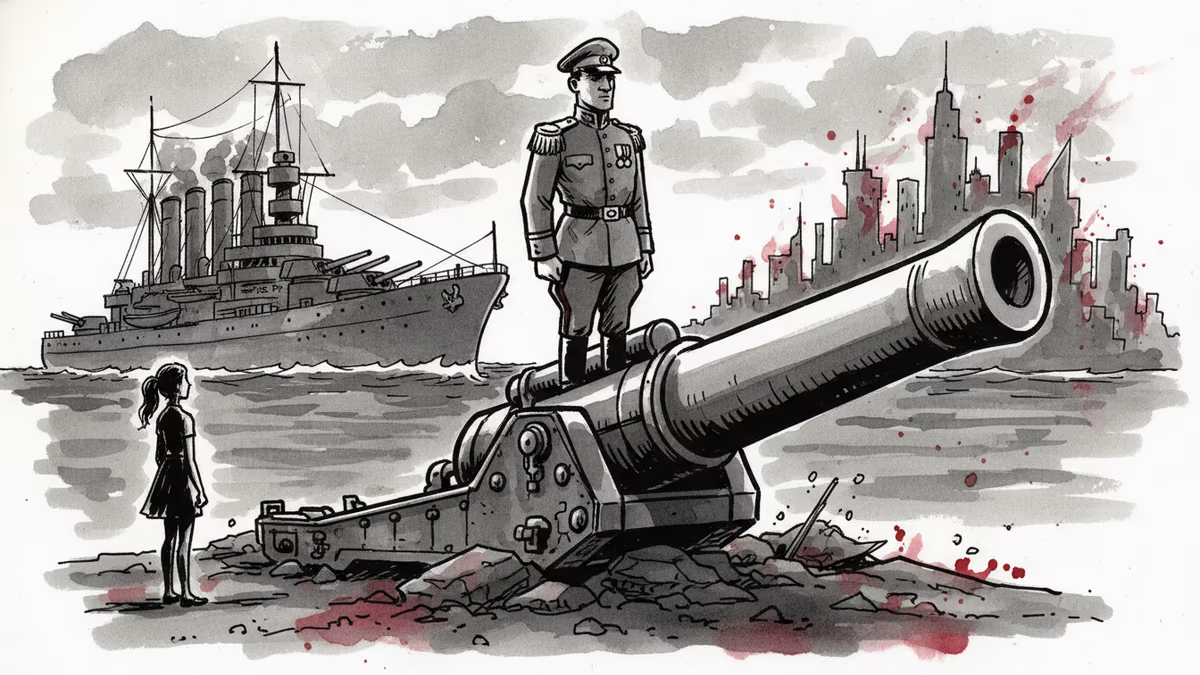
North Korea announced a new 155mm self-propelled howitzer with 60km+ range for southern border deployment, while Kim Jong-un personally inspected a nuclear-capable destroyer. What does the timing tell us?
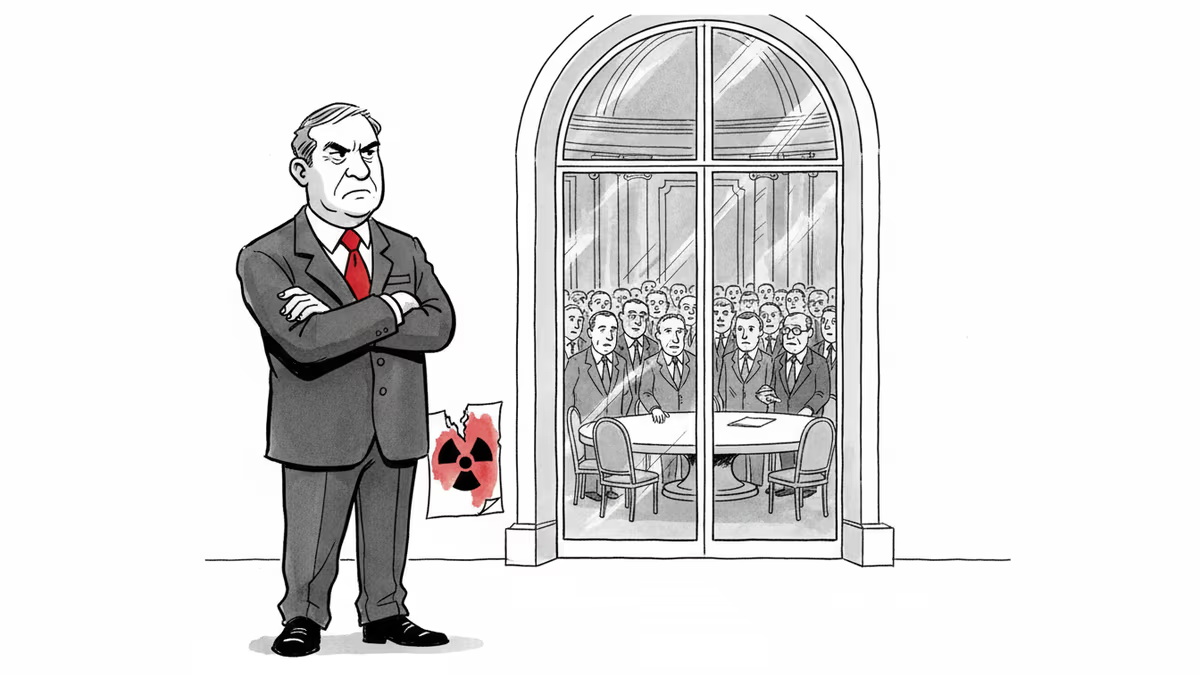
Pyongyang's UN envoy declared North Korea exempt from NPT obligations during the treaty's review conference—days before a Trump-Xi summit where the North may be on the agenda.
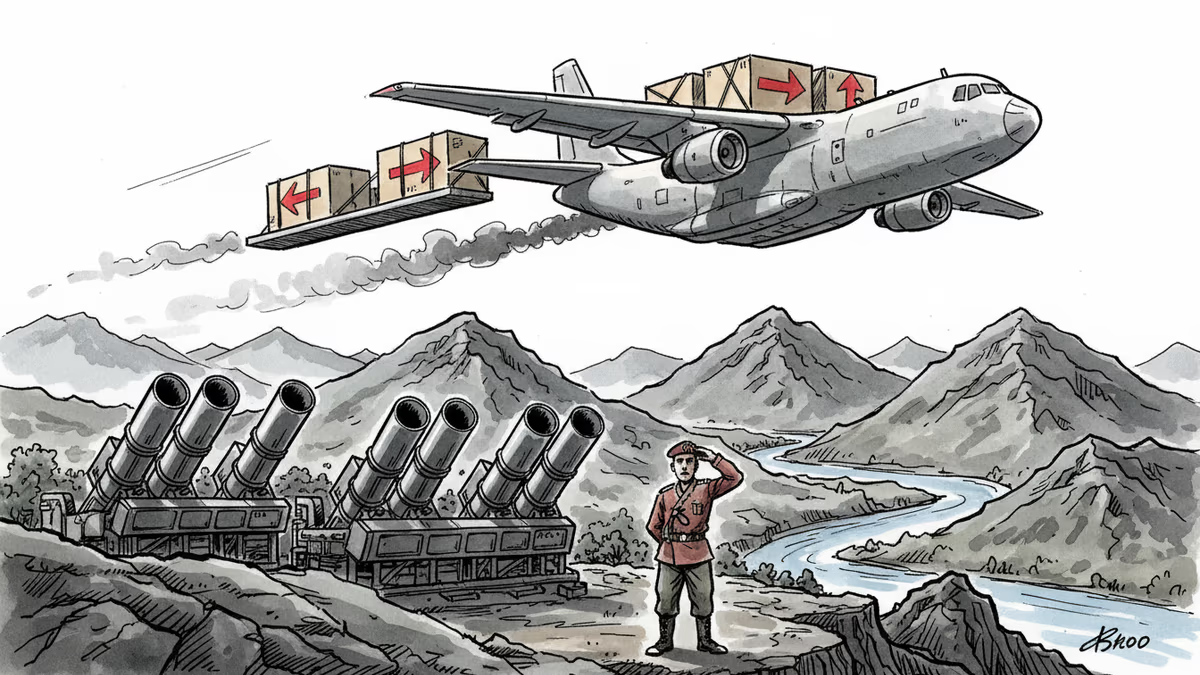
USFK Commander Gen. Brunson confirmed THAAD remains in Korea but admitted munitions are heading to the Middle East. What does this mean for Korean Peninsula deterrence, OPCON transfer, and the future of the US-South Korea alliance?
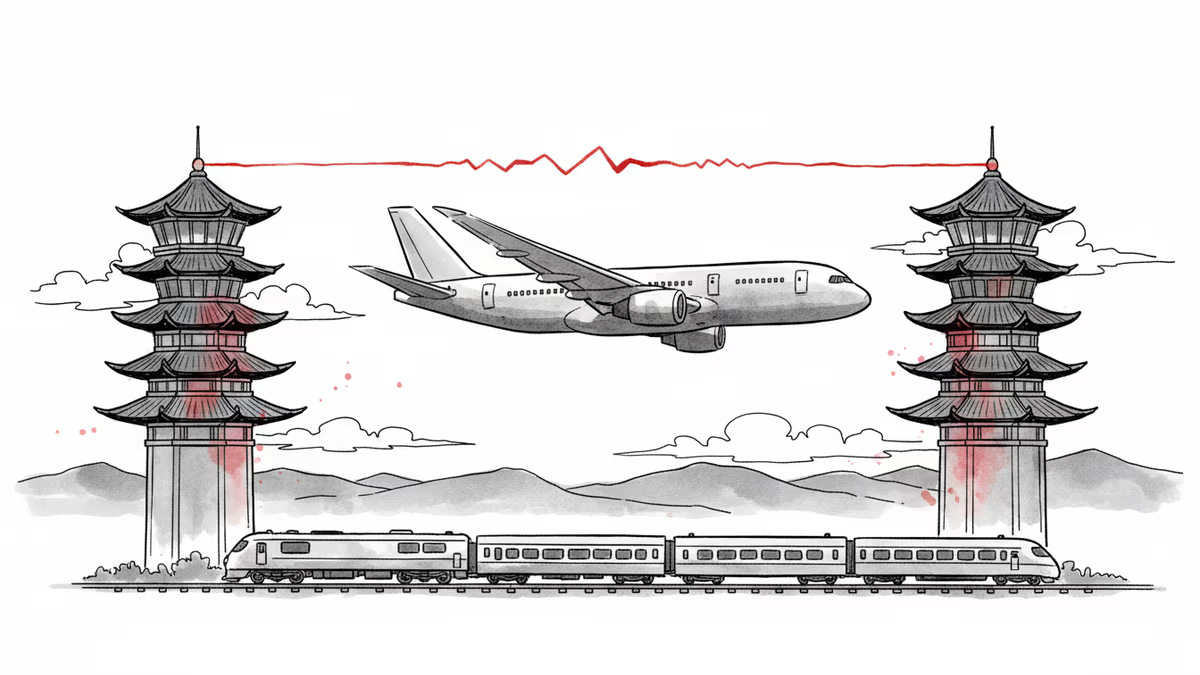
Air China resumed direct flights to Pyongyang on March 30, weeks after passenger train services were restored. The back-to-back moves signal a deliberate deepening of China-North Korea ties.
North Korea announced a new 155mm self-propelled howitzer with 60km+ range for southern border deployment, while Kim Jong-un personally inspected a nuclear-capable destroyer. What does the timing tell us?
Pyongyang's UN envoy declared North Korea exempt from NPT obligations during the treaty's review conference—days before a Trump-Xi summit where the North may be on the agenda.
USFK Commander Gen. Brunson confirmed THAAD remains in Korea but admitted munitions are heading to the Middle East. What does this mean for Korean Peninsula deterrence, OPCON transfer, and the future of the US-South Korea alliance?
Air China resumed direct flights to Pyongyang on March 30, weeks after passenger train services were restored. The back-to-back moves signal a deliberate deepening of China-North Korea ties.
Thoughts
Share your thoughts on this article
Sign in to join the conversation