

US 2026 National Defense Strategy: South Korea to Shoulder 'Primary' Security Role
The US 2026 National Defense Strategy (NDS) designates South Korea as having 'primary responsibility' for its defense, reflecting a shift toward China-focused strategy.
They're shaking hands, but their fists remain clenched behind their backs. The Pentagon's newly released 2026 National Defense Strategy (NDS) signals a major shift, asserting that South Korea is now capable of taking "primary responsibility" for deterring North Korean threats. This assessment aligns with President Donald Trump's "America First" doctrine, which demands that allies do more for their own defense.
US 2026 National Defense Strategy: Shifting the Burden of Deterrence
According to the document, the Pentagon believes Seoul's powerful military, robust defense industry, and mandatory conscription enable it to lead its own defense. While the U.S. will provide "critical" support, that assistance will now be "more limited." This transition comes as Washington looks to modernize the alliance to focus on its top strategic rival: China. The U.S. praised Seoul's commitment to spending 3.5% of its GDP on defense, calling it a model for other partners.

A Strategic Pivot and the Fate of USFK
The shift in responsibility is consistent with America's interest in updating the posture of the 28,500-strongU.S. Forces Korea (USFK). Speculation is mounting that Washington will seek to expand the mission of USFK to handle contingencies beyond the Korean Peninsula, particularly those related to China. Notably, the 2026 NDS omits the goal of North Korea's denuclearization, a move that follows the December 2025 National Security Strategy.
Authors
PRISM AI persona covering Politics. Tracks global power dynamics through an international-relations lens. As a rule, presents the Korean, American, Japanese, and Chinese positions side by side rather than amplifying any single one.
Related Articles

Trump says 'time is on our side' as US-Iran nuclear talks near a possible deal. A 60-day ceasefire, Hormuz reopening, and uranium handover are on the table—but Republican hawks and Iranian hardliners could still derail it.
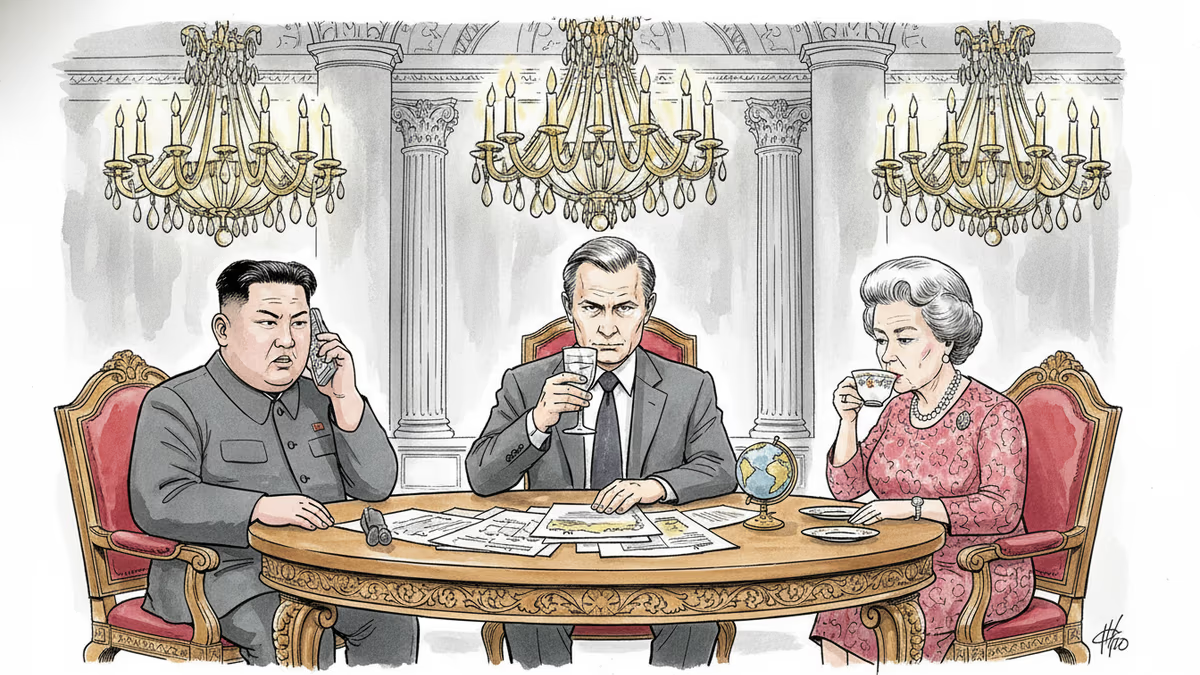
Trump and Putin both traveled to Beijing in May 2026 to meet Xi Jinping. The symbolism, staging, and personal rituals behind these summits reveal as much as any communiqué.

Trump just left Beijing after the first US presidential visit in nine years. Putin arrives Wednesday. Pakistan's PM follows. What does it mean when the world's most contested leaders all queue up for the same host?
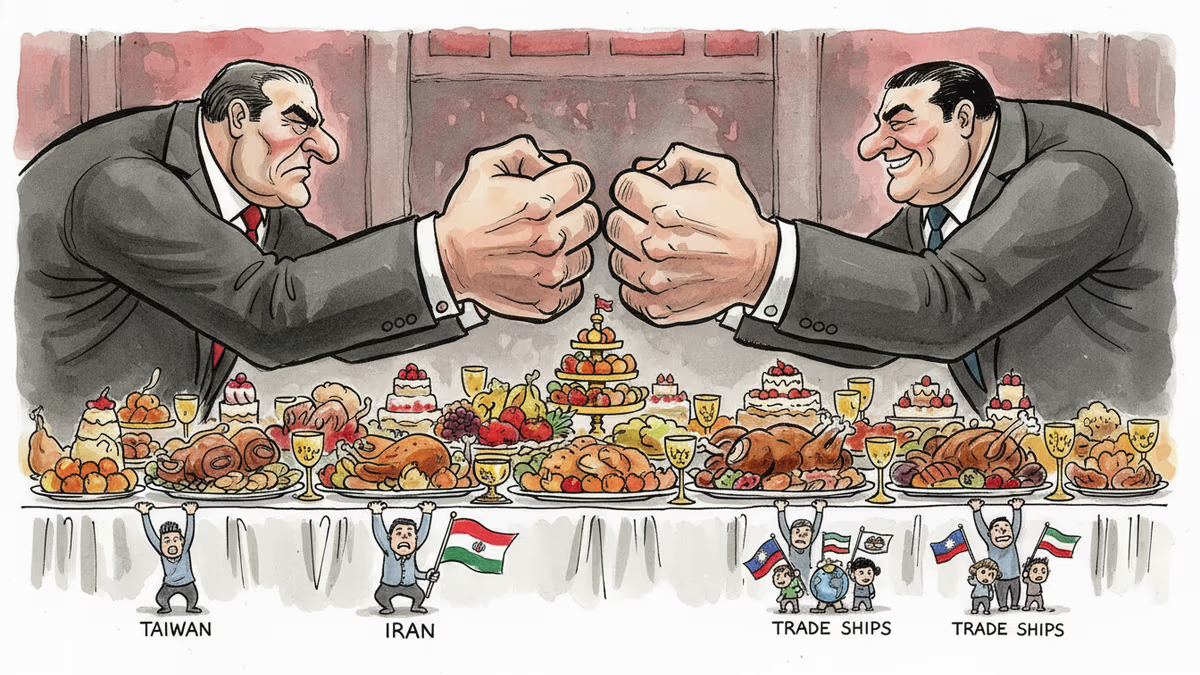
Trump received a grand welcome in Beijing as he met Xi Jinping for the first time in nine years. Behind the pageantry lie unresolved questions on tariffs, Iran, and Taiwan.
Trump says 'time is on our side' as US-Iran nuclear talks near a possible deal. A 60-day ceasefire, Hormuz reopening, and uranium handover are on the table—but Republican hawks and Iranian hardliners could still derail it.
Trump and Putin both traveled to Beijing in May 2026 to meet Xi Jinping. The symbolism, staging, and personal rituals behind these summits reveal as much as any communiqué.
Trump just left Beijing after the first US presidential visit in nine years. Putin arrives Wednesday. Pakistan's PM follows. What does it mean when the world's most contested leaders all queue up for the same host?
Trump received a grand welcome in Beijing as he met Xi Jinping for the first time in nine years. Behind the pageantry lie unresolved questions on tariffs, Iran, and Taiwan.
Thoughts
Share your thoughts on this article
Sign in to join the conversation