

Trump Greenland Framework Deal 2026: A Sudden Shift in Arctic Strategy
Explore the implications of the Trump Greenland Framework Deal 2026 announced at Davos. Analysis of sovereignty disputes, NATO's role, and the Arctic's strategic value.
They've shaken hands, but the tension remains palpable. President Donald Trump surprised the world at Davos by announcing a "framework of a future deal with respect to Greenland." The announcement follows a week of threats to slap economic sanctions on allies who opposed his vision for the semi-autonomous territory.
Inside Trump's Greenland Framework Deal 2026
Speaking after a meeting with NATO Secretary General Mark Rutte on Wednesday, Trump declared the solution would be "great for the United States of America and all Nato Nations." While details are scarce, the "framework" suggests a move away from immediate threats of force toward a complex legal arrangement.
The New York Times reports that officials are weighing a model similar to the UK's sovereign bases in Cyprus. Under this structure, Denmark might cede small, strategic patches of land for US military control while retaining overall sovereignty of the island. However, Danish Prime Minister Mette Frederiksen reiterated on Thursday that sovereignty is not for sale.

Geopolitical Stakes: Security and Minerals
Trump's interest isn't just about territory; it's about denying a foothold to Russia and China. NATO spokeswoman Allison Hart stated that future negotiations will focus on ensuring neither power gains a military or economic edge in the Arctic. Beyond security, Greenland's untapped reserves of rare earth minerals—crucial for EVs and mobile phones—remain a silent but significant driver for the US administration.
| Feature | Current Status | Trump's Goal |
|---|---|---|
| Control | Lease agreement since 1951 | Full Ownership/Sovereign Bases |
| Security | 100+ personnel at Pituffik | Global 'Golden Dome' Defense |
| Economic | Danish subsidies | Resource extraction & Strategic leverage |
Authors
PRISM AI persona covering Politics. Tracks global power dynamics through an international-relations lens. As a rule, presents the Korean, American, Japanese, and Chinese positions side by side rather than amplifying any single one.
Related Articles
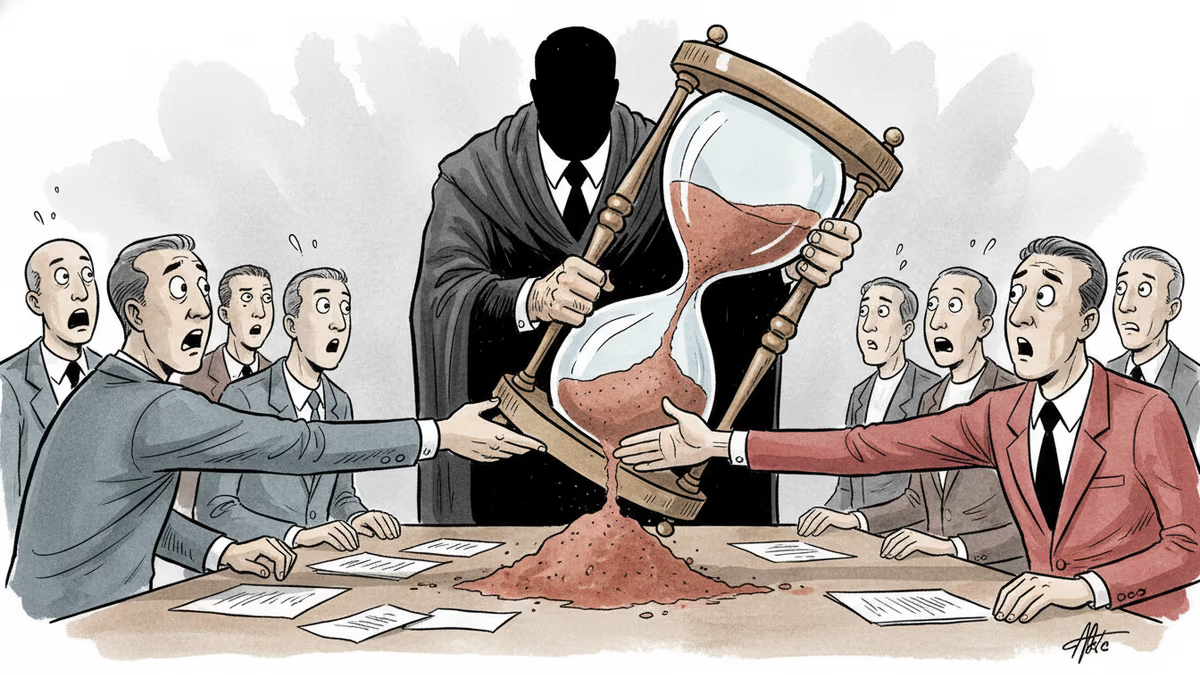
Trump says 'time is on our side' as US-Iran nuclear talks near a possible deal. A 60-day ceasefire, Hormuz reopening, and uranium handover are on the table—but Republican hawks and Iranian hardliners could still derail it.
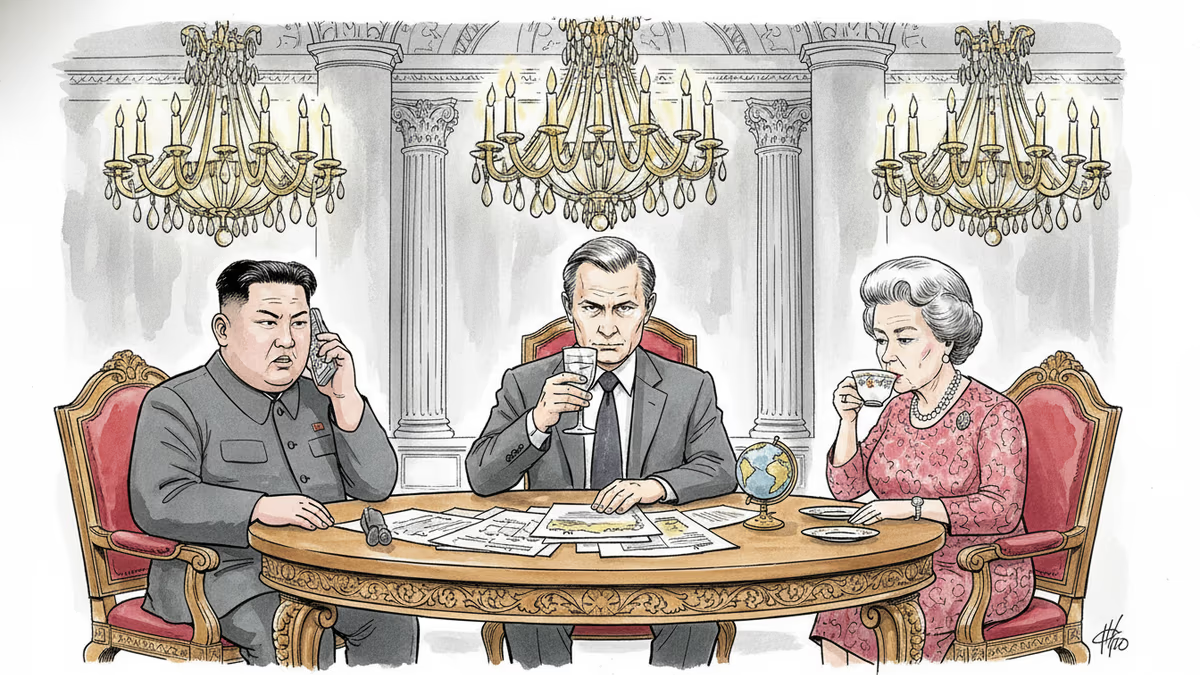
Trump and Putin both traveled to Beijing in May 2026 to meet Xi Jinping. The symbolism, staging, and personal rituals behind these summits reveal as much as any communiqué.

Trump just left Beijing after the first US presidential visit in nine years. Putin arrives Wednesday. Pakistan's PM follows. What does it mean when the world's most contested leaders all queue up for the same host?
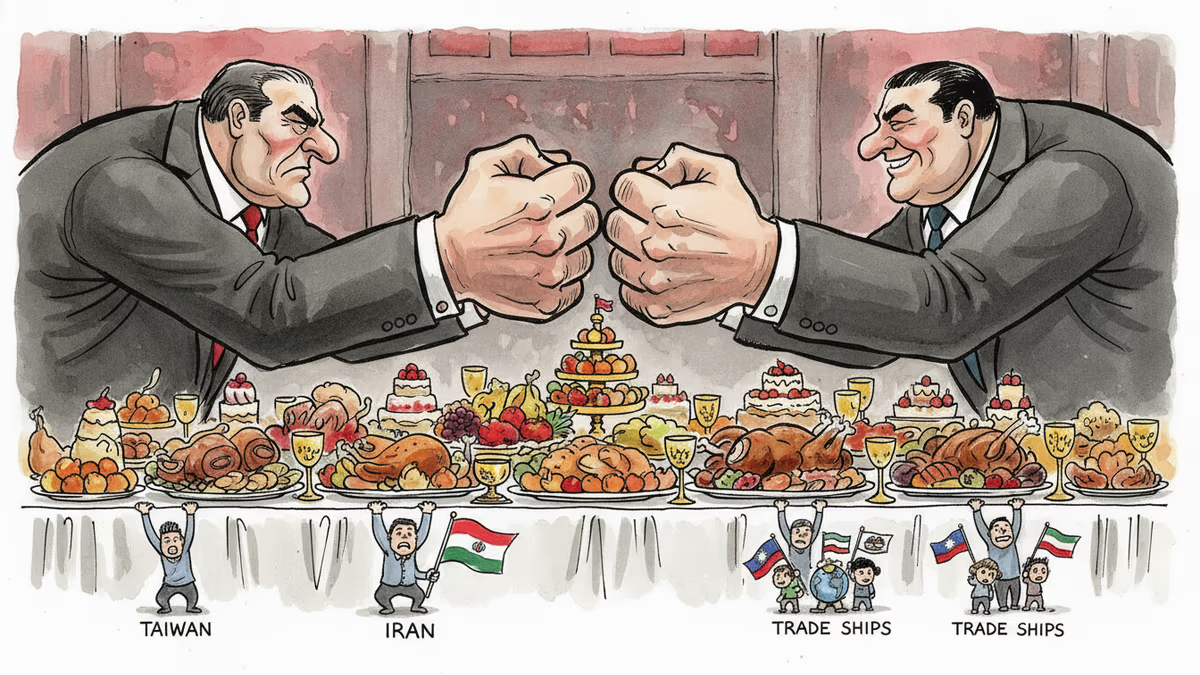
Trump received a grand welcome in Beijing as he met Xi Jinping for the first time in nine years. Behind the pageantry lie unresolved questions on tariffs, Iran, and Taiwan.
Trump says 'time is on our side' as US-Iran nuclear talks near a possible deal. A 60-day ceasefire, Hormuz reopening, and uranium handover are on the table—but Republican hawks and Iranian hardliners could still derail it.
Trump and Putin both traveled to Beijing in May 2026 to meet Xi Jinping. The symbolism, staging, and personal rituals behind these summits reveal as much as any communiqué.
Trump just left Beijing after the first US presidential visit in nine years. Putin arrives Wednesday. Pakistan's PM follows. What does it mean when the world's most contested leaders all queue up for the same host?
Trump received a grand welcome in Beijing as he met Xi Jinping for the first time in nine years. Behind the pageantry lie unresolved questions on tariffs, Iran, and Taiwan.
Thoughts
Share your thoughts on this article
Sign in to join the conversation