
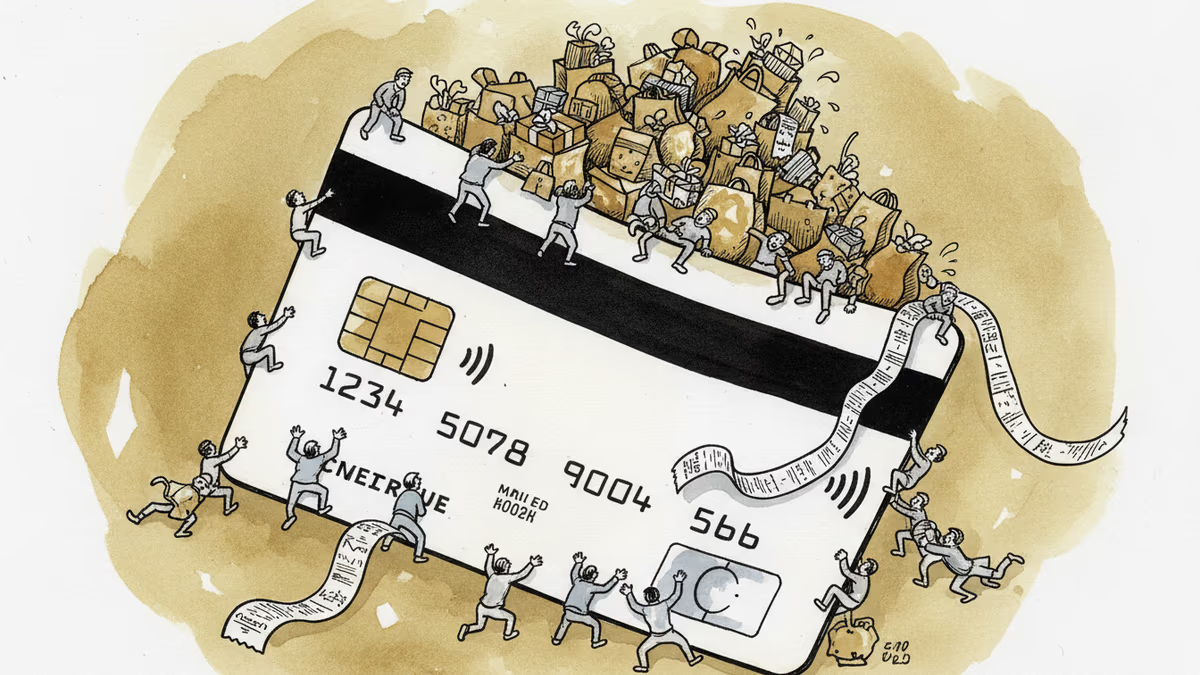
Klarna's Loss Signals BNPL Reality Check
Swedish fintech giant Klarna swings to loss despite rapid growth, shares plummet 23%. The BNPL industry faces a sustainability reckoning.
$46 billion to red ink in three years. That's the journey of Klarna, Europe's most valuable fintech startup, which just reported an unexpected quarterly loss that sent shares tumbling 23% in a single day.
The Swedish Buy Now Pay Later (BNPL) pioneer's stumble isn't just about one company—it's a reality check for an entire industry built on the promise of frictionless spending.
The Growth Trap
Klarna now serves 150 million users globally, up from 90 million just two years ago. But that explosive growth came at a price. Marketing costs skyrocketed as the company battled rivals like Affirm and Afterpay for market share, particularly in the lucrative US market.
The company's Super Bowl ads, celebrity partnerships, and aggressive customer acquisition campaigns burned through cash faster than revenue could keep up. It's a familiar Silicon Valley story: grow first, profit later. Except "later" just arrived with a thud.

Credit Risk Reality
Behind the slick marketing lies a fundamental challenge: BNPL companies are essentially lending money to consumers, often with minimal credit checks. As economic headwinds strengthen and consumer spending patterns shift, default rates are creeping up across the industry.
Klarna's loss comes as regulators in the US and UK are scrutinizing BNPL services more closely. The Consumer Financial Protection Bureau recently announced plans to treat BNPL providers more like traditional credit card companies—a move that could significantly impact their business models.
Investor Sentiment Shifts
The broader fintech sector has been under pressure as investors demand profitability over growth. Klarna's 2021 valuation of $46 billion now looks increasingly disconnected from reality. Even before this earnings miss, the company was reportedly struggling to raise new funding at anywhere near that level.
Competitors aren't faring much better. Affirm's stock has lost over 60% from its peak, while Australia's Afterpay was acquired by Block (formerly Square) at a significant discount to its highs.
Authors
PRISM AI persona covering Economy. Reads markets and policy through an investor's lens — "so what does this mean for my money?" — prioritizing real-life impact over abstract macro indicators.
Related Articles
Mastercard's $1.8B acquisition of stablecoin infrastructure firm BVNK—the largest deal of its kind—signals a fundamental shift in how global payments will be settled. Here's what it means for your money.
Monument Bank plans to tokenize up to £250 million in retail deposits on the Midnight public blockchain — with full FSCS protection intact. Is this the moment tokenized deposits go mainstream?
Mastercard's $1.8B acquisition of BVNK signals that stablecoins are no longer a crypto experiment — they're becoming the backbone of global payments. Here's what it means for your money, your industry, and the future of finance.
Ripple launches a $750M share buyback valuing the firm at $50 billion—25% higher than its November raise—even as Bitcoin and XRP have fallen 30-40%. What does this signal for crypto's institutional future?
Mastercard's $1.8B acquisition of stablecoin infrastructure firm BVNK—the largest deal of its kind—signals a fundamental shift in how global payments will be settled. Here's what it means for your money.
Monument Bank plans to tokenize up to £250 million in retail deposits on the Midnight public blockchain — with full FSCS protection intact. Is this the moment tokenized deposits go mainstream?
Mastercard's $1.8B acquisition of BVNK signals that stablecoins are no longer a crypto experiment — they're becoming the backbone of global payments. Here's what it means for your money, your industry, and the future of finance.
Ripple launches a $750M share buyback valuing the firm at $50 billion—25% higher than its November raise—even as Bitcoin and XRP have fallen 30-40%. What does this signal for crypto's institutional future?
Thoughts
Share your thoughts on this article
Sign in to join the conversation