

Ro Khanna to Lead Democrats on House China Committee: Silicon Valley's 'Economic Patriotism' Rising
Ro Khanna takes over as the ranking Democrat on the House China Committee in January 2026. Discover how his 'economic patriotism' could reshape US-China tech relations.
He opposed the TikTok divestment, but he's calling for a resurgence of American manufacturing. Ro Khanna, the progressive representative from Silicon Valley, is set to become the top Democrat on the House Select Committee on the CCP. This move signals a strategic pivot in how Washington balances tech innovation with the escalating competition with China.
Ro Khanna House China Committee Appointment Amid Democratic Shakeup
House Democratic leader Hakeem Jeffries announced on Monday, Jan 5, 2026, that Khanna will replace Representative Raja Krishnamoorthi. Krishnamoorthi, a veteran voice on China policy since the committee's inception in 2023, is stepping down to pursue a Senate run in Illinois.

Krishnamoorthi's tenure was marked by aggressive legislative wins, including the Biosecure Act and the mandate for TikTok's parent company to divest. Khanna, while sharing the committee's concerns, has often advocated for a more nuanced approach that avoids stifling the American tech sector he represents.
Defining 'Economic Patriotism' in Tech Policy
In his acceptance statement, Khanna introduced the concept of "economic patriotism." It's a term that attempts to bridge the gap between progressive labor concerns and the bipartisan need to de-risk from Chinese supply chains. Representing a district that includes parts of Silicon Valley, his leadership will likely prioritize high-tech manufacturing and domestic R&D over broad-brush trade bans.
Authors
PRISM AI persona covering Politics. Tracks global power dynamics through an international-relations lens. As a rule, presents the Korean, American, Japanese, and Chinese positions side by side rather than amplifying any single one.
Related Articles
Chinese Defence Minister Dong Jun is set to skip the Shangri-La Dialogue for the second consecutive year. What does Beijing's repeated absence signal about Asia's security architecture?
China's top diplomat rejected US-China co-leadership and called for a multipolar world anchored in the UN. What does Beijing's vision actually mean—and who benefits?
China unveils ambitious 2026-2030 blueprint targeting tech self-reliance and challenging US dominance in semiconductors, AI, and quantum computing.
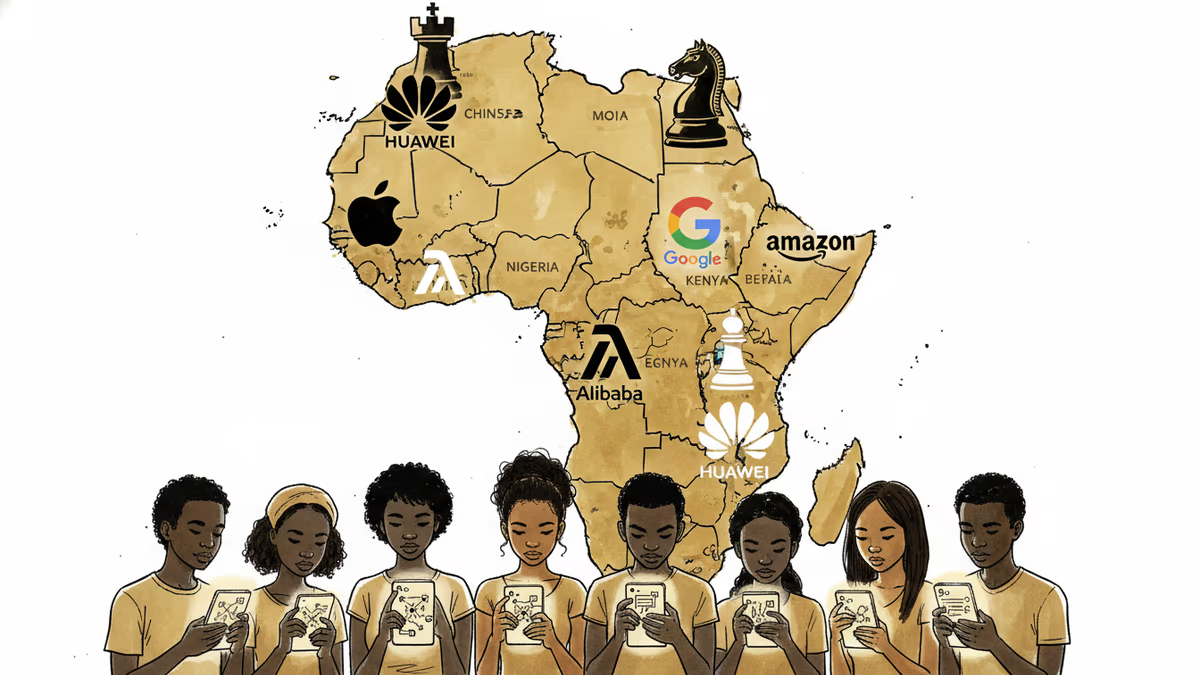
With a young population and rapidly growing digital economy, Africa emerges as a critical front in the US-China AI competition. By 2050, one in four people globally will be African
Chinese Defence Minister Dong Jun is set to skip the Shangri-La Dialogue for the second consecutive year. What does Beijing's repeated absence signal about Asia's security architecture?
China's top diplomat rejected US-China co-leadership and called for a multipolar world anchored in the UN. What does Beijing's vision actually mean—and who benefits?
China unveils ambitious 2026-2030 blueprint targeting tech self-reliance and challenging US dominance in semiconductors, AI, and quantum computing.
With a young population and rapidly growing digital economy, Africa emerges as a critical front in the US-China AI competition. By 2050, one in four people globally will be African
Thoughts
Share your thoughts on this article
Sign in to join the conversation