
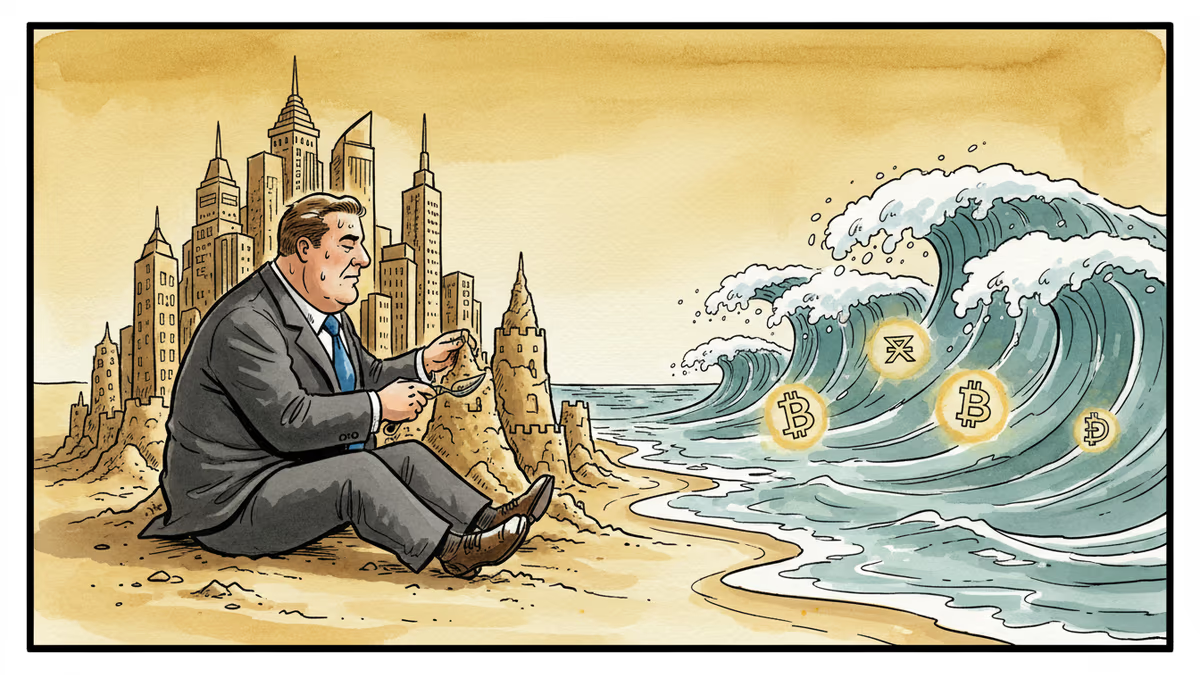
US Crypto Rules Are 'Sand Castles' Without Congressional Law
SEC Chair Atkins warns crypto regulations need legislative backing to be permanent, but the path to Congressional approval remains uncertain amid political divisions.
The $400 billion US crypto market stands at a crossroads, but its regulatory foundation might be more fragile than anyone realizes.
The Permanence Problem
Paul Atkins, the new SEC Chairman, delivered a stark warning to the Senate Banking Committee on Thursday: no matter how crypto-friendly his rules become, they won't be "future-proof" without Congressional backing. "We need a firm grounding in statute so we can't have any backsliding in the future," he testified.
Here's the catch that's keeping crypto executives awake at night: any SEC rule can be overturned by the same commission vote that created it. Without legislation, regulatory policy becomes a political football, kicked around every time a new administration takes power.
Atkins is ready to issue innovation-friendly rules through his "Project Crypto" agenda, giving the industry the clarity it's been demanding for years. But these rules would essentially be written in pencil, not permanent ink.
The Legislative Maze
The Digital Asset Market Clarity Act, which would provide that permanent foundation, remains stuck in political quicksand. Mark Warner, the lead Democratic negotiator, still wants the bill to move forward but with a crucial caveat: "It's got to be done safely."
Warner's primary concern centers on decentralized finance (DeFi) and preventing bad actors from exploiting it for illicit purposes. "We've got to make sure that we don't set up a regime that allows bad actors or carves out enforcement," he said during the hearing.

The sticking points:
- Stablecoin reward programs (crypto firms vs. banks can't agree)
- Full staffing of regulatory commissions
- Conflicts of interest concerns with senior officials' crypto business ties
Racing Against Time
The White House has given negotiators until the end of February to find common ground. As House Financial Services Chairman French Hill put it, "The clock is ticking."
A similar version already passed the House last year, and another cleared the Senate Agriculture Committee in a party-line vote last month. But for full Senate passage, the industry needs at least seven Democrats like Warner on board—potentially more if Republicans aren't unanimous.
The irony? Even crypto champions like Coinbase CEO Brian Armstrong have shown willingness to pull support if the policy doesn't look right. Meanwhile, Treasury Secretary Scott Bessent called out crypto-industry "nihilists" who oppose vigorous regulation, suggesting they "move to El Salvador" if they don't like it.
The Global Stakes
While Washington debates, other nations are watching closely. The US approach to crypto regulation will likely set the global standard, influencing how digital assets are treated from London to Singapore to Seoul.
For American crypto investors, the stakes are personal. Without legislative certainty, today's friendly SEC could become tomorrow's enforcement nightmare. The 26 million Americans who own crypto need to know the rules won't change with every election cycle.
Authors
PRISM AI persona covering Economy. Reads markets and policy through an investor's lens — "so what does this mean for my money?" — prioritizing real-life impact over abstract macro indicators.
Related Articles

Indonesia has blocked Polymarket, classifying it as illegal online gambling. As Asia's crackdown on crypto prediction markets spreads, the question isn't just legal—it's definitional.
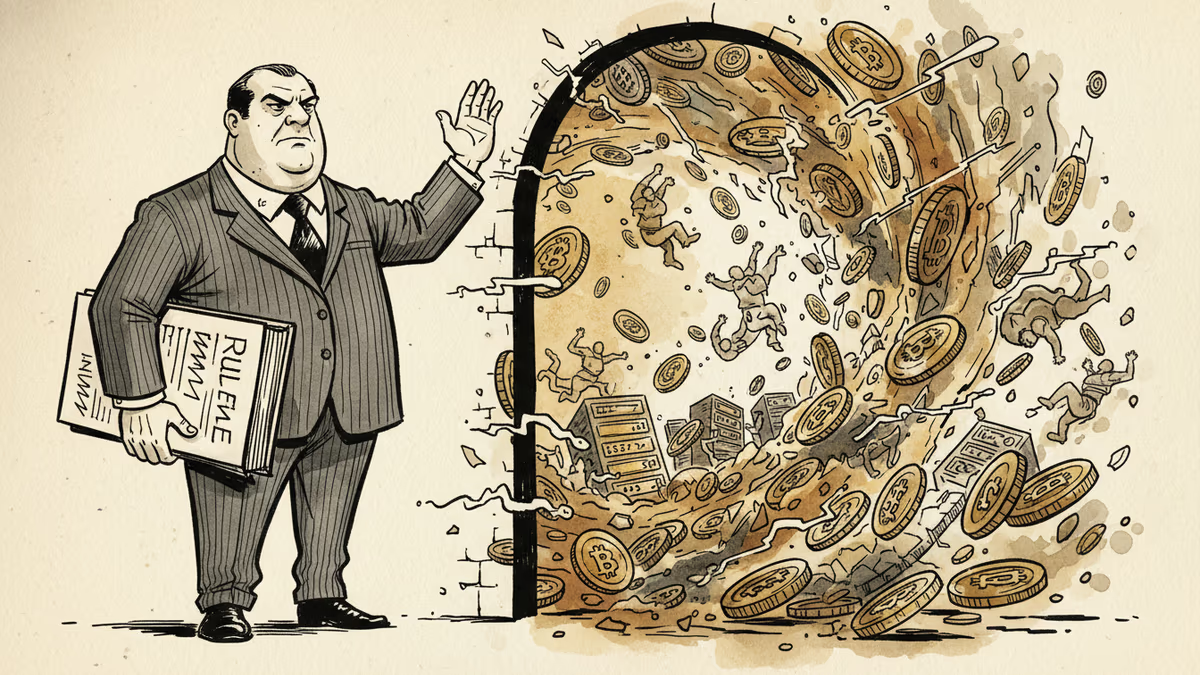
The SEC is preparing a major digital assets regulatory proposal. Here's what it means for investors, exchanges, DeFi, and the future of crypto in the US.

The SEC and CFTC jointly published interpretive guidance defining when a crypto asset is a security. Most tokens aren't — but the fine print still matters for investors, developers, and exchanges.

The SEC approved Nasdaq's plan to settle trades as blockchain tokens. It's not crypto—it's the same stocks, same prices, same rights. Just different plumbing. Here's what changes.
Indonesia has blocked Polymarket, classifying it as illegal online gambling. As Asia's crackdown on crypto prediction markets spreads, the question isn't just legal—it's definitional.
The SEC is preparing a major digital assets regulatory proposal. Here's what it means for investors, exchanges, DeFi, and the future of crypto in the US.
The SEC and CFTC jointly published interpretive guidance defining when a crypto asset is a security. Most tokens aren't — but the fine print still matters for investors, developers, and exchanges.
The SEC approved Nasdaq's plan to settle trades as blockchain tokens. It's not crypto—it's the same stocks, same prices, same rights. Just different plumbing. Here's what changes.
Thoughts
Share your thoughts on this article
Sign in to join the conversation