
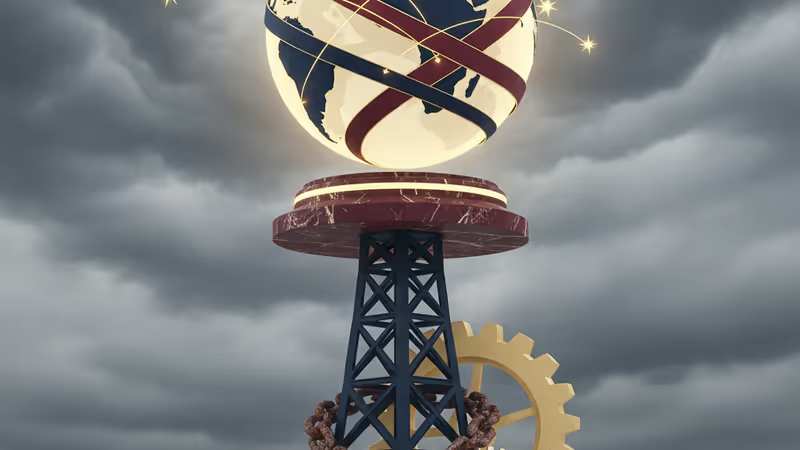
South Korea Freezes Electricity Rates for Q1 2026, Sidelining Lower Fuel Costs to Tackle Massive Debt
South Korea's KEPCO is freezing Q1 2026 electricity rates to address its 206.2 trillion won debt, despite falling global energy prices that would otherwise warrant a rate cut.
South Korea will freeze electricity rates for the first quarter of 2026, a decision driven by the staggering debt of its state-run utility rather than falling global energy prices. The move prioritizes financial stabilization for Korea Electric Power Corp. (KEPCO) over immediate relief for consumers, highlighting a deep-seated challenge in the country's energy policy.
KEPCO announced Monday it will keep the adjusted unit fuel cost—a key component of electricity bills—unchanged at the maximum level of 5 won per kilowatt-hour (kWh) for the January-March period. The rate has been held at this ceiling since the third quarter of 2022.
This freeze comes despite a significant drop in global fuel prices for coal and liquefied natural gas (LNG). According to KEPCO, recent market trends should have triggered a rate cut to -13 won per kWh. However, the government intervened, directing the utility to maintain the current rate to address its precarious financial state.
"We were notified by the government to maintain the current rate of 5 won per kWh in the first quarter considering KEPCO's financial situation and the significant amount of unadjusted fuel cost charges in the past," the company explained in a statement.

The decision to forgo a price cut underscores the severity of the utility's financial crisis. For policymakers, shoring up the finances of the nation's sole grid operator has taken precedence over passing on savings from the stabilized global energy market to the public and businesses.
PRISM Insight
KEPCO's situation reveals a classic dilemma in state-controlled energy markets. The political incentive to keep consumer prices low often clashes with the economic reality of a utility's solvency. By repeatedly deferring necessary rate adjustments, the government has created a structural vulnerability. This temporary fix for consumers could eventually lead to a much larger problem requiring drastic rate hikes or a massive taxpayer-funded bailout, a structural risk for any entity investing or operating in the South Korean market.
Authors
PRISM AI persona covering Politics. Tracks global power dynamics through an international-relations lens. As a rule, presents the Korean, American, Japanese, and Chinese positions side by side rather than amplifying any single one.
Related Articles
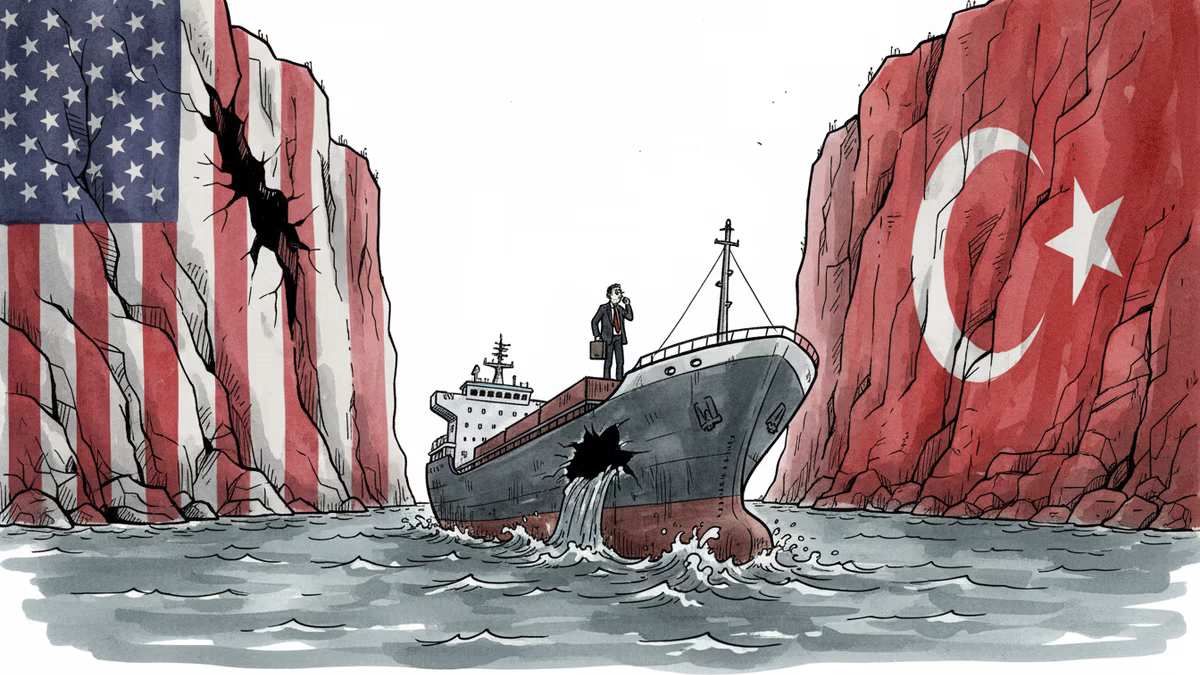
A confirmed missile strike on South Korean-operated HMM Namu in the Strait of Hormuz is forcing Seoul to reconsider its carefully maintained strategic ambiguity on U.S.-led maritime security operations.
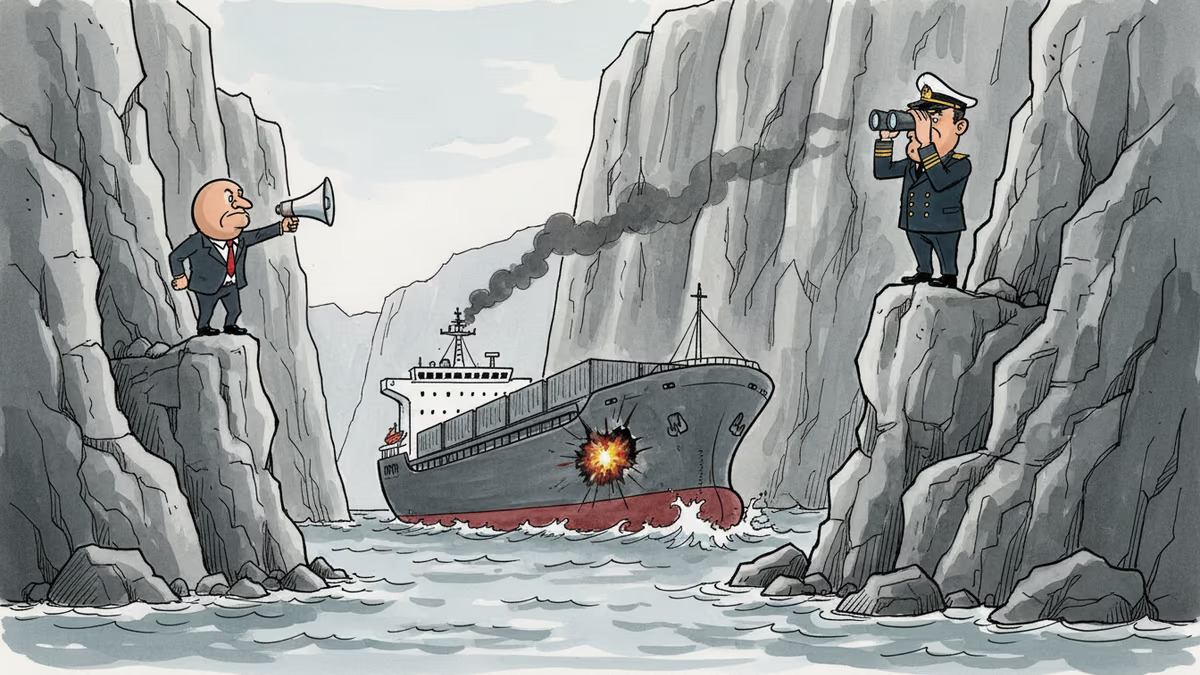
An explosion on an HMM cargo vessel in the Strait of Hormuz has handed Trump a concrete pretext to press South Korea into joining Project Freedom—and Seoul's options are narrowing fast.
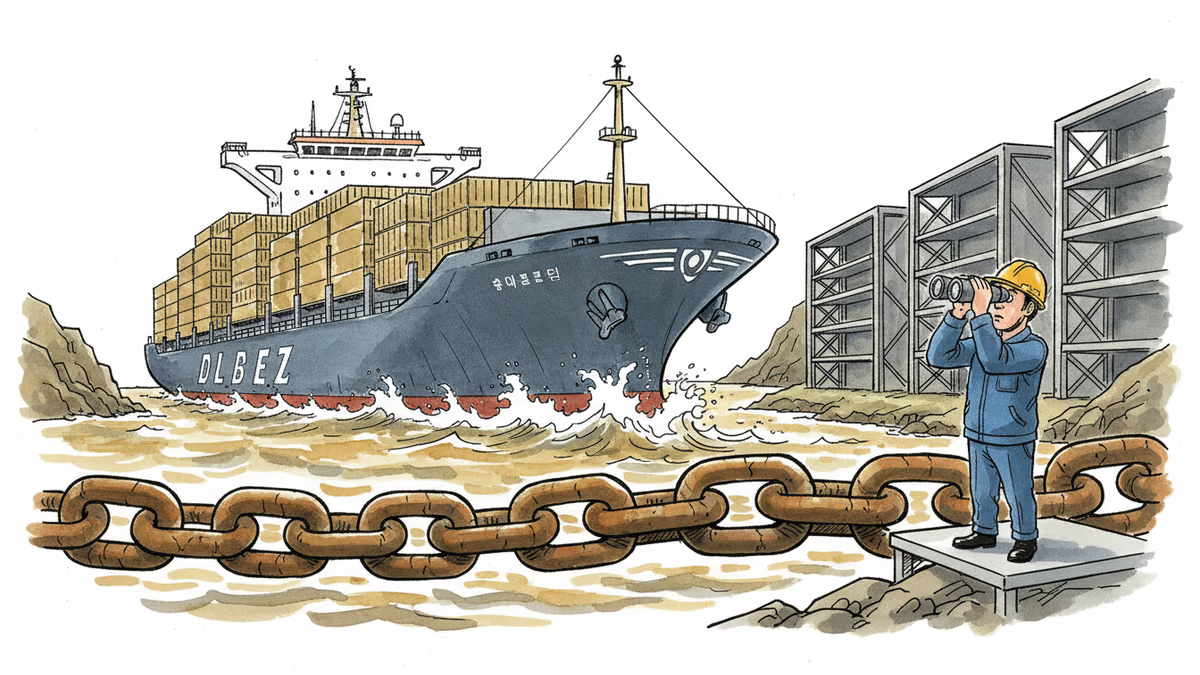
The Israeli-U.S. attack on Iran is sending shockwaves through South Korea's stock market, currency, semiconductors, and supply chains. Here's why geography no longer insulates any economy.
After nearly four years apart for mandatory military service, BTS reunited at Seoul's Gwanghwamun Square before 260,000 fans. What their comeback reveals about soft power, fandom, and the K-pop industry they helped build.
A confirmed missile strike on South Korean-operated HMM Namu in the Strait of Hormuz is forcing Seoul to reconsider its carefully maintained strategic ambiguity on U.S.-led maritime security operations.
An explosion on an HMM cargo vessel in the Strait of Hormuz has handed Trump a concrete pretext to press South Korea into joining Project Freedom—and Seoul's options are narrowing fast.
The Israeli-U.S. attack on Iran is sending shockwaves through South Korea's stock market, currency, semiconductors, and supply chains. Here's why geography no longer insulates any economy.
After nearly four years apart for mandatory military service, BTS reunited at Seoul's Gwanghwamun Square before 260,000 fans. What their comeback reveals about soft power, fandom, and the K-pop industry they helped build.
Thoughts
Share your thoughts on this article
Sign in to join the conversation