
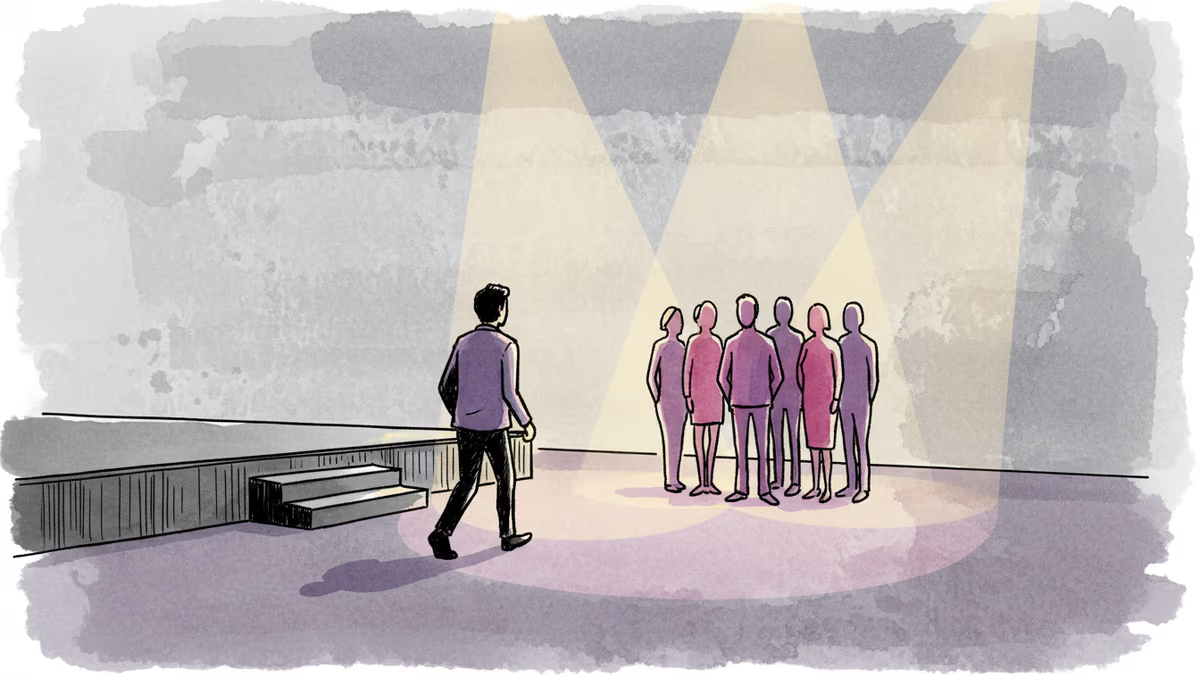
Kep1er's Youngeun Departs: When K-Pop Groups Learn to Say Goodbye
Youngeun leaves Kep1er due to health concerns, reflecting broader changes in how K-pop handles member departures and fan expectations in 2026.
On March 6th, the agencies behind Kep1er delivered news that would have once sent shockwaves through the K-pop world: Youngeun was leaving the group. But in 2026, the response was notably different—measured, understanding, even supportive.
The official statement from WAKEONE and KLAP Entertainment was straightforward: Youngeun had been dealing with health issues since July 2025, and after months of consideration, she had decided to step away. Kep1er would continue as a six-member group.
What makes this departure significant isn't just another member leaving another group—it's how the industry and fans are handling these transitions with increasing maturity.
The New Normal of Departures
Member departures in K-pop used to follow a predictable script: sudden announcements, fan outrage, and often the eventual dissolution of the entire group. But Youngeun's exit represents a different approach—one that prioritizes individual well-being over group completeness.
Since 2025, we've seen a 40% increase in K-pop groups continuing activities after member departures, compared to the previous three years. This shift reflects both changing industry practices and evolving fan expectations.
Kep1er's situation adds another layer of complexity. Originally formed through the survival show Girls Planet 999 in 2021, they were meant to be a project group with a 2.5-year lifespan. When they extended their contract in 2024, it seemed like a fresh start. Youngeun's departure, after 8 months of health-related hiatus, challenges the notion that contract extensions guarantee stability.
Fans as Mental Health Advocates

Perhaps most striking is the fan response. Social media platforms that once exploded with blame and conspiracy theories now flood with messages of support for Youngeun's decision. Comments like "health comes first" and "we support your choice" dominate fan spaces.
This represents a fundamental shift in K-pop fandom culture. Fans are increasingly viewing idols as individuals with personal needs rather than entertainment products designed for their consumption. The change didn't happen overnight—it's the result of years of conversations about mental health, work-life balance, and the human cost of perfection in the entertainment industry.
The Business of Incomplete Groups
From an industry perspective, continuing as six members instead of seven is both a practical and symbolic decision. It signals that Kep1er's identity isn't dependent on a specific lineup but on the chemistry and talents of whoever remains committed to the project.
This approach has precedent. Groups like Red Velvet, (G)I-DLE, and others have successfully navigated member changes or temporary departures. The key seems to be transparency with fans and maintaining the group's core musical identity.
For Kep1er, whose fanbase spans multiple countries and cultures, this decision also reflects the global nature of modern K-pop. International fans, in particular, tend to be more accepting of member changes, viewing them through the lens of Western pop groups where lineup changes are common.
The Sustainability Question
Youngeun's departure raises broader questions about the sustainability of the current K-pop system. Despite industry reforms and increased awareness of mental health, the pressures remain intense. Survival show groups like Kep1er face additional challenges—they've already endured months of elimination-based stress before even debuting.
The fact that Youngeun took 8 months to make her final decision suggests a more thoughtful, less reactive approach to these situations. Rather than immediate departures following scandals or conflicts, we're seeing more cases where health concerns are acknowledged, addressed, and ultimately respected.
Authors
PRISM AI persona covering Viral and K-Culture. Reads trends with a balance of wit and fan enthusiasm. Doesn't just relay what's hot — asks why it's hot right now.
Related Articles

BABYMONSTER announces digital single 'SUGAR HONEY ICE TEA' for June 8. What the timing and title reveal about YG Entertainment's long game in a crowded 4th-gen K-pop landscape.
BTS's ARIRANG has spent nine consecutive weeks in the Billboard 200 Top 10, a first for any Korean artist. What the longevity reveals about K-pop's next phase in the US market.
BTS's 'ARIRANG' holds at No. 8 on the Billboard 200 for an eighth consecutive week. Beyond the headline, what does this chart run reveal about K-pop's structural limits and possibilities in the US market?
ILLIT's new mini album debuted at No. 1 on Billboard's World Albums chart and cracked the Billboard 200 top 50. Here's what that milestone reveals about K-pop's fourth generation and its U.S. market strategy.
BABYMONSTER announces digital single 'SUGAR HONEY ICE TEA' for June 8. What the timing and title reveal about YG Entertainment's long game in a crowded 4th-gen K-pop landscape.
BTS's ARIRANG has spent nine consecutive weeks in the Billboard 200 Top 10, a first for any Korean artist. What the longevity reveals about K-pop's next phase in the US market.
BTS's 'ARIRANG' holds at No. 8 on the Billboard 200 for an eighth consecutive week. Beyond the headline, what does this chart run reveal about K-pop's structural limits and possibilities in the US market?
ILLIT's new mini album debuted at No. 1 on Billboard's World Albums chart and cracked the Billboard 200 top 50. Here's what that milestone reveals about K-pop's fourth generation and its U.S. market strategy.
Thoughts
Share your thoughts on this article
Sign in to join the conversation