
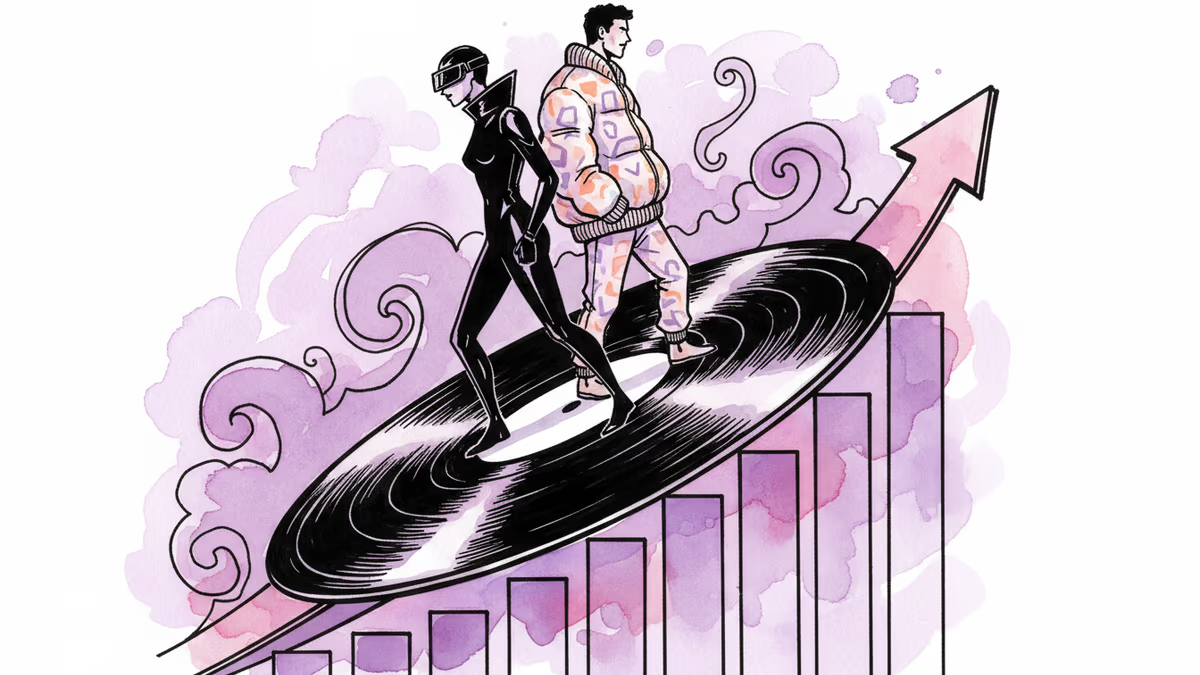
Jennie & Tame Impala Hit the Hot 100 Top 10 — But the Real Story Is How They Got There
Jennie and Tame Impala's "Dracula" remix debuted at No. 10 on the Billboard Hot 100, marking a first for both artists. Here's what the collab reveals about K-pop's evolving US market strategy.
When was the last time an indie rock band and a K-pop solo artist shared the same chart milestone? This week, the answer became: right now.
What Actually Happened
Jennie and Tame Impala's collaborative remix of "Dracula" climbed to No. 10 on the Billboard Hot 100 this week — the highest charting position either artist has ever reached on the chart that measures the most popular songs in the United States, combining streaming, radio airplay, and download sales.
For Jennie, formerly of BLACKPINK, this is a landmark in a solo career that has been methodically building toward mainstream US crossover since her 2024 album Ruby. For Tame Impala — the psychedelic rock project led by Australian musician Kevin Parker — it's a different kind of milestone. Despite a decade-plus of critical acclaim and festival headlining slots, Parker's project had never cracked the Hot 100's top tier. Indie credibility and mainstream chart performance have long operated in separate economies, and this collab just bridged them.
The Collab Architecture Matters
The structure of this collaboration is worth examining. Jennie didn't feature on a track by a US pop heavyweight — the more conventional K-pop route to American chart visibility. Instead, she partnered with an artist whose fanbase skews toward indie and alternative listeners who have historically had limited overlap with K-pop audiences.

That's a meaningful distinction. BTS's "Dynamite" hit No. 1 in 2020, but that achievement was inseparable from ARMY's coordinated streaming campaigns. Fandom-driven chart entries are real, but they have structural ceilings — without radio airplay and casual listener streams, songs tend to drop fast. A psychedelic pop remix with Tame Impala's sonic fingerprints is precisely the kind of track that can earn organic radio rotation and reach listeners who've never engaged with K-pop before.
The No. 10 debut suggests both fanbases showed up — and possibly some listeners beyond either.
What This Signals for K-Pop's US Strategy
The K-pop industry has spent the better part of five years trying to solve a specific problem: how do you sustain chart presence in the US market beyond the initial fandom surge? The answer increasingly looks like genre crossover — not just featuring US artists, but genuinely inhabiting different sonic spaces.
Jennie's trajectory illustrates this shift. Her collaborations and solo work have moved steadily away from the tight K-pop production grammar toward sounds that sit comfortably alongside Western pop and alternative playlists. The Tame Impala pairing accelerates that repositioning. For YG Entertainment, the business calculus is straightforward: a Jennie who charts independently of BLACKPINK's group activity is a more durable commercial asset.
For Kevin Parker, the upside is equally clear. Tame Impala has long been the kind of act that critics love and casual listeners recognize but don't necessarily stream obsessively. A Hot 100 Top 10 entry, regardless of how it arrived, recalibrates the project's commercial profile.
This content is AI-generated based on source articles. While we strive for accuracy, errors may occur. We recommend verifying with the original source.
Related Articles
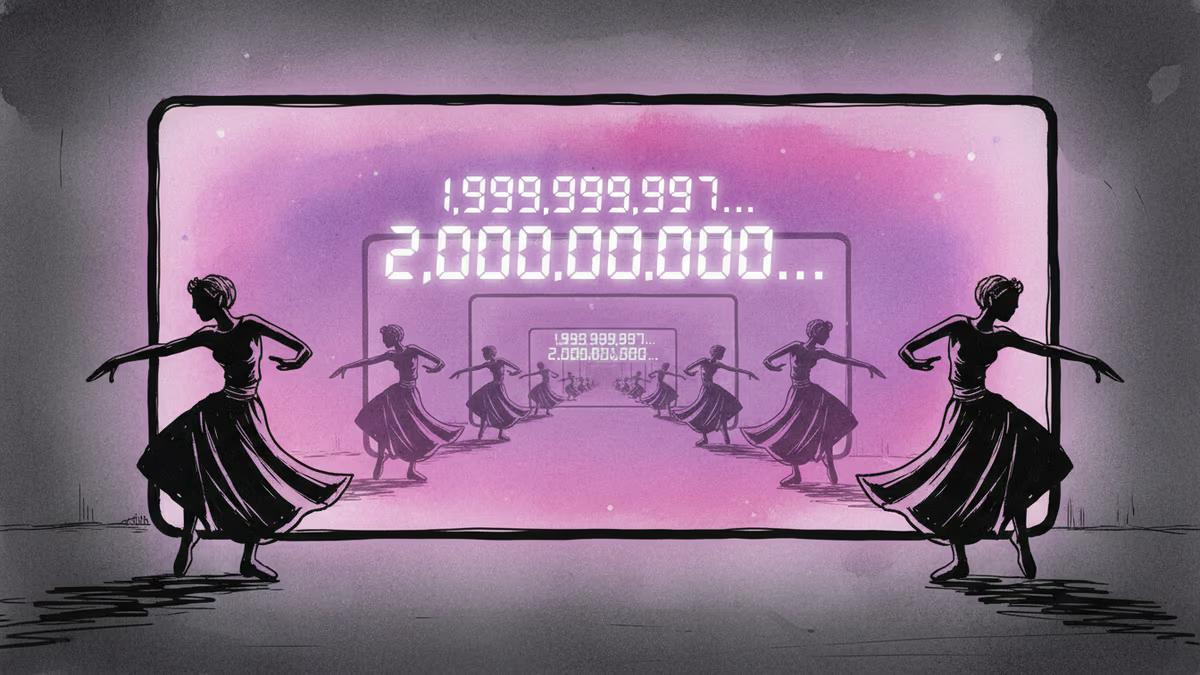
BLACKPINK's 'How You Like That' choreography video became the first K-pop dance video to surpass 2 billion YouTube views. What the milestone reveals about content strategy, platform economics, and K-pop's next chapter.

BABYMONSTER announces digital single 'SUGAR HONEY ICE TEA' for June 8. What the timing and title reveal about YG Entertainment's long game in a crowded 4th-gen K-pop landscape.
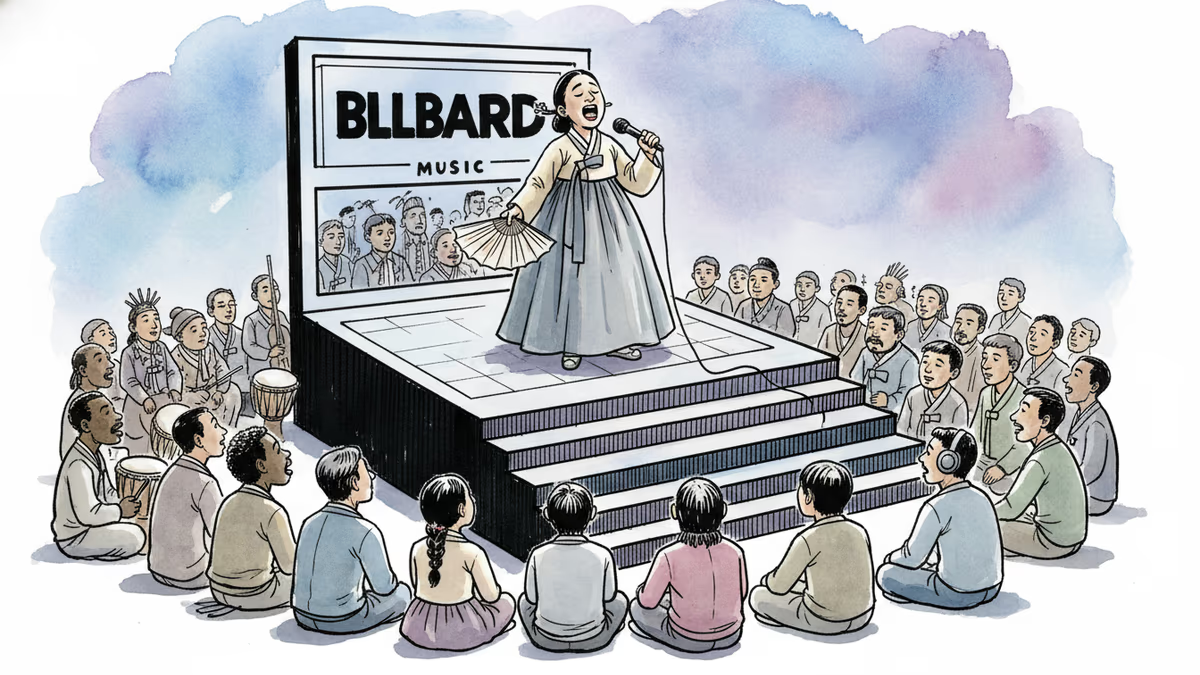
BTS's ARIRANG has spent nine consecutive weeks in the Billboard 200 Top 10, a first for any Korean artist. What the longevity reveals about K-pop's next phase in the US market.
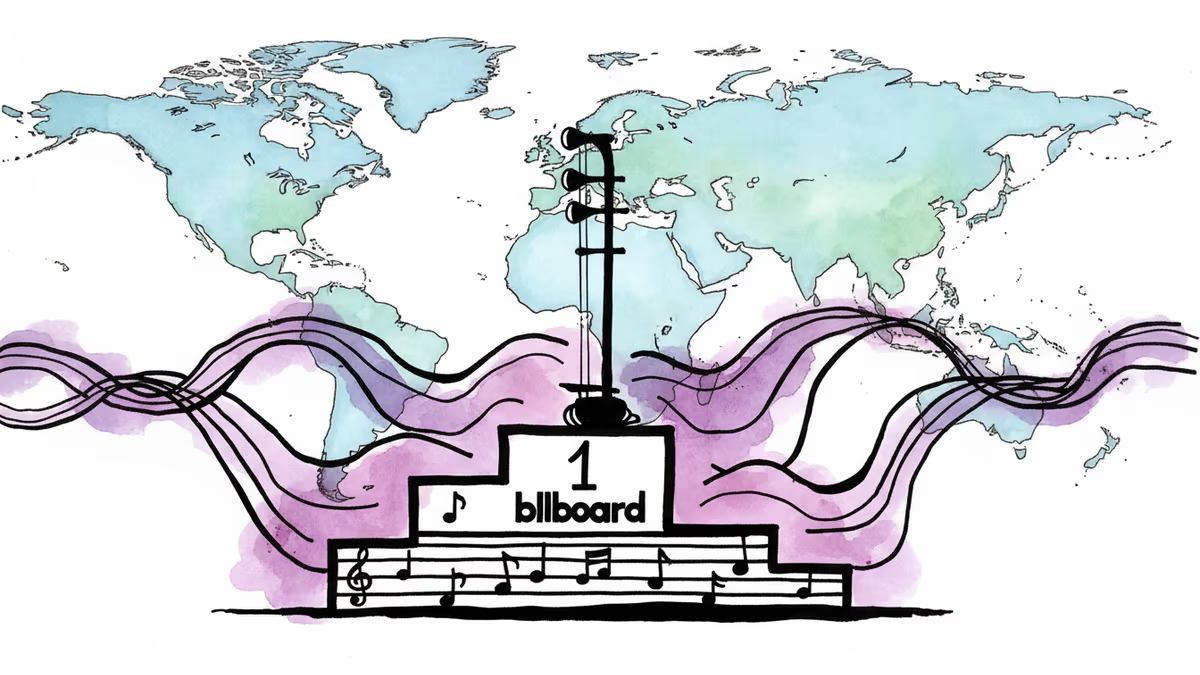
BTS's 'ARIRANG' holds at No. 8 on the Billboard 200 for an eighth consecutive week. Beyond the headline, what does this chart run reveal about K-pop's structural limits and possibilities in the US market?
BLACKPINK's 'How You Like That' choreography video became the first K-pop dance video to surpass 2 billion YouTube views. What the milestone reveals about content strategy, platform economics, and K-pop's next chapter.
BABYMONSTER announces digital single 'SUGAR HONEY ICE TEA' for June 8. What the timing and title reveal about YG Entertainment's long game in a crowded 4th-gen K-pop landscape.
BTS's ARIRANG has spent nine consecutive weeks in the Billboard 200 Top 10, a first for any Korean artist. What the longevity reveals about K-pop's next phase in the US market.
BTS's 'ARIRANG' holds at No. 8 on the Billboard 200 for an eighth consecutive week. Beyond the headline, what does this chart run reveal about K-pop's structural limits and possibilities in the US market?
Thoughts
Share your thoughts on this article
Sign in to join the conversation