
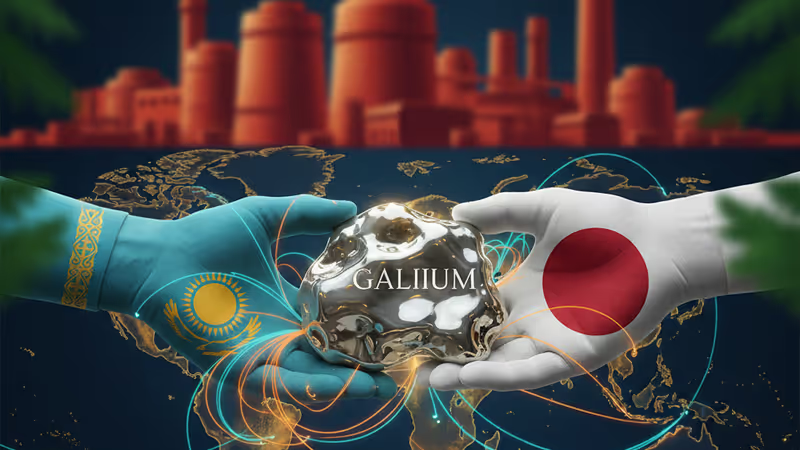
Mitsubishi Taps Kazakhstan for Gallium, Hedging Against China's Grip on EV Metals
Mitsubishi Corp. will begin importing gallium from Kazakhstan in 2026, a strategic move to reduce Japan's reliance on China for the metal crucial to EVs and semiconductors.
Japanese trading giant is set to begin importing the critical metal gallium from Kazakhstan starting in . It’s a direct move to diversify Japan's supply chain for the metal—essential for EV components and advanced semiconductors—away from the world's top producer, China.
Why Gallium is a Geopolitical Flashpoint
Gallium isn't a household name, but it's vital for high-growth tech sectors. Its unique properties make it critical for power-efficient chips used in electric vehicles and 5G infrastructure. The problem for global manufacturers? China dominates its production, creating a significant bottleneck and a point of geopolitical leverage.
According to a report from Nikkei, this move by highlights a growing urgency among G7 nations to de-risk their supply chains. The fear is that Beijing could restrict exports of key materials, as it has with other rare earths in the past, effectively crippling key industries overnight.
Japan Inc.'s Broader 'China Plus One' Strategy
This isn't an isolated deal. It's part of a concerted effort by both the Japanese government and its largest corporations to build resilient supply chains. From rare-earth processing to graphite production, Japanese firms are actively seeking partners and investment opportunities outside of China.
The choice of Kazakhstan is also strategic, signaling a broader pivot towards Central Asia as a source for critical resources and a new frontier for infrastructure investments. It’s a clear signal that the global map for strategic commodities is being redrawn.
This isn't just about swapping one supplier for another; it's a strategic shift toward Central Asia. For investors, this signals growing interest and capital flows into the region's resource and infrastructure sectors, opening potential new opportunities as Western and Japanese firms seek credible alternatives to China.
This content is AI-generated based on source articles. While we strive for accuracy, errors may occur. We recommend verifying with the original source.
Related Articles

The U.S. will increase tariffs on Chinese semiconductor imports in June 2027, according to a USTR filing. An 18-month grace period with zero duties offers a temporary reprieve, signaling a strategic move in the ongoing trade war.

Japan and Bangladesh have confirmed a broad economic partnership agreement to eliminate tariffs on key exports like steel and auto parts. Analyze the impact on supply chains and investment in South Asia.
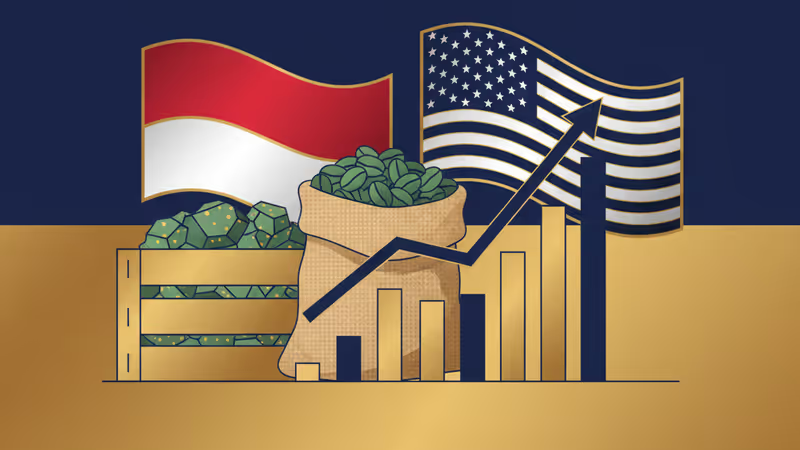
The U.S. and Indonesia have reached a new tariff agreement. Indonesia gets exemptions for palm oil and coffee, while the U.S. secures access to critical minerals.
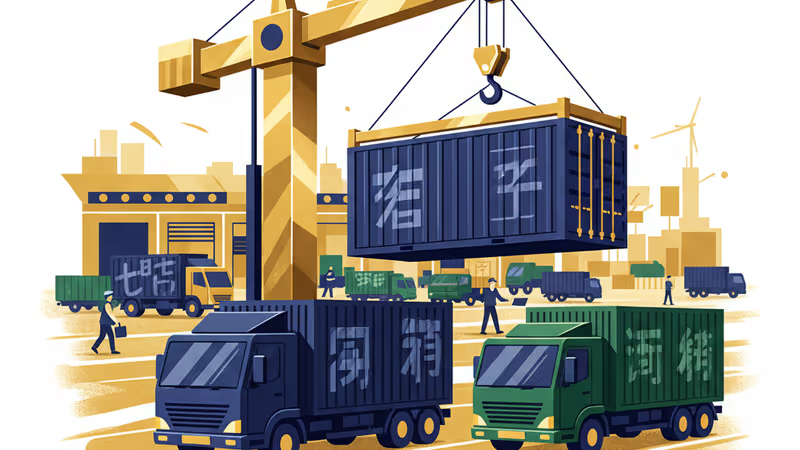
Donald Trump's tariffs on China have turned Vietnam's Mong Cai into a major hub for rerouting goods to the U.S. An analysis of the supply chain shifts reshaping global trade.
The U.S. will increase tariffs on Chinese semiconductor imports in June 2027, according to a USTR filing. An 18-month grace period with zero duties offers a temporary reprieve, signaling a strategic move in the ongoing trade war.
Japan and Bangladesh have confirmed a broad economic partnership agreement to eliminate tariffs on key exports like steel and auto parts. Analyze the impact on supply chains and investment in South Asia.
The U.S. and Indonesia have reached a new tariff agreement. Indonesia gets exemptions for palm oil and coffee, while the U.S. secures access to critical minerals.
Donald Trump's tariffs on China have turned Vietnam's Mong Cai into a major hub for rerouting goods to the U.S. An analysis of the supply chain shifts reshaping global trade.