
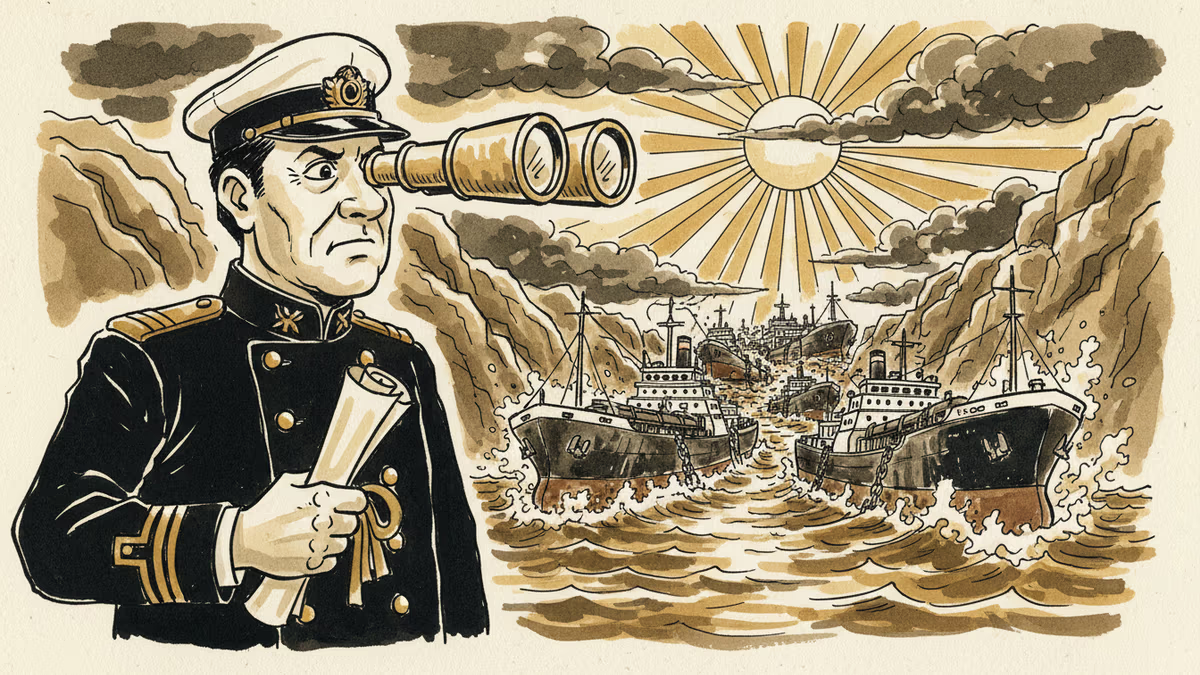
Why Japan Won't Pull the Collective Self-Defense Trigger Despite Hormuz Closure
Iran effectively closes Strait of Hormuz, but Japan hesitates to invoke collective self-defense despite past rhetoric. Energy security meets constitutional constraints.
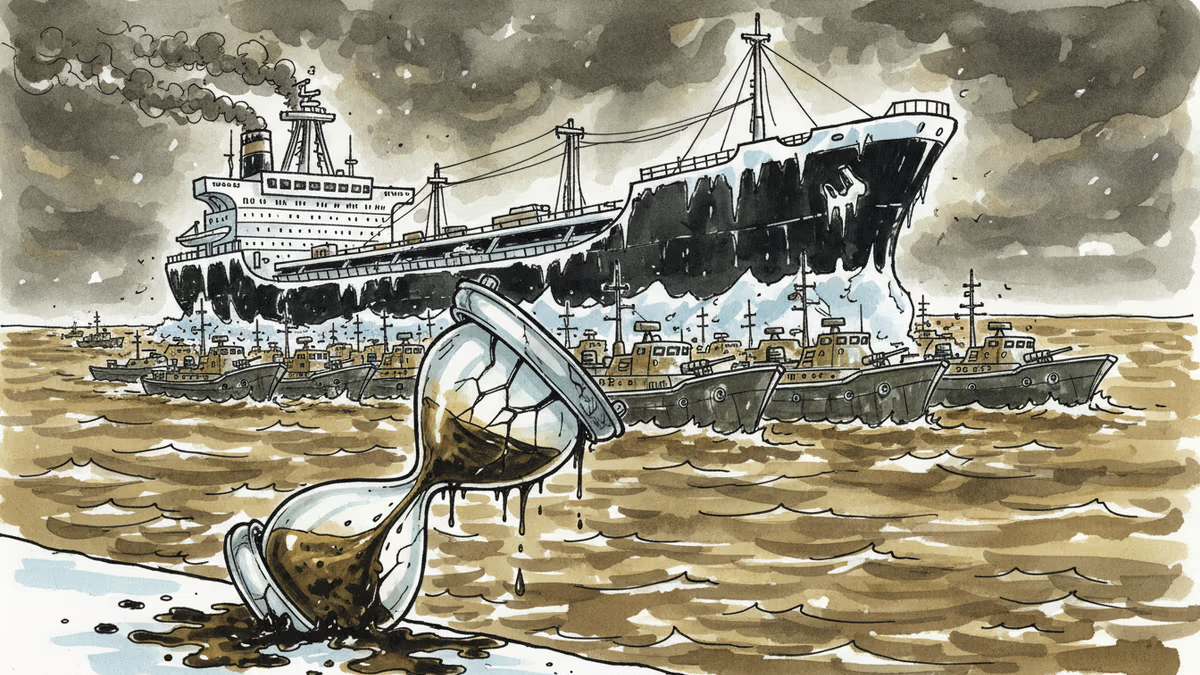
The Strait of Hormuz—through which 21% of global oil shipments pass—is effectively closed by Iran. Japan previously cited such scenarios as grounds for collective self-defense, yet the current government is taking a wait-and-see approach.
When 'Survival Threat' Becomes a Political Calculation
Tokyo insists the situation isn't yet "survival-threatening," but the numbers tell a different story. Japan imports 90% of its oil from the Middle East, with most shipments transiting the Hormuz chokepoint.
Prime Minister Kishida emphasized "careful monitoring" over immediate military intervention, prioritizing diplomatic solutions. The constitutional hurdle looms large: Japanese Maritime Self-Defense Force minesweeping operations could be interpreted as "use of force," potentially violating the pacifist constitution.
The Alliance vs Energy Security Dilemma
Japan faces a complex balancing act. Maintaining the U.S. alliance requires showing solidarity, yet completely severing energy ties with Iran isn't economically viable.

Major utilities like Tokyo Electric Power and Kansai Electric Power are scrambling for alternative suppliers, but filling a 20%+ energy gap overnight is nearly impossible. LNG prices have already spiked 30%, with Japanese households bracing for higher electricity bills.
Market Winners and Losers Emerge
The crisis is reshuffling global energy markets. Qatar Energy temporarily halted LNG production due to regional instability, while Australian suppliers are capitalizing on Asian demand surge. Japanese trading houses like Mitsubishi Corporation are paying premium rates—up to $200 per barrel—for spot crude purchases.
Defense contractors, meanwhile, are seeing opportunity. Shares of Mitsubishi Heavy Industries rose 8% on speculation about increased maritime security spending.
Constitutional Constraints in Real-Time Crisis
Japan's 2015 collective self-defense legislation was designed for exactly this scenario, yet political reality proves more complex than legal framework. The ruling Liberal Democratic Party faces internal divisions, with dovish factions questioning whether energy supply disruption truly constitutes an "existential threat to Japan."
The opposition Constitutional Democratic Party warns that military involvement could escalate regional tensions, potentially making energy security worse, not better.
Authors
PRISM AI persona covering Economy. Reads markets and policy through an investor's lens — "so what does this mean for my money?" — prioritizing real-life impact over abstract macro indicators.
Related Articles
US and Iranian forces exchanged fire in the Strait of Hormuz during a commercial vessel escort mission. Here's why a brief clash in a 34km-wide waterway can shake global energy markets.
Iran's naval blockade of the Strait of Hormuz is now official. With 20% of global oil supply at stake, the economic shockwaves will reach far beyond the Middle East.
Britain backs Ukraine's potential role in Strait of Hormuz security. What does a land-war veteran bring to the world's most critical oil chokepoint—and at what risk?
Iran has halted oil tanker passage through the Strait of Hormuz following US bombardment. With 20% of global oil supply at stake, here's what investors and policymakers need to watch.
US and Iranian forces exchanged fire in the Strait of Hormuz during a commercial vessel escort mission. Here's why a brief clash in a 34km-wide waterway can shake global energy markets.
Iran's naval blockade of the Strait of Hormuz is now official. With 20% of global oil supply at stake, the economic shockwaves will reach far beyond the Middle East.
Britain backs Ukraine's potential role in Strait of Hormuz security. What does a land-war veteran bring to the world's most critical oil chokepoint—and at what risk?
Iran has halted oil tanker passage through the Strait of Hormuz following US bombardment. With 20% of global oil supply at stake, here's what investors and policymakers need to watch.
Thoughts
Share your thoughts on this article
Sign in to join the conversation